Quick Answer: In short, foot pain from hunting usually comes from long walks over uneven ground in stiff, heavy boots, with hours of standing still in the cold in between. Rough terrain, a heavy pack, and boots that barely flex overload your arches, heels, and the balls of your feet. Most of it is preventable: well-fitted boots broken in before the season, moisture-wicking socks, and a short foot-care routine after each day out.
See a doctor promptly if you notice:
- Sharp or severe pain in the heel, arch, or one spot on a bone
- Swelling, redness, or warmth that doesn’t settle after a day or two of rest
- Numbness, tingling, or a burning feeling in your feet or toes
- Pain that makes walking or putting weight on your foot difficult
- A wound, sore, or blister that won’t heal — especially if you have diabetes
Why Hunting Is Hard on Your Feet
Hunting asks your feet to do two opposite jobs in the same day. For hours you hike over ruts, roots, and slopes, and then you stand still for a long stretch, barely moving, often in the cold. Neither is easy on feet.
The walking is the first problem. Uneven ground makes your feet twist and roll with every step, so the small muscles in your feet and ankles work overtime to keep you steady. A slope loads one side of the foot more than the other, and a heavy pack adds weight to every step.
Then comes the standing still. When you stop moving, blood flow in your feet slows, and in cold weather your feet get stiff and numb. When you start walking again, the first steps hurt. That’s the pattern behind a lot of foot pain from hunting: not one bad step, but a full day of small stresses adding up.
What It Is: The Most Common Causes
Plantar fasciitis tops the list for hunters who walk long distances. The plantar fascia is the band of tissue along the bottom of your foot, and miles of rough ground stretch and irritate it. The classic sign is heel pain with your first steps in the morning, easing as you move around.
Blisters and hot spots come from stiff boots and wet socks. A boot that rubs your heel or pinches your toes will raise a blister fast when you’re walking miles, and once a sock gets damp from sweat or a creek crossing, friction gets worse.
Metatarsalgia — pain in the ball of your foot — shows up when you spend hours walking on slopes and carrying a pack. Cold feet make it worse: standing still in the cold tightens your calves and stiffens your feet. Our guide to foot pain in cold weather explains what cold does to your feet and how to keep them warm.
What Helps: Boots and Socks That Work
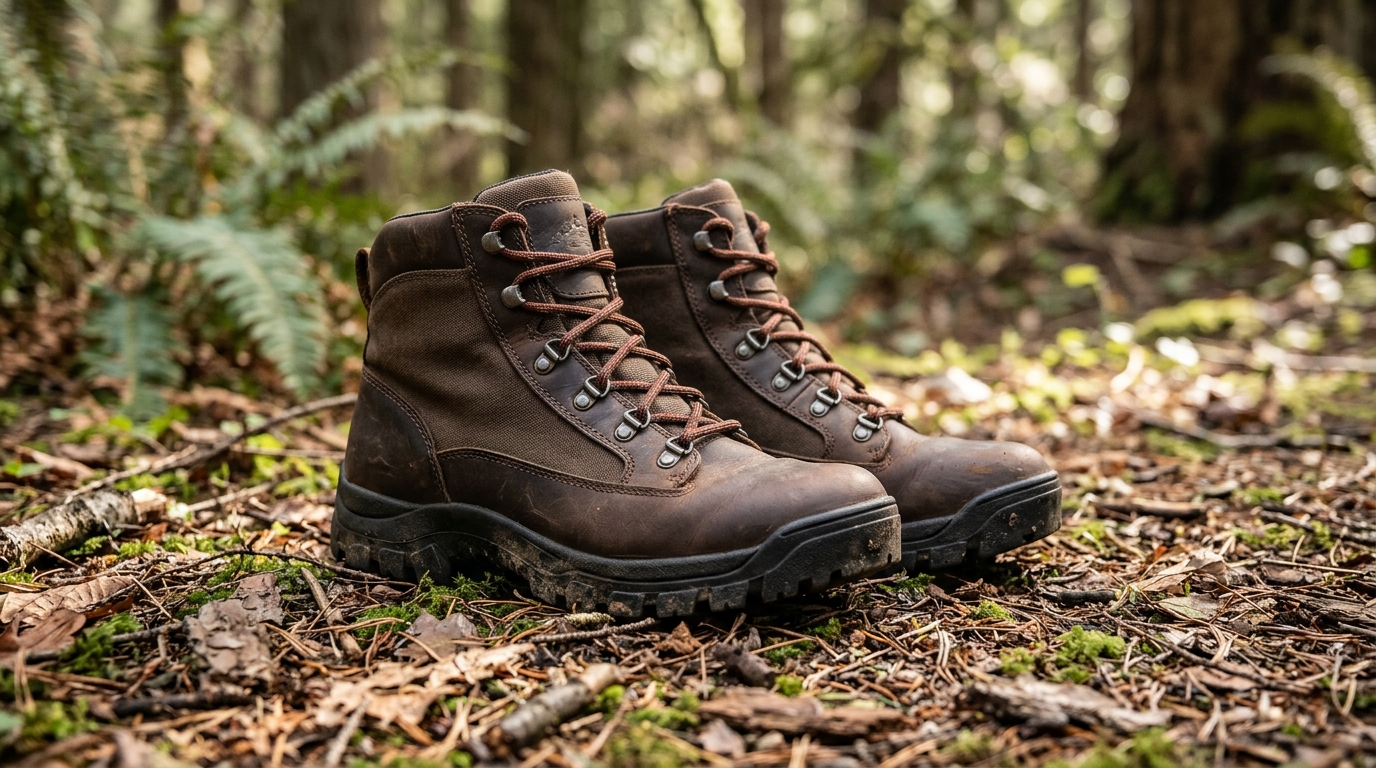
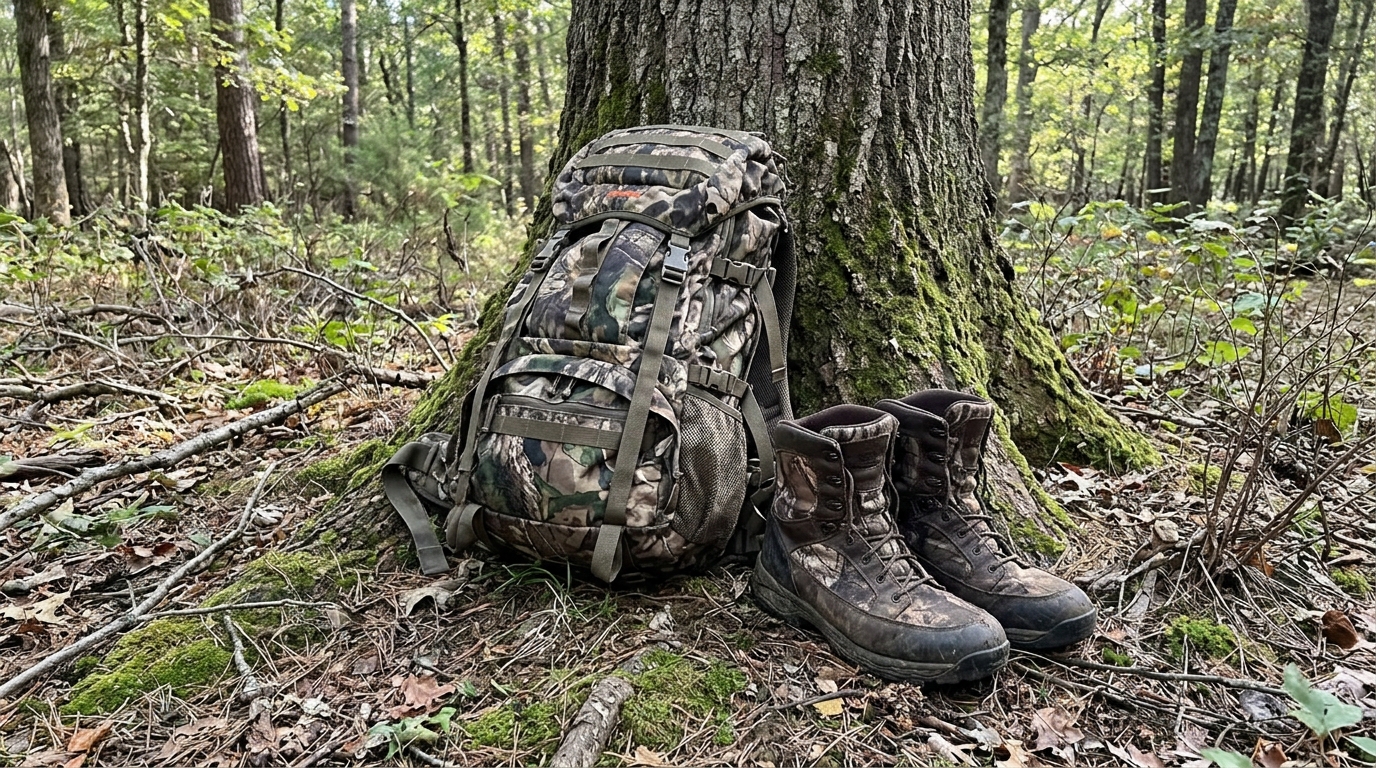
Your boots matter more than anything else. A good hunting boot has a sole stiff enough to protect you from rocks, but it still needs to flex at the ball of the foot, fit snugly around the heel, and give your toes room to wiggle. Break them in with a few short walks at home first, so they soften where your foot bends.
Fit is everything. Try boots on with the socks you’ll actually hunt in, and walk around the shop for at least ten minutes. Your heel should stay put when you step, and your toes shouldn’t touch the front when you walk downhill. Our guide to foot pain from hiking boots covers the same fit problems in hiking boots, and the fixes work just as well for hunting boots.
Socks are the other half of the fix. Wear a thin moisture-wicking liner sock under a thicker wool sock — the two layers slide against each other instead of your skin, which cuts friction. Carry a spare pair and change at midday; dry feet blister far less than wet ones.
What Helps: Recovery After a Day Out
When you get back to camp or home, give your feet the same attention you’d give your gear. Take your boots off, let them air out, and let your feet dry properly. Wash off sweat and mud, dry between the toes, and cover any hot spot with a blister plaster before it gets worse.
Roll the bottom of each foot over a tennis ball or a water bottle for a few minutes, then stretch your calves against a wall: one foot back, heel pressed down, hold for thirty seconds a side. If your feet are cold and stiff, soak them in warm — not hot — water for ten minutes to loosen them up.
Rest matters too. If your feet are sore after a long day, take a shorter walk the next day or plan a rest day. Pain that greets you again first thing in the morning, several days running, deserves a proper look from a doctor.
Your Daily Routine for Happier Feet in the Field
A routine that keeps your feet going all season:
- Start the day in broken-in boots: Lace them snug at the ankle, looser over the toes.
- Wear two sock layers: A wicking liner under a wool sock, with a dry spare in your pack.
- Move your feet while you stand still: Wiggle your toes and shift your weight every few minutes.
- Check your feet at midday: Change socks, dry hot spots, and tape any blister early.
- Roll and stretch every evening: A tennis-ball roll loosens tired arches, and calf stretches ease heel pain.
FAQs
Why do my feet hurt so much after hunting?
You’re walking miles over uneven ground in stiff boots, often carrying a heavy pack, then standing still in the cold. That tires the small muscles in your feet and overloads your arches and heels.
What boots are best for hunting?
Boots that fit well, flex at the ball of the foot, hold your heel snugly, and leave room for your toes. Break them in before the season.
How do I stop getting blisters when hunting?
Wear a moisture-wicking liner sock under a wool sock, make sure your boots are broken in, and tape any hot spot as soon as you feel it. Change into dry socks at midday.
Why do my feet go numb when I stand still hunting?
Standing still slows blood flow to your feet, and cold tightens everything up. Wiggle your toes, shift your weight, and stamp gently every few minutes. Insulated boots and wool socks help a lot.
When should I see a doctor about foot pain from hunting?
See a doctor if the pain is sharp or in one spot, lasts more than a few days of rest, or keeps coming back every trip. Numbness that doesn’t fade or a blister that won’t heal should also be checked promptly.
Sources
- American Podiatric Medical Association — choosing footwear for outdoor activity
- Cleveland Clinic — plantar fasciitis causes and treatment
- Mayo Clinic — blisters: causes, prevention, and care
This article is for general information only and is not medical advice. Talk to your doctor or a podiatrist about your own feet.