
A foot cramp is a muscle that contracts and will not let go. It can range from a tiny prick to a painful knot that makes walking impossible for a minute or two, and it can strike during exercise or at rest — including at night in bed. Most cramps are benign: an overworked, dehydrated or poorly shod foot protesting. Recurring cramps are the ones that need attention.
When to see a doctor
See a clinician if cramps recur daily or several times a week, if they do not ease with stretching and hydration, or if they come with swelling, redness, weakness, numbness, or skin changes. Anyone with diabetes, poor circulation or nerve symptoms should get frequent cramps checked rather than assuming they are just dehydration.
What causes foot cramps
- Overuse and fatigue: exercising too hard, standing all day, or overworked foot muscles.
- Dehydration and electrolytes: low potassium, magnesium, calcium or vitamin D, and fluid loss in heat or illness.
- Footwear: overly tight shoes, ill-fitting shoes, or shoes that strain foot muscles.
- Health conditions: diabetes, poor circulation, thyroid imbalance, hormonal changes (including pregnancy), obesity, and pinched nerves.
- Medicines: diuretics (“water pills”) and cholesterol-lowering medicines are known contributors.
- Age: people over 80 get foot and toe cramps most often.
Symptoms
- Sudden severe, sharp foot pain with a visibly tight or knotted muscle
- Involuntary contraction or twitching that you cannot relax on command
- Pain lasting seconds to minutes, sometimes with lingering tenderness
- Cramps during activity, at rest, or waking you at night
What actually helps — during a cramp
- Stretch it out: gently stretch the foot — pull toes toward your shin, or stand and walk on the foot. Stop the activity that triggered it.
- Massage: deep massage of the knotted muscle helps it release.
- Heat or ice: a warm towel or heat relaxes most cramps; ice helps if the area is sore afterwards.
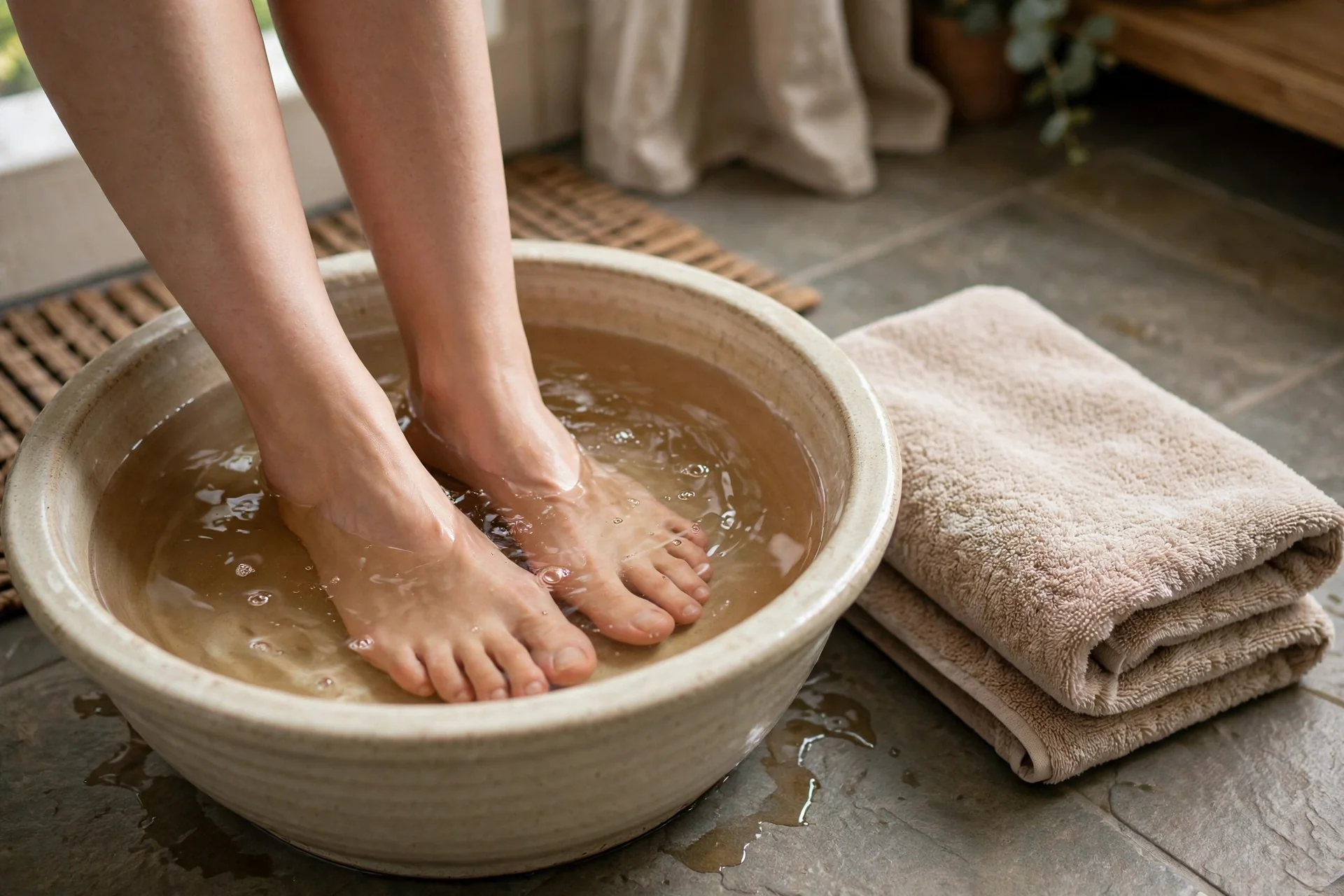
- Warm soak: soaking in warm water loosens the muscle groups.
- Do not push through: continuing to move hard during a cramp risks tearing the muscle.

Daily routine to prevent cramps
- Morning: stretch feet and calves before standing for long periods.
- Through the day: drink water steadily, eat potassium/magnesium-rich foods (bananas, leafy greens, nuts, dairy), wear comfortable shoes.
- Before and after activity: warm up and stretch; break in new shoes slowly.
- Evening: a gentle foot stretch before bed helps prevent night cramps.
Frequently asked questions
Are foot cramps dangerous?
Usually not — most are harmless and pass within minutes. Recurring cramps are the exception: they can signal an underlying problem worth checking.
What stops a foot cramp fast?
Stretching the muscle and standing/walking on the foot, plus massage. Heat helps most people; the cramp usually releases within a minute or two.
Do bananas really help foot cramps?
They help if low potassium is part of the cause — bananas, leafy greens, nuts and dairy cover potassium, magnesium and calcium together. They are not a cure for cramps caused by nerve or circulation problems.
Why do I get foot cramps at night?
Muscles tighten as you rest, and dehydration or electrolyte dips from the day show up then. A pre-bed stretch and steady daytime hydration reduce them.
Should I take magnesium supplements for cramps?
Only if your diet is low or a clinician finds a deficiency — supplements help some people and do nothing for others, and high doses cause stomach problems. Food first, tests if cramps recur.
Sources
- Relief for Painful Foot Cramps — Parkview Health
- 5 Ways to Prevent and Treat Foot Cramps — Ankle & Foot MD
- Foot Cramps: Symptoms, Causes, Treatment, Prevention — Footfiles
Footcarely is reader-supported. We don’t use affiliate links yet — when we do, this page will say so. This guide is general information, not medical advice. Frequent or unexplained cramps deserve a clinician’s look.
Related: Burning Feet at Night · Numb Feet & Toes · Foot Pain Map · Foot Problem Finder quiz