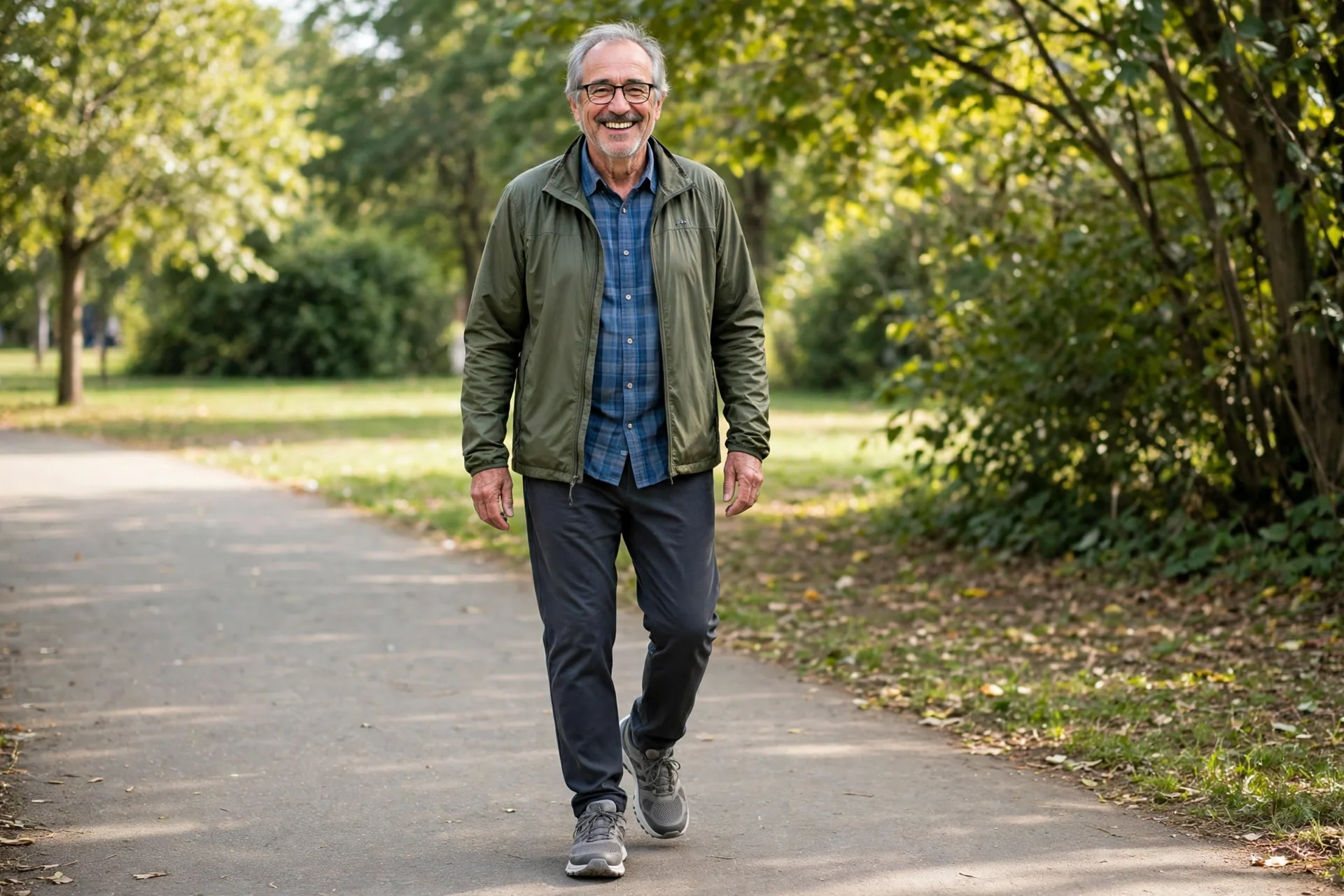
Quick Answer: Foot pain is not a normal part of aging. After 60, feet lose cushioning, skin thins, and circulation slows — so bunions, arthritis, numbness, and slow-healing sores become more common. A simple daily routine (inspect, wash, dry, moisturize, well-fitting shoes) plus closed-back, non-slip shoes prevents most problems and lowers fall risk.
When to see a doctor promptly: If you have diabetes or poor circulation, any cut, blister, redness, or sore on your foot deserves same-week care — even if it does not hurt. Numbness can hide injuries. Also seek care for a sore that does not heal, one-sided swelling, black or blue toes, or a sudden change in foot shape.
Why feet change as you age
Three slow changes drive most senior foot problems. First, the fat pads under the heels and balls of the feet thin out, so every step lands harder. Second, skin becomes drier and thinner, which means cracks and blisters form more easily and heal more slowly. Third, circulation and nerve sensation decline — especially with diabetes — so small injuries can go unnoticed until they become serious. Arthritis adds stiffness and changes foot shape over time, which is why shoes that fit at 50 may pinch at 70.
None of this means pain is something to accept. Most age-related foot problems are manageable, and many are preventable with routine care and the right shoes.
Common foot problems in older adults
- Bunions and hammertoes: Years of narrow shoes and changing joints push toes out of line. They cause pain, rubbing, and balance problems.
- Arthritis: Stiffness and aching in the toe and ankle joints, worse in the morning or after sitting.
- Corns and calluses: Thick skin from pressure points — a sign shoes are not fitting right, not just a cosmetic issue.
- Thick, brittle, or ingrown toenails: Harder to trim safely, especially with limited flexibility or poor eyesight.
- Dry, cracked skin: Cracks on the heels can deepen and become entry points for infection.
- Neuropathy (nerve damage): Tingling, numbness, or a “pins and needles” feeling, most often linked to diabetes. Numb feet cannot warn you about injuries.
- Poor circulation: Cold feet, slow-healing cuts, and swelling. This raises the risk of ulcers and infection.
- Fallen arches and heel pain: Arches flatten with age, changing how weight spreads across the foot.
Related guides on this site: bunions, plantar fasciitis and heel pain, toenail fungus, swollen feet, and foot cramps.
The daily foot routine for seniors (5–10 minutes)
This routine is the single highest-value habit in senior foot care. It catches problems while they are still small.
- Inspect every day. Check the tops, soles, and between all toes for cuts, blisters, redness, swelling, or color changes. Use a long-handled mirror or ask a family member to check the soles if you cannot see them.
- Wash with warm, not hot, water. Use mild soap daily. If you have numbness, test water temperature with your elbow — burns are a common injury when sensation is reduced. Do not soak feet for long periods; soaking dries skin out.
- Dry thoroughly, especially between toes. Trapped moisture there invites fungal infection.
- Moisturize feet — but not between the toes. A plain, fragrance-free cream on the tops, soles, and heels prevents cracks. Keep between the toes dry.
- Trim nails straight across. File sharp edges. If nails are thick, hard to reach, or you have diabetes or poor circulation, have a podiatrist trim them instead of risking a cut.
- Never walk barefoot. Not even indoors. Bare feet and socks are linked to a much higher fall risk, and a small object on the floor can injure a numb foot without you noticing.
- Wear clean, moisture-wicking socks. Seamless, soft socks reduce friction and blisters.
Shoes that protect balance
Footwear is fall prevention. The CDC’s fall-prevention program (STEADI) describes the safest shoe for older adults: a closed-back shoe that fastens with laces or a hook-and-loop strap, a firm heel counter, a low and wide heel, and a firm, non-slip sole that is not too thick.
- Best everyday choice: A supportive walking shoe with a wide base and textured tread. Podiatrists frequently recommend models like the New Balance 928v3 or Brooks Addiction Walker for stability.
- If laces are hard: Choose the hook-and-loop version of the same shoe — the fastening matters more than the brand.
- House shoes matter most: Most falls happen at home. Replace backless slippers with a closed-heel house shoe that has a grippy rubber sole.
- Avoid: Backless mules and clogs, heels over one inch, smooth soles, and worn-out shoes. Going barefoot or in socks is the biggest risk of all.
No shoe prevents falls on its own — strength, balance exercise, eyesight, medications, and trip hazards at home matter too. But the right shoe removes one of the easiest risks to fix.
Simple balance and circulation exercises
Do these holding a sturdy chair or countertop for support.
- Ankle circles: 10 slow circles each direction, each foot. Keeps ankles mobile and blood moving.
- Toe wiggling and spreading: A few minutes a day maintains flexibility and sensation awareness.
- One-leg balance: Hold for 10 seconds per side, building up over weeks. Stop if you feel unsteady.
- Gentle walking: Short, regular walks beat rare long ones for circulation and strength.
When to see a podiatrist
Book a routine visit at least once a year, more often if you have diabetes, neuropathy, or circulation problems. Go sooner for: a sore that does not heal within a few days, spreading redness or warmth, new numbness, a foot that changes shape, or pain that changes how you walk. Medicare may cover medically necessary nail and foot care when qualifying conditions place feet at risk — ask your doctor whether you qualify.
Foot pain changes how you walk, and changed walking raises fall risk. Treating feet early protects independence, not just comfort.
Frequently asked questions
Is foot pain normal when you get older?
No. Pain is common, but it is not normal aging — it usually has a treatable cause such as arthritis, poor footwear, or circulation problems. Persistent pain deserves a podiatry check.
How often should seniors have their feet checked?
At least once a year. With diabetes, neuropathy, or poor circulation, every 3–6 months is typical, and every 1–2 months after an ulcer or amputation history.
What is the safest shoe for an older adult?
A closed-back shoe with a fastening (laces or hook-and-loop), firm heel counter, low wide heel, and non-slip sole. Avoid backless slippers, high heels, and smooth soles.
Should seniors with diabetes soak their feet?
No — prolonged soaking dries and softens skin, creating cracks germs can enter. Wash daily with warm water instead, and dry carefully between the toes.
Can better shoes really reduce falls?
They remove a major risk factor: studies link barefoot walking, socks, and backless slippers to higher fall risk, while firm, fastened, non-slip shoes support balance. Combined with strength and balance exercise, the effect is meaningful.
Sources
- Gotham Footcare — Foot Health in Seniors: Why Aging Feet Need Special Attention
- Michigan Foot Doctors — Diabetic Foot Care 101
- Michigan Foot Doctors — Best Shoes for Elderly with Balance Problems (CDC STEADI criteria)
Reviewed for general accuracy against the sources above. This article is for information only and is not medical advice. See our Medical Disclaimer.