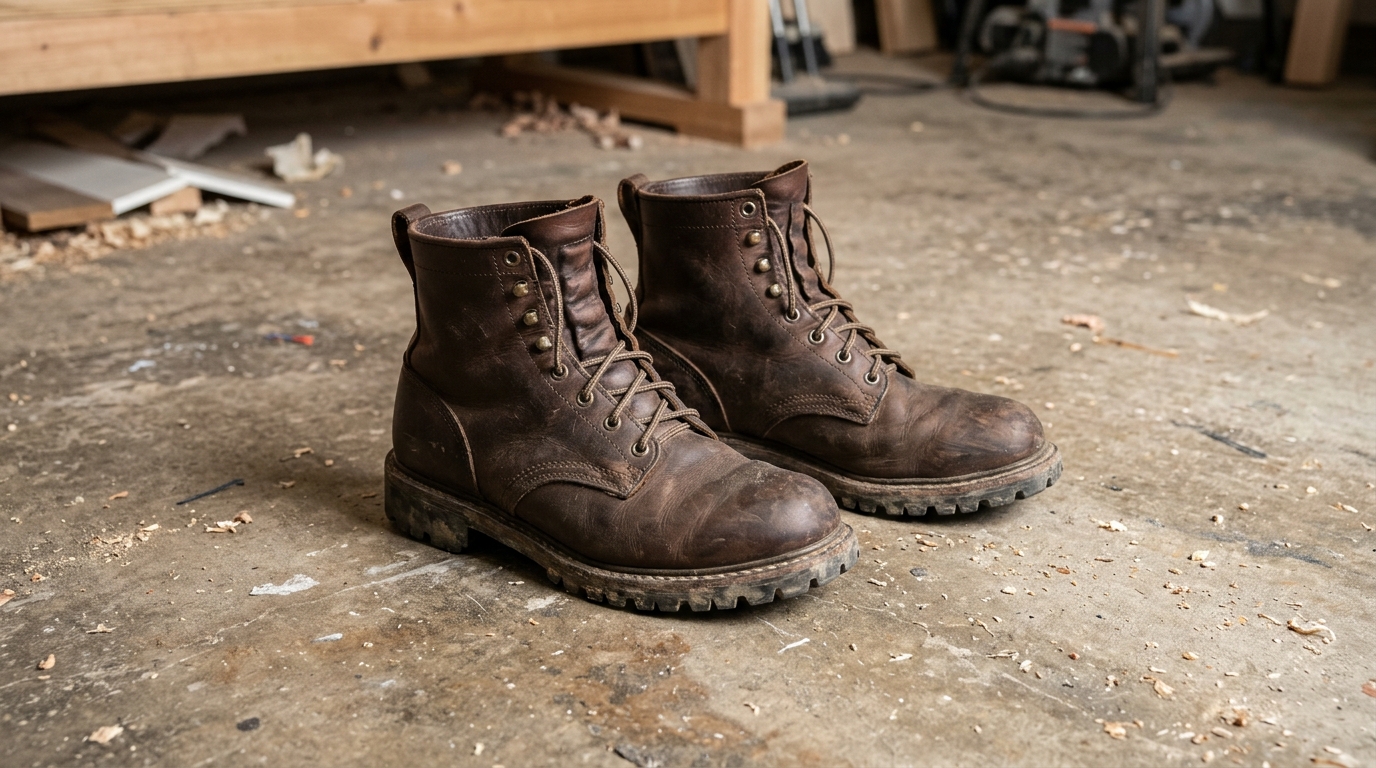
Foot pain from work boots is one of the most common complaints on job sites, and it usually comes down to fit, weight, or support rather than the work itself. Boots that are too narrow squeeze the forefoot, heavy steel-toe boots tire the feet and calves, and flat factory insoles offer almost no arch support, so arches ache, heels throb, and toes go numb by the end of a shift. Breaking boots in helps, but pain that persists after a few weeks is not normal and usually means the boot, the insole, or the size is wrong. The fixes are practical: get measured properly, choose the right width, swap in supportive insoles, and lace for your foot shape. Pain that is sharp, one-sided, or accompanied by swelling or numbness that does not fade deserves a proper check.
See a doctor promptly if you notice any of these:
- Sharp or sudden foot pain at work or after a shift
- Numbness or tingling that does not fade overnight
- Swelling, redness, or a wound that will not heal
- Pain that persists on rest days, not just at work
- Weakness in the foot or ankle, or a change in foot shape
Why work boots hurt your feet
Work boots are built for protection first and comfort second, and that trade-off shows up in your feet. A steel or composite toe cap adds weight to the front of the boot, which changes how you walk and tires the muscles that lift the foot. Thick, stiff soles protect against punctures but reduce flexibility, so the foot cannot roll naturally through each step. Over a ten or twelve hour shift, those small inefficiencies add up to real fatigue and pain.
Fit is the biggest culprit. Many people buy boots in their usual shoe size, but work boots fit differently across brands, and feet swell during a long day on concrete. A boot that feels fine in the shop can become a vice by afternoon. Too-narrow boots squeeze the forefoot and can cause bunions, corns, and numb toes; too-long boots let the foot slide forward, jamming the toes into the toe cap on every step. Lacing matters too: boots laced too tightly across the top cut off circulation, while boots left loose let the heel slip and cause blisters.
The insole is the hidden problem. Most work boots ship with a thin, flat foam insole that offers almost no arch support and flattens within weeks. If you have flat feet or high arches, that lack of support means the arch collapses or the pressure concentrates on the heel and ball, leading to arch pain, heel pain, and eventually plantar fasciitis. The American Podiatric Medical Association notes that proper arch support and cushioning are essential for people who stand or walk on hard surfaces all day.
Surface and duration make it worse. Concrete does not give, so every step sends shock straight up through the foot. Standing in one spot is often harder than walking, because the same pressure points bear weight continuously without relief.
What helps foot pain from work boots
Start with fit. Get both feet measured, standing, at the end of the day when they are largest, and try boots on with the socks you actually wear at work. Look for the right width, not just the right length: your toes should be able to spread, and the widest part of your foot should match the widest part of the boot. Break boots in gradually with shorter wears before a full shift, and use the lacing pattern that suits your foot — skipping eyelets over a high instep or using a heel-lock loop to stop heel slip.
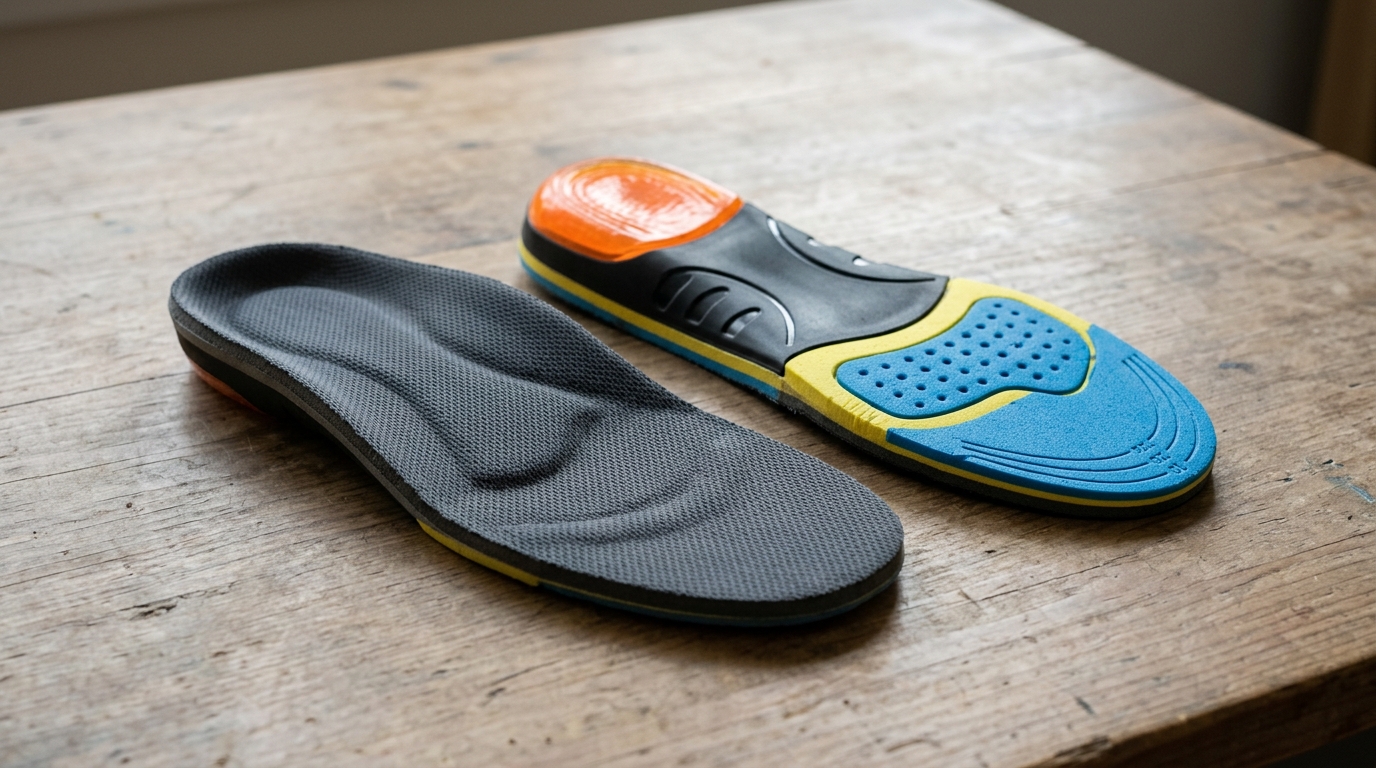
Replace the factory insole. This is the single highest-value upgrade for most workers. A supportive insole with proper arch support and cushioning redistributes pressure and reduces fatigue, and for persistent pain, custom orthotics made from a mould of your foot are worth the investment. Replace insoles every six to twelve months, since they compress with use. For standing on hard surfaces, see foot pain from standing on concrete.
Choose the right boot for the job. Composite toes are lighter than steel and reduce fatigue, and a lighter boot overall means less strain. Waterproof membranes are worth it if you work wet, since damp feet blister and chill faster. If your employer allows a choice of approved boots, try several brands: fit varies enormously between them.
Look after your feet off the clock too. Stretch your calves and roll the soles over a ball after a shift, rotate between two pairs of boots if you can so each pair dries fully, and keep socks clean and cushioned. If pain persists despite better boots and insoles, see a podiatrist: conditions like plantar fasciitis, metatarsalgia, and tarsal tunnel syndrome are common in manual workers and respond well to treatment. For stretching guidance, see plantar fasciitis stretches.
A daily routine for work-boot feet
Before your shift, put on clean cushioned socks, lace your boots snugly but not tightly, and check that your insoles are in good shape.
During the shift, sit and elevate your feet on breaks when you can, and if your feet swell, loosen the laces slightly rather than enduring the squeeze.
After your shift, stretch your calves, roll your soles over a ball, air out your boots, and check for blisters or red spots. If pain is not easing after a few weeks of better fit and insoles, book an appointment.
Frequently asked questions
How long should it take to break in work boots?
Most boots should feel comfortable within one to two weeks of gradual wear. Pain that persists beyond that usually means a fit or support problem, not a break-in issue.
Are steel-toe boots worse for your feet than composite-toe boots?
Steel toes are heavier, which can increase fatigue over a long shift. Composite toes are lighter and often more comfortable, though both protect equally well when rated for the job.
Do aftermarket insoles really help work boot pain?
Yes. Factory insoles are usually thin and flat, while supportive insoles cushion impact and support the arch, which reduces arch pain, heel pain, and fatigue.
Should work boots be tight or loose?
Neither. They should be snug enough to hold the heel in place, with room for the toes to spread and for feet to swell during the day. Heel slip and toe squeezing both cause problems.
When should I see a doctor about work boot pain?
See a doctor if pain is sharp, one-sided, or persists on rest days, if numbness does not fade overnight, or if better boots and insoles do not help within a few weeks.
Sources
- American Podiatric Medical Association — Foot Health and Work Footwear
- Mayo Clinic — Plantar Fasciitis: Symptoms and Causes
- Cleveland Clinic — Metatarsalgia
This article is for information only and is not medical advice. If your foot pain is severe, sudden, or not improving, talk to a healthcare professional for a proper diagnosis.