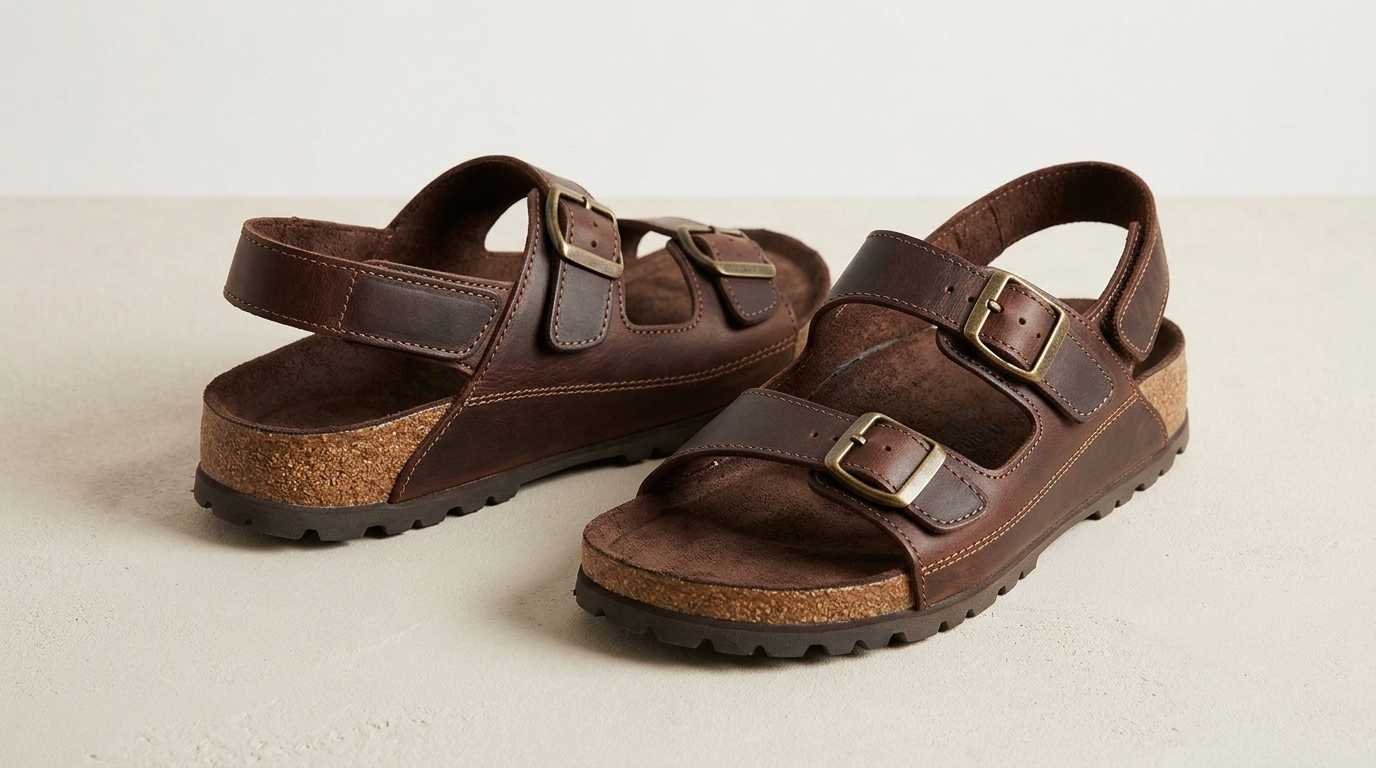
Foot pain from sandals usually comes down to three things: flat soles with no arch support, a loose fit that makes your toes grip to keep the sandal on, and thin cushioning that leaves your heels and forefoot absorbing every step. Flip-flops are the worst offenders, but even stylish flat sandals can cause aching arches, heel pain, and sore toes after a long day. The good news is that not all sandals are bad for your feet. Sandals with contoured footbeds, arch support, cushioned soles, and straps that actually hold the foot in place can be comfortable all day. Learning what to look for — and what to avoid — makes the difference between sandals that hurt and sandals you can walk in happily.
See a doctor promptly if you notice any of these:
- Sharp or sudden foot pain after wearing sandals
- Heel pain that is worst first thing in the morning
- Pain that persists for weeks after you stop wearing the sandals
- Numbness, tingling, or weakness in the foot
- A wound or blister between the toes that will not heal
Why sandals hurt your feet
The classic flat sandal or flip-flop offers the foot almost nothing. There is no arch support, so the arch collapses with every step, stretching the plantar fascia and tiring the small muscles of the foot. There is little or no cushioning, so the heel strikes the ground with full force. And because the sandal is held on only by a strap or a toe post, the toes have to curl and grip to keep it from flying off — a constant, low-level effort that strains the toes and the forefoot.
That combination explains the most common complaints. Arch pain and heel pain, including plantar fasciitis, are linked to flat, unsupportive sandals, especially when people switch to them suddenly in summer after months in supportive shoes. The American Podiatric Medical Association warns that flip-flops in particular offer no arch support or heel cushioning and can contribute to foot pain and injuries. Toe pain comes from gripping, and blisters form where straps rub or where the toe post sits between the toes.
Loose sandals change how you walk. To keep a flip-flop on, people tend to take shorter steps and grip with their toes, which alters gait and loads the forefoot and ankles unevenly. On uneven ground, a loose sandal also offers no ankle stability, raising the risk of twists and sprains. Wet sandals are worse again: they slip, they chafe, and they invite fungal infections between the toes.
It is not only cheap sandals that cause trouble. Expensive flat leather sandals with a hard sole and no contouring can be just as hard on the feet, and so-called minimalist sandals, worn for long walks without a gradual build-up, can overload feet that are used to support.
How to choose sandals that don’t hurt
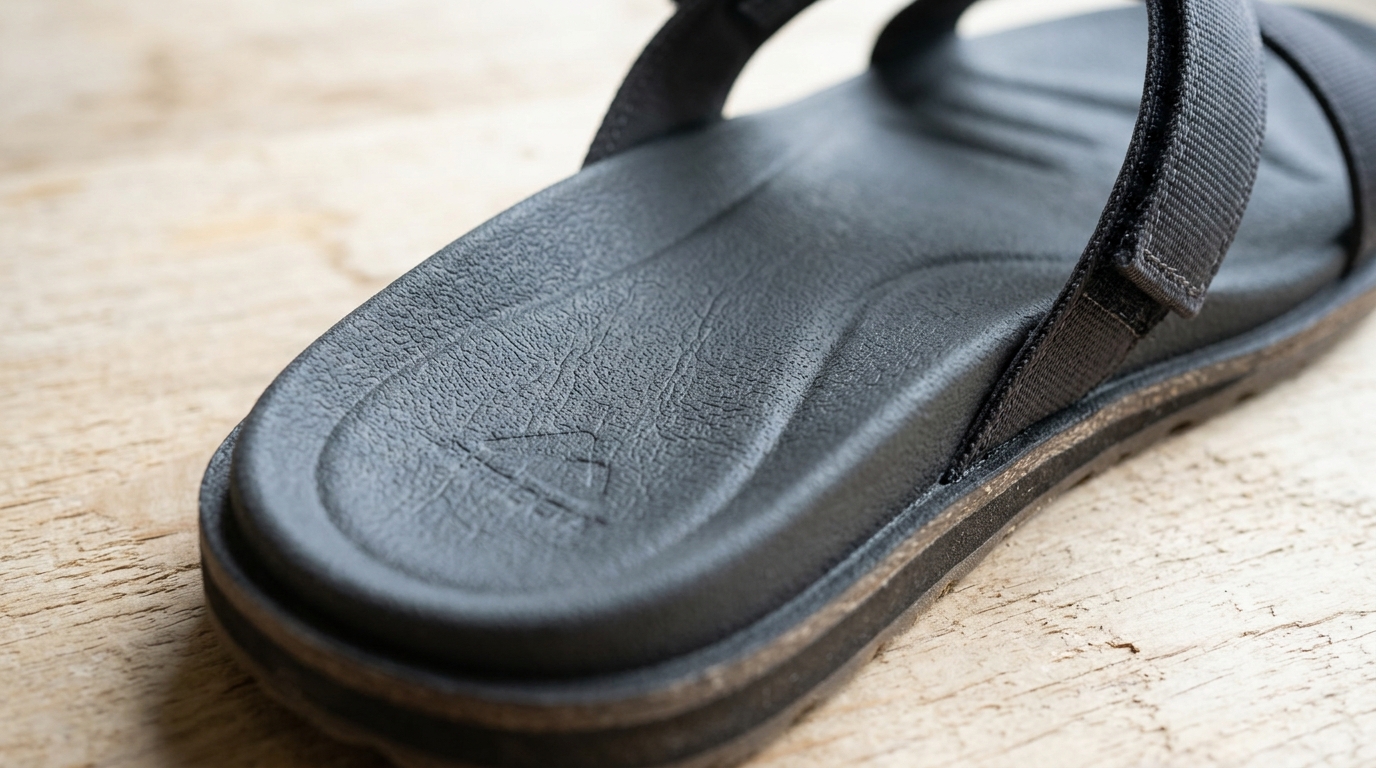
Look for a contoured footbed. A good sandal has a shaped footbed that cups the heel, supports the arch, and lets the toes lie flat. You should be able to see and feel the arch contour, not just a flat slab of foam. Brands that specialise in comfort sandals build this in, and it makes the biggest single difference to comfort over a long day.
Check the straps and the fit. Straps should hold the foot securely without digging in: an ankle strap or a back strap stops the toes from having to grip, and adjustable straps let you fit the sandal to your foot rather than the other way around. The foot should not hang over the edge of the sole, and the heel should sit inside the heel cup rather than spilling over the back.
Pick cushioning and a sensible sole. A cushioned midsole absorbs shock, and a slightly thicker sole with a low heel or rocker shape is kinder than a paper-thin flat sole. Avoid completely flat soles if you have arch or heel pain, and avoid very high platform sandals, which are unstable. Test sandals by walking in them around the shop, not just standing still. For stretching guidance, see plantar fasciitis stretches.
Ease in gradually. If you are switching from supportive shoes to sandals for the summer, build up wear time over a week or two rather than doing a full day of walking on day one. Stretch your calves and roll your soles over a ball, and if arch or heel pain persists despite better sandals, see a podiatrist to check for plantar fasciitis or other conditions. See the foot pain map to locate where your pain is.
A daily routine for sandal feet
Before you head out, choose sandals with a contoured footbed and secure straps, adjust the straps so the foot is held without pinching, and apply sunscreen to the tops of your feet.
During the day, take breaks from walking on hard surfaces, and if your feet start to ache, switch to supportive shoes rather than pushing through.
Afterwards, stretch your calves, roll your soles over a ball, and check for blisters or red spots between the toes. If pain lingers, try a more supportive sandal or see a podiatrist.
Frequently asked questions
Are flip-flops bad for your feet?
For long walks, yes. Flip-flops offer no arch support, no heel cushioning, and force your toes to grip, which strains the forefoot and can contribute to heel and arch pain.
What makes a sandal supportive?
A contoured footbed with arch support, a cushioned sole, a heel cup, and straps that hold the foot securely so the toes do not have to grip.
Can sandals cause plantar fasciitis?
Flat, unsupportive sandals can contribute to it, especially with a sudden switch to sandals in summer. Supportive sandals and gradual wear reduce the risk.
Are expensive sandals better for your feet?
Price alone is not the test. What matters is the contoured footbed, arch support, cushioning, and secure fit — some affordable sandals have these, and some expensive ones do not.
When should I see a doctor about sandal-related foot pain?
See a doctor if pain is sharp, if heel pain is worst in the morning, if pain persists for weeks after you stop wearing the sandals, or if you have numbness or a non-healing blister.
Sources
- American Podiatric Medical Association — Flip-Flops and Foot Health
- Mayo Clinic — Plantar Fasciitis: Symptoms and Causes
- Cleveland Clinic — Flat Feet
This article is for information only and is not medical advice. If your foot pain is severe, sudden, or not improving, talk to a healthcare professional for a proper diagnosis.