Flat feet in children are almost always normal. Most young kids have flat-looking feet because their arches are still developing and a fat pad fills the arch area — and in most cases, flat feet in children cause no pain at all and need no treatment. Arches usually develop by around age six to ten, and many kids keep flexible flat feet into adulthood without any trouble. You should pay attention if your child complains of foot, ankle, or leg pain, tires quickly when walking, or has stiff, rigid flat feet that do not form an arch when they stand on tiptoe. For most families, the right move is supportive shoes, active play, and a check with a podiatrist only if pain or stiffness shows up.
See a doctor promptly if you notice any of these:
- Foot, ankle, or leg pain that keeps coming back or limits play
- Flat feet that are stiff and rigid, with no arch even on tiptoe
- One foot flat and the other not, or a sudden change in foot shape
- Limping, frequent tripping, or refusing to walk or run
- Swelling, redness, or pain along the inside of the ankle
Why so many children have flat feet
If you look at your toddler’s feet, you will probably see no arch at all — just a flat sole from heel to toe. That is completely normal. Babies and young children are born with a fat pad in the arch area, and their bones, ligaments, and muscles are still soft and developing. The arch typically begins to form as children grow, strengthen their feet through walking and play, and lose some of that baby fat pad. Most kids develop visible arches between the ages of six and ten, though the exact timing varies a lot from child to child.
There are two main types of flat feet in children. Flexible flat feet are by far the most common: the arch is visible when your child sits or stands on tiptoe, but flattens out when they put weight on the foot. These are usually painless and often run in families. Rigid flat feet are much less common: the arch never appears, even when the foot is not bearing weight, and the foot may feel stiff. Rigid flat feet can be linked to a structural problem in the bones of the foot and are more likely to cause pain.
Flat feet in children rarely mean anything is wrong. The key question is not whether the arch is visible, but whether the foot hurts or limits what your child can do. A painless flat foot that lets your child run, jump, and play is generally a healthy foot.
What helps — and what usually does not
Let your child go barefoot sometimes. Walking barefoot on safe surfaces like grass, sand, or carpet lets the small muscles of the foot work and strengthens the arch naturally. The American Academy of Pediatrics notes that barefoot play helps children’s feet develop strength and coordination. You do not need special shoes for this — just a safe surface and a watchful eye.
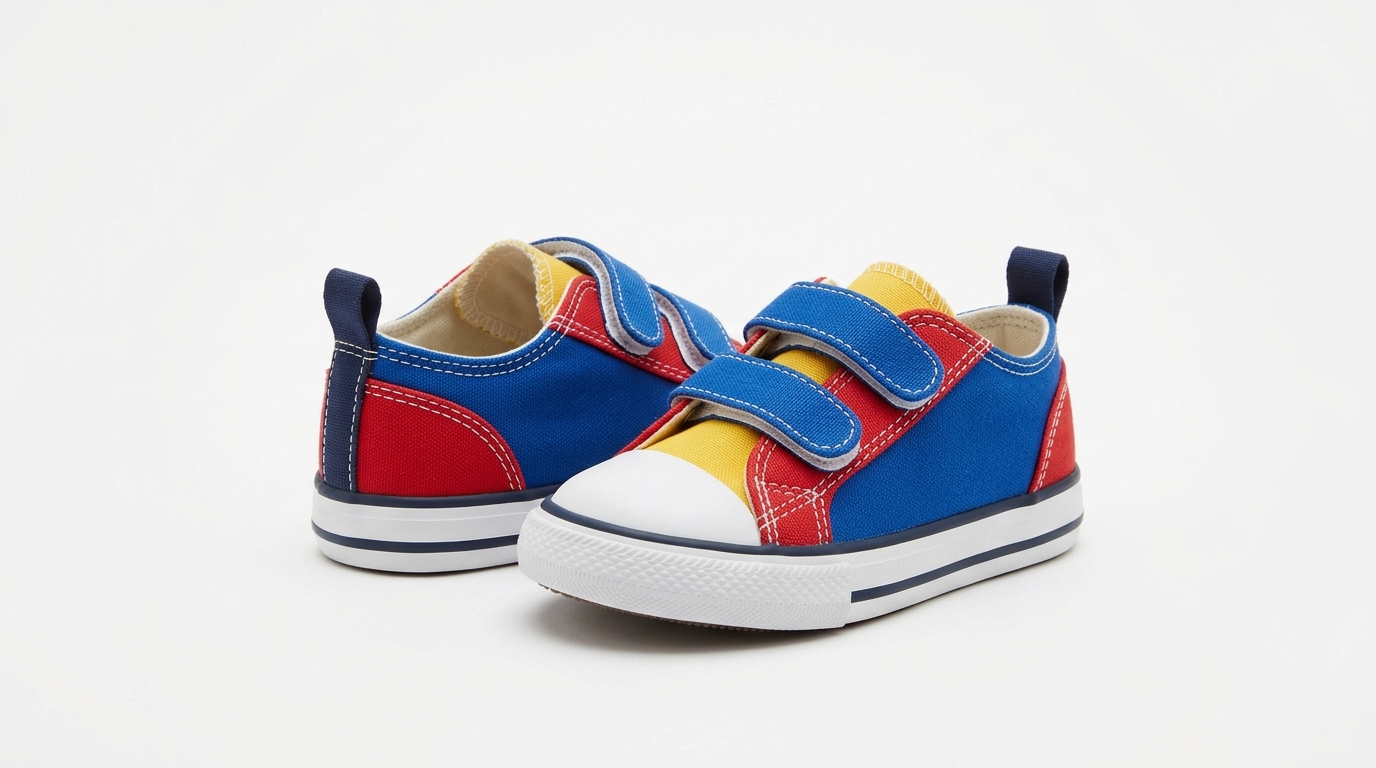
Choose shoes that fit well. For everyday wear, look for shoes with a firm heel counter, a flexible sole that bends at the ball of the foot, and enough room for toes to wiggle. Expensive arch-support shoes or rigid orthotics are usually not needed for painless flexible flat feet — and studies have found that corrective shoes do not speed up arch development in children without symptoms. What matters most is a good fit and a shoe that supports normal activity.
Encourage active play. Running, climbing, hopping, and balancing all build foot strength. Simple games like picking up small objects with the toes can help too, but regular play is usually enough.
Watch how your child walks and plays. If they tire quickly, complain of aching feet after a short walk, or avoid running games they used to enjoy, that is worth a conversation with your pediatrician. Pain — not the shape of the foot — is the real signal that something needs attention. A podiatrist can check whether the flat feet are flexible or rigid and whether insoles or exercises would help.
When to get flat feet checked
Most children with flat feet never need treatment. But book an appointment if your child has pain in the feet, ankles, knees, or legs, if one foot looks different from the other, or if the feet are stiff and rigid. Also get checked if your child suddenly starts limping, tripping often, or refusing activities they used to enjoy. These signs can point to rigid flat feet, a tarsal coalition — where two foot bones are joined — or another condition that benefits from early attention.
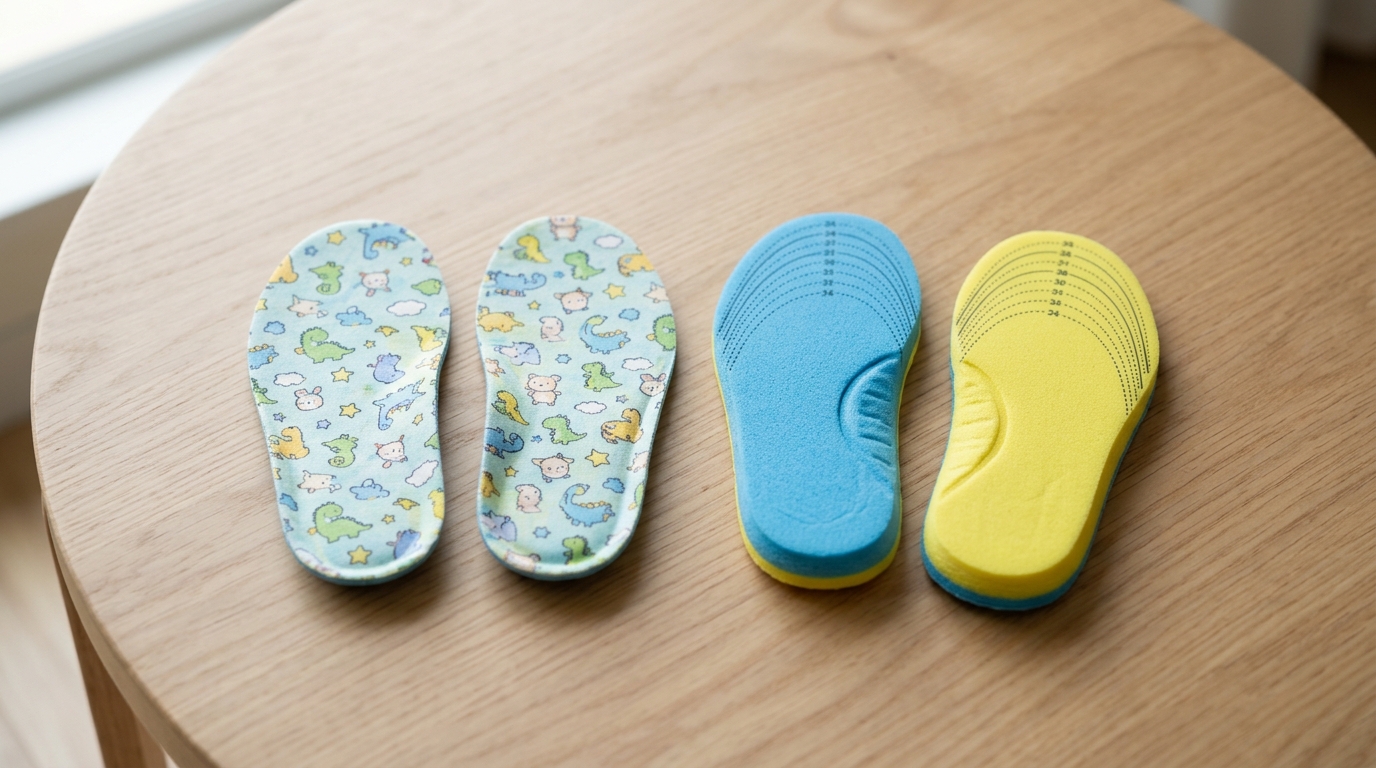
At the appointment, the doctor will watch your child walk, check whether the arch appears on tiptoe, and may order an X-ray if the feet are rigid or painful. For flexible flat feet with pain, the usual first step is a supportive insole, not surgery. Surgery is reserved for rare cases where rigid flat feet cause persistent pain despite other treatment.
The bottom line is reassuring: flat feet in children are common, usually painless, and often resolve on their own. Keep your child active, buy shoes that fit, and watch for pain rather than the shape of the arch.
Frequently asked questions
Will my child’s flat feet go away on their own?
Often, yes. Arches usually develop between ages six and ten as the fat pad shrinks and foot muscles strengthen. Some children keep flexible flat feet into adulthood with no problems at all.
Do flat feet in children need special shoes or orthotics?
Usually not. Painless flexible flat feet do not need corrective shoes or orthotics. Well-fitting, supportive everyday shoes are enough, and studies show corrective shoes do not speed arch development.
Can flat feet cause pain in children?
Flexible flat feet are usually painless. Pain in the feet, ankles, or legs — especially after walking or playing — is worth a medical check, as it may signal rigid flat feet or another issue.
Is it good for children with flat feet to go barefoot?
Yes, on safe surfaces. Barefoot play strengthens the small muscles of the foot and helps coordination. It is a simple, natural way to support healthy foot development.
When should I take my child to a podiatrist?
Take them if they have recurring foot or leg pain, rigid flat feet with no arch on tiptoe, one foot that looks different from the other, or if they limp, trip often, or avoid walking and playing.
Sources
- American Academy of Pediatrics — Flat Feet in Children
- Mayo Clinic — Flatfeet in Children: Symptoms and Causes
- Cleveland Clinic — Flat Feet in Children
This article is for information only and is not medical advice. If your foot pain is severe, sudden, or not improving, talk to a healthcare professional for a proper diagnosis.