Flat feet knee pain is real, and it is more common than most people realise. When your arches collapse, your feet roll inward, your knees turn in with them, and the joint ends up tracking off-centre with every step you take. Flat feet knee pain usually shows up as an ache around or behind the kneecap, especially after walking, standing, or climbing stairs. The good news is that it often improves a lot with the right shoes, arch support, and a few simple exercises. If knee pain is severe, sudden, or comes with swelling, locking, or a feeling that the knee gives way, see a doctor promptly.
See a doctor promptly if you notice any of these:
- Knee pain that is severe, sudden, or follows a fall or twist
- Swelling, redness, or warmth around the knee that does not settle
- The knee locks, catches, or gives way when you walk
- Pain that stops you sleeping or does not improve after a few weeks
- Knee pain with fever, or pain after a recent injury or surgery
What flat feet do to your knees
Think of your foot as the foundation of a building. When the arch works properly, it absorbs shock and keeps your leg lined up. When it collapses, the whole structure tilts. Your foot rolls inward — podiatrists call this overpronation — and your shin bone rotates inward with it. Your knee has no choice but to follow, turning in and tracking slightly off-centre every time you bend it.
That misalignment is small, but it repeats thousands of times a day. Each step loads the inside of the knee a little more than the outside, and the kneecap gets pulled slightly out of its groove. Over weeks and months, that uneven loading irritates the cartilage behind the kneecap and the soft tissues around the joint. This is why flat feet knee pain often builds up slowly — you might notice it first after a long day on your feet.
Why the pain feels the way it does
Flat feet knee pain usually feels like a dull ache around the front of the knee, often just behind or beside the kneecap. It tends to be worse after activity — a long walk, a day of shopping, a hike — and eases with rest. Stairs are a classic trigger, especially coming down, because the knee bends under load and the kneecap presses harder against the joint. Some people feel a clicking or grinding sensation, which is the kneecap moving in its groove.
The pain can also show up in unexpected places. Because the knee is compensating, the muscles around it work harder, so the inner thigh can ache too — and when the knee turns in, the hip rotates to compensate, so the lower back may join in.
What helps flat feet knee pain
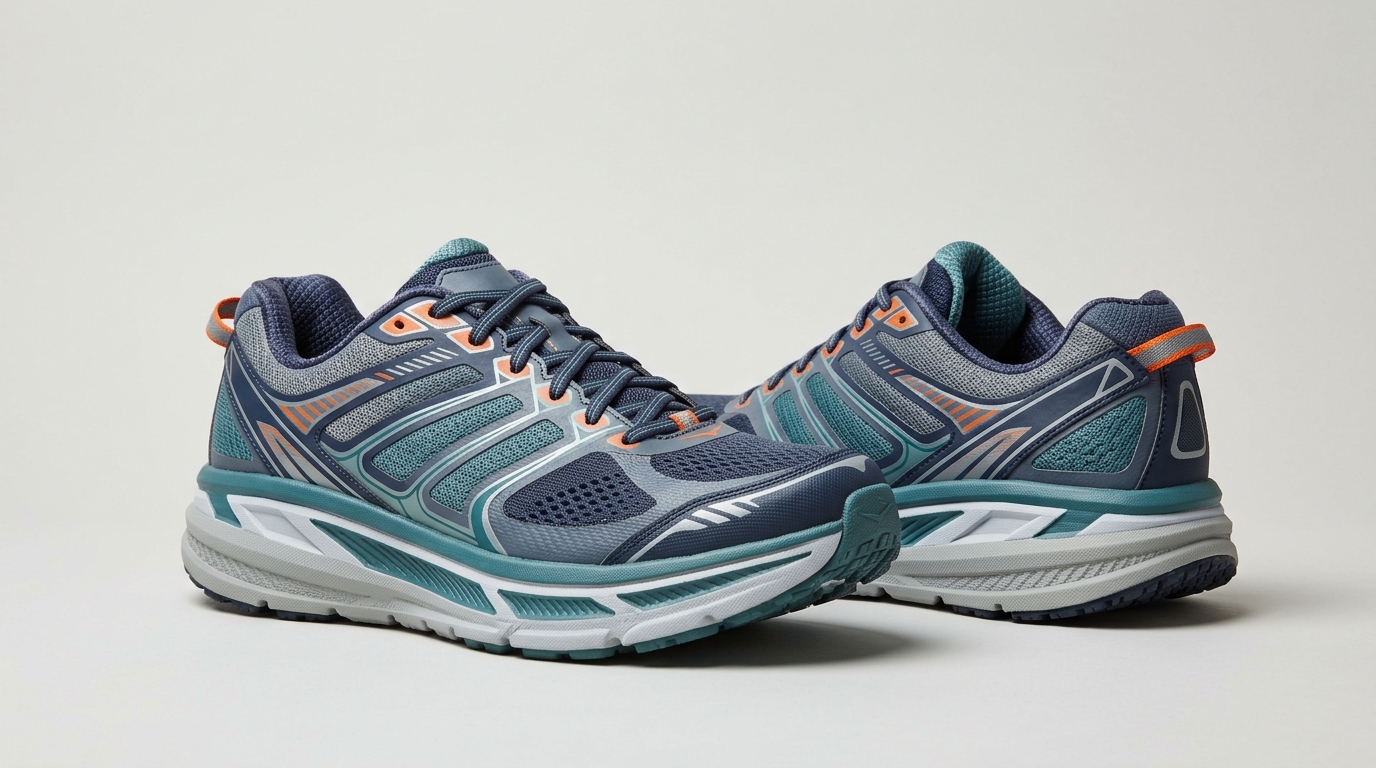
Start with your shoes, because they are the easiest fix and often the biggest one. Look for shoes with a firm heel counter and a midsole that does not twist easily when you wring it. Built-in arch support keeps the foot from rolling in so far, which straightens the knee above it. Avoid completely flat, floppy shoes and worn-out trainers whose heels have collapsed to one side. If your shoes lean when you set them on a flat surface, they are working against your knees.
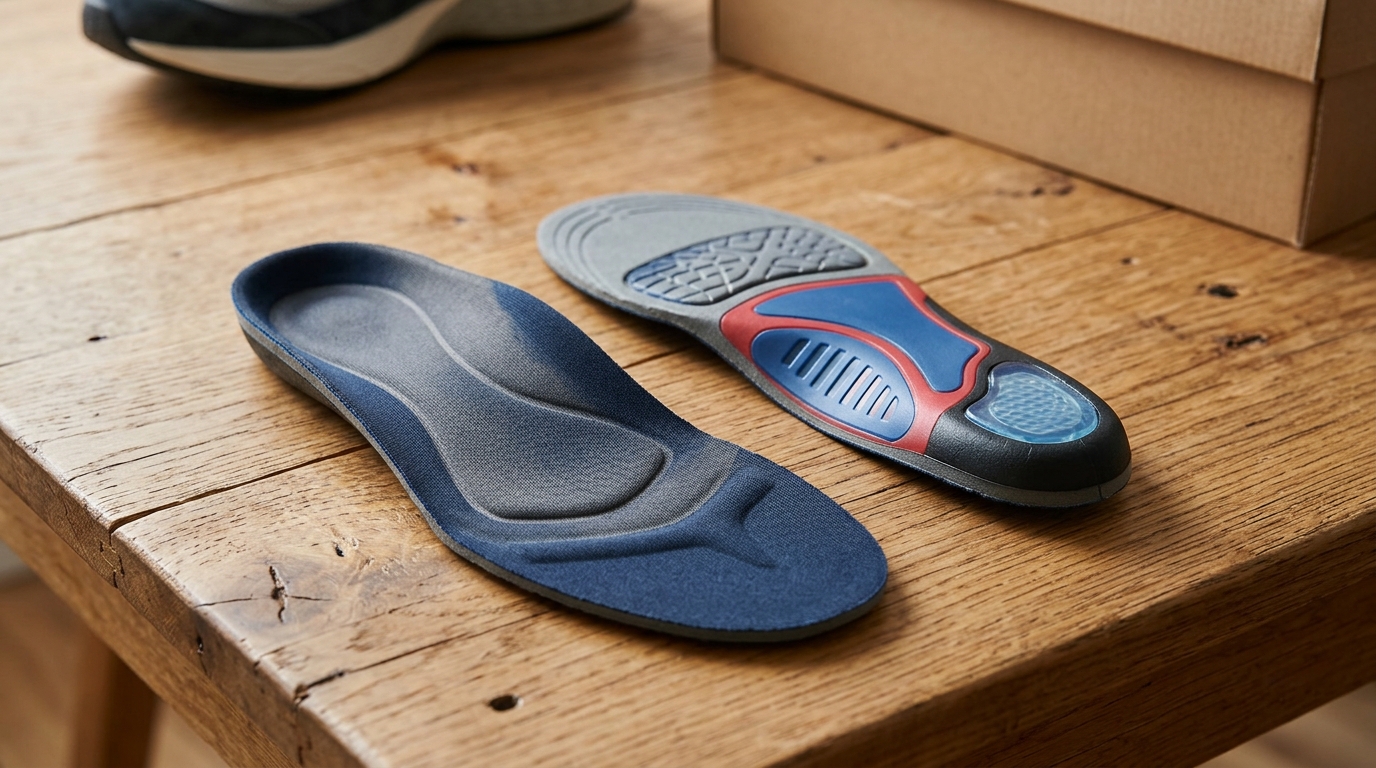
Insoles are the next step, and they help a lot of people. Over-the-counter arch supports are a good place to start: they lift the arch, reduce the inward roll, and take pressure off the inside of the knee. Give them a couple of weeks — your feet need time to adjust, and a little soreness at first is normal. If shop-bought insoles do not help, a podiatrist can make custom orthotics moulded to your feet, which suit people with very flat arches or one foot flatter than the other.
Strengthening matters just as much as support. The muscles around your hips — especially the glutes — control how your thigh and knee line up, so weak hips let the knee collapse inward even more. Clamshells, side-lying leg lifts, and glute bridges, done a few times a week, build the control that keeps the knee tracking straight. Calf stretches help too, because tight calves force the foot to roll in further.
A daily routine that protects your knees
Keep it simple and repeat it. In the morning, put on supportive shoes or your insoles before you start walking around the house — barefoot on hard floors is when flat feet collapse the most, so even a supportive slipper helps. Before a long day on your feet, do five minutes of calf stretches and a few glute bridges.
In the evening, give your knees a break. Ice the sore knee for ten to fifteen minutes if it aches after a busy day. Build up activity gradually rather than jumping from very little to a lot in one week — sudden increases are a common trigger for a flare-up. And check your shoes every few months: if the heel counter has gone soft or the tread is worn, replace them. Your knees will notice the difference long before you do.
Frequently asked questions
Can flat feet cause knee pain?
Yes. Collapsed arches let the foot roll inward, which turns the knee in and loads the joint unevenly. The ache usually sits around the kneecap and gets worse after walking or standing.
Will insoles help flat feet knee pain?
They often do. Arch-support insoles reduce the inward roll of the foot, which straightens the knee above it and takes pressure off the joint. Give them a couple of weeks before deciding — your legs need time to adjust to the new alignment.
What shoes are best for flat feet and knee pain?
Look for a firm heel counter, good arch support, and a midsole that resists twisting. Avoid completely flat, floppy shoes and worn-out trainers. If you are unsure, a shoe shop that does gait analysis can help you find the right fit.
Can exercises fix knee pain from flat feet?
Exercises help a great deal, especially ones that strengthen the hips and glutes, like clamshells and glute bridges. Strong hips keep the knee tracking straight. Stretching tight calves helps too. But if pain is severe or keeps getting worse, see a doctor rather than exercising through it.
When should I see a doctor about flat feet knee pain?
See a doctor if the pain is severe or sudden, if the knee swells, locks, or gives way, if it stops you sleeping, or if it does not improve after a few weeks of better shoes and exercises.
Sources
- Cleveland Clinic — Flat Feet: Causes, Symptoms, and Treatment
- Mayo Clinic — Knee Pain: Symptoms and Causes
- American Podiatric Medical Association — Flat Feet and Overpronation
- NHS — Flat Feet: Causes and Treatment
This article is for information only and is not medical advice. If your foot pain is severe, sudden, or not improving, talk to a healthcare professional for a proper diagnosis.