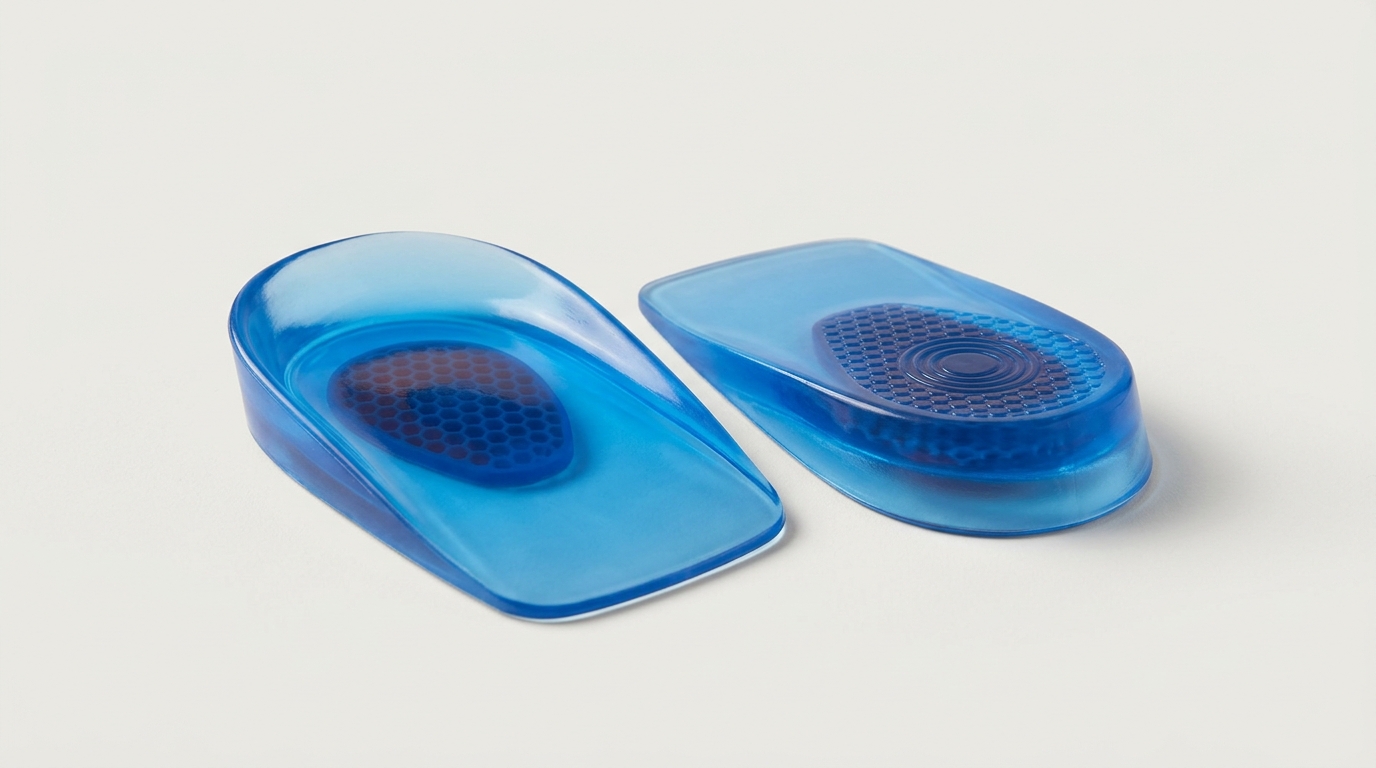
Heel pad pain is a deep, aching pain under your heel that usually hurts most when you walk barefoot on a hard floor or stand for a long time. Heel pad pain happens when the thick cushion of fat under your heel bone thins, shifts, or becomes inflamed — often from age, extra body weight, long hours on your feet, or walking barefoot on hard surfaces. Heel pad pain is not the same as plantar fasciitis, though the two can feel similar. Cushioned shoes, heel cups, and cutting back on barefoot walking usually ease it within a few weeks. If heel pad pain is severe, sudden, or comes with swelling or bruising, see a doctor promptly.
See a doctor promptly if you notice any of these:
- Heel pain that is severe, sudden, or follows a fall or hard landing
- Swelling, bruising, or redness around the heel
- Pain that stops you putting weight on the foot
- Heel pain that does not improve after a few weeks of cushioned shoes and rest
- Numbness, tingling, or weakness in the foot or toes
What the heel pad does and why it hurts
Under your heel bone sits a thick pad of fat, held in place by a web of tough fibres. It is your foot’s built-in shock absorber — every step you take lands on it, and it spreads the impact so the bone does not take the full hit. A healthy heel pad is about two centimetres thick and springs back after each step. When that pad thins or shifts, the bone sits closer to the ground, and every step starts to sting.
Age is the most common reason the pad thins. Like the fat pads elsewhere in the body, the heel pad loses volume and elasticity over the decades, which is why heel pad pain is more common after fifty. Extra body weight adds to the problem, because the pad is squeezed harder with every step. Long hours standing on concrete or tile, walking barefoot on hard floors, and shoes with thin, flat soles all wear the pad down faster.
Sometimes the pad does not thin so much as shift. A hard landing — jumping down from a height, or a bad step off a kerb — can push the fat pad sideways, leaving the heel bone less protected. This is called heel pad syndrome, and it tends to cause a deep ache right in the centre of the heel, worst when you press on it or walk barefoot. Athletes who run on hard surfaces and people who have lost weight quickly can also develop it.
What helps heel pad pain
The first fix is cushioning. Wear shoes with a thick, soft heel and a cushioned insole, and avoid flat, hard-soled shoes. A gel heel cup or a silicone heel pad inside your shoe works well for many people — it replaces some of the cushioning your own pad has lost. Wear them in every pair of shoes you use regularly, including house shoes, because walking barefoot on hard floors is one of the worst things for a sore heel pad.
Rest the heel a little, but do not stop moving altogether. Cut back on long walks and standing for the first week or two, and swap in low-impact activity like cycling or swimming. Ice the heel for ten to fifteen minutes a couple of times a day if it feels hot or tender. Over-the-counter pain relief can help in the short term, but the real fix is cushioning and time, not tablets.
If the pain keeps coming back, a podiatrist can help. They can check whether the pad has shifted, measure how much cushioning is left, and fit custom orthotics or a deeper heel cup. They can also rule out lookalike problems, because heel pad pain is easy to confuse with plantar fasciitis or a heel spur. Do not try to push through severe heel pain — walking on a sore heel changes your gait, and that can set off knee, hip, or back pain next.
A daily routine to protect your heels
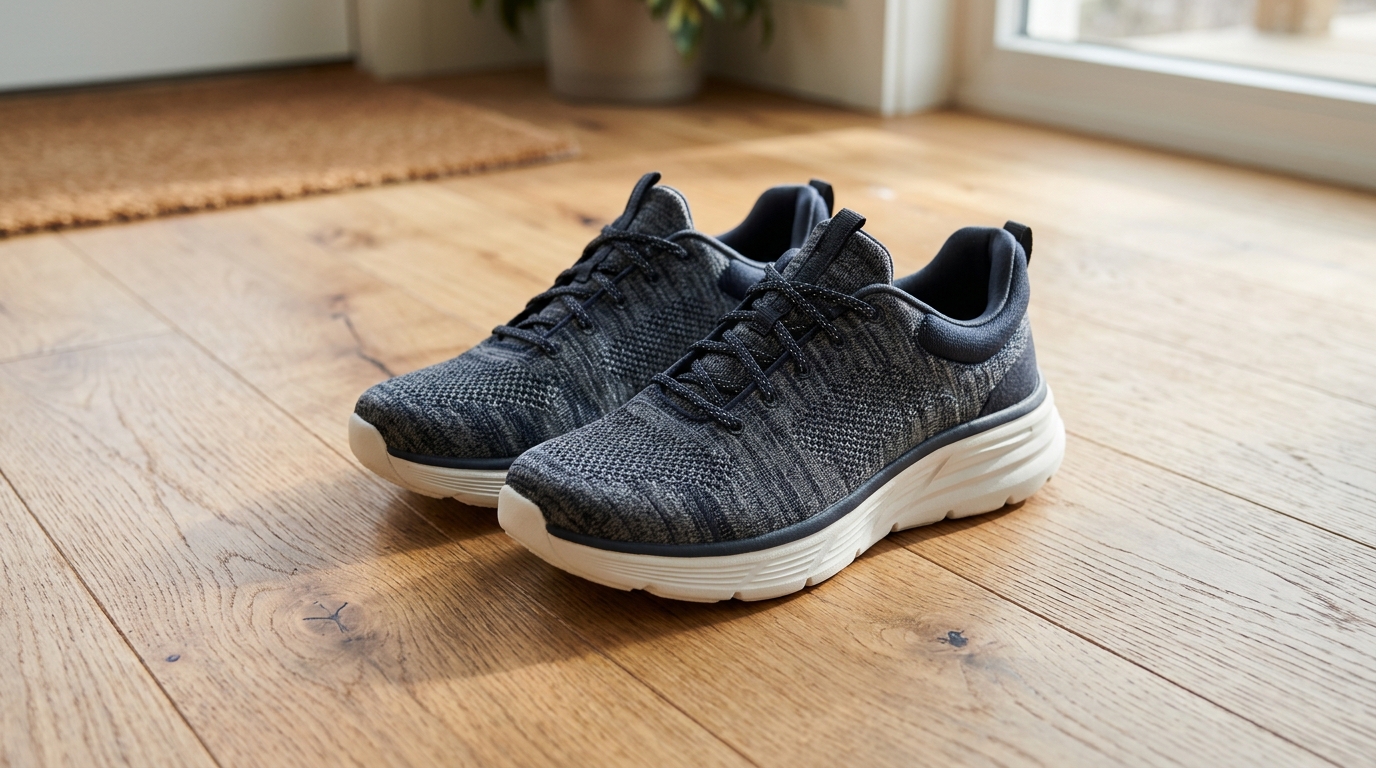
Start the day in cushioned shoes, not bare feet. Keep a pair of supportive house shoes by the bed so your first steps of the morning land on something soft — the heel pad is stiffest after a night’s rest, and barefoot steps on a hard floor are when it hurts most. If you stand for work, use an anti-fatigue mat and sit down for a few minutes every hour.
Check your shoes regularly. Press the heel of each shoe: if it feels thin, hard, or squashed flat, replace the shoes or add a fresh heel cup. Keep your weight in a healthy range if you can, since every extra kilo adds load to the pad with each step. And build in a little calf stretching each day — tight calves change how the heel strikes the ground and add to the strain. With steady cushioning and a few small habit changes, most heel pad pain eases over a few weeks.
Frequently asked questions
What is heel pad pain?
Heel pad pain is a deep ache under the heel caused by the fat cushion beneath the heel bone thinning, shifting, or becoming inflamed. It hurts most when you walk barefoot on hard floors or stand for a long time.
Is heel pad pain the same as plantar fasciitis?
No, though they can feel similar. Plantar fasciitis usually causes a sharp pain at the front edge of the heel, worst with the first steps in the morning. Heel pad pain is a deeper ache in the centre of the heel, worst when you press on it or walk barefoot.
Do heel cups help heel pad pain?
Yes, for most people. A gel or silicone heel cup adds back some of the cushioning the heel pad has lost, which reduces the impact on the bone with each step. Wear them in your everyday shoes and your house shoes.
How long does heel pad pain take to heal?
With cushioned shoes, heel cups, and less barefoot walking, most people notice a real improvement within two to four weeks. If the pad has thinned a lot with age, the pain may need ongoing cushioning to stay away.
Should I stop walking barefoot with heel pad pain?
Yes, at least for now. Walking barefoot on hard floors puts the full impact of each step straight onto the heel bone. Wear cushioned house shoes indoors until the pain has settled.
Sources
- Cleveland Clinic — Heel Pain: Causes and Treatment
- Mayo Clinic — Heel Pain: Symptoms and Causes
- American Podiatric Medical Association — Heel Pain and Heel Spurs
- NHS — Heel Pain: Causes and Self-Care
This article is for information only and is not medical advice. If your foot pain is severe, sudden, or not improving, talk to a healthcare professional for a proper diagnosis.