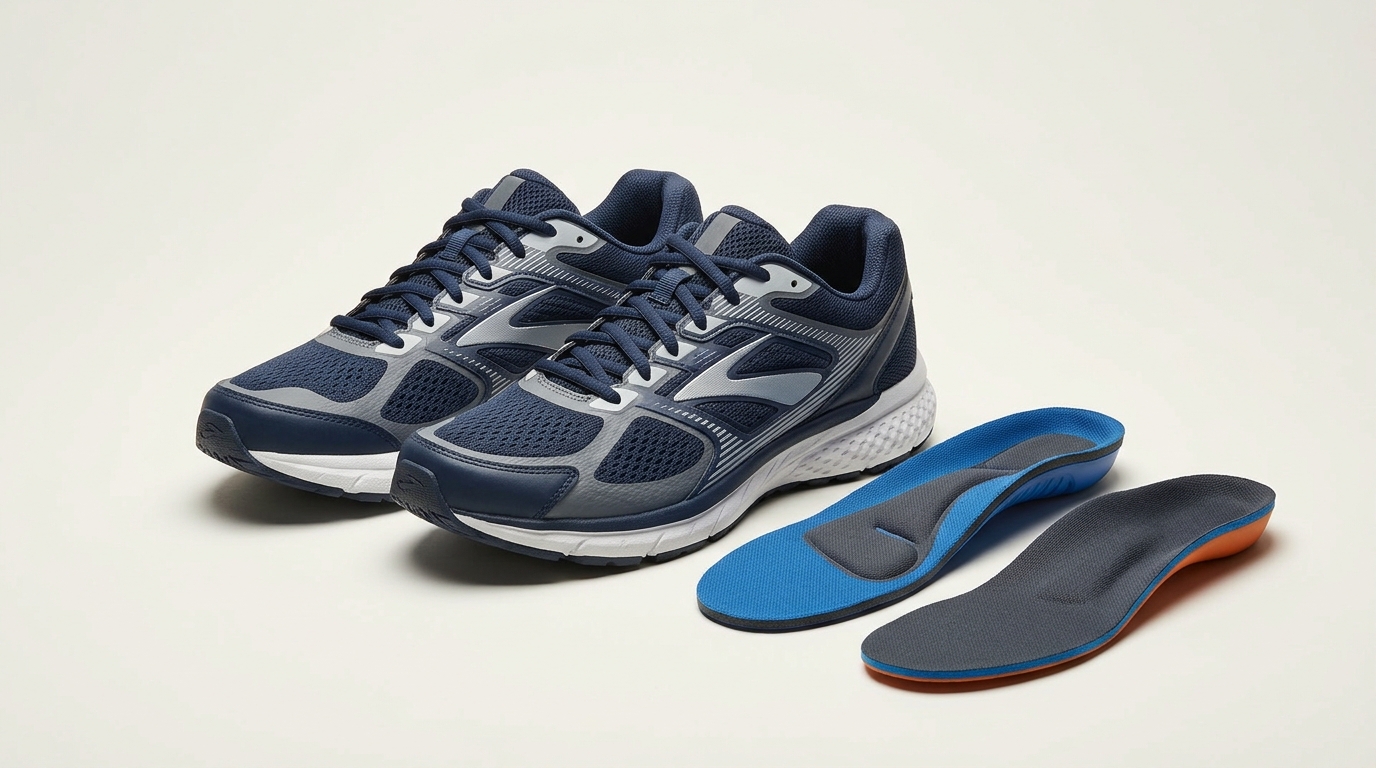
Arch pain after running usually comes from overworked tissues in the arch of your foot — the plantar fascia, the small muscles inside the foot, or the tendons that support the arch. Arch pain after running often flares up when you increase your mileage too fast, run in worn-out shoes, or run with flat feet or very high arches. The good news is that most cases settle with rest, better shoes, and a few simple strengthening exercises. Arch pain after running that is severe, sudden, or comes with swelling or bruising needs a prompt check from a doctor, since it can occasionally signal a stress fracture.
See a doctor promptly if you notice any of these:
- Arch pain that is severe, sudden, or follows a twist or fall
- Swelling, bruising, or a visible change in the shape of your arch
- Pain that stops you putting weight on the foot
- Arch pain that does not improve after two weeks of rest and better shoes
- Numbness, tingling, or weakness in the foot or toes
What causes arch pain after running
Your arch works like a spring. Every time your foot hits the ground, the arch flattens a little to absorb the shock, then springs back to push you forward. When you run, that spring loads and unloads thousands of times. If the load grows faster than your foot can adapt — a sudden jump in mileage, a hilly route, or a return after time off — the tissues get irritated. That is the most common story behind arch pain after running.
Your foot shape plays a big part too. If you have flat feet, your arch collapses more with each step, which stretches the plantar fascia and the tendons along the inside of the ankle. If you have very high arches, the opposite happens: the foot is stiff, it does not absorb shock well, and the pressure lands hard on the heel and the ball of the foot. Both shapes can leave the arch sore after a run. Tight calves make it worse, because they limit how far the ankle can bend and force the arch to take more of the load.
Shoes are the third suspect. Trainers that have lost their cushioning, shoes with no arch support, or a pair that simply does not match your foot type all add strain. A runner who switches to a very minimal shoe too quickly often feels it in the arch first. And running on hard surfaces like concrete, especially downhill, increases the impact every step sends through the arch.
What helps arch pain after running
Start by easing off, not stopping completely. Cut your mileage roughly in half for a week or two, and swap one or two runs for low-impact cross-training like cycling or swimming. Ice the arch for ten to fifteen minutes after a run, rolling a cold water bottle under the foot feels good and works well. Over-the-counter pain relief can help in the short term, but do not use it to push through pain and keep running hard.
Check your shoes next. If the heel is worn down on one side, or the shoe rocks when you set it on a flat surface, it is time for a new pair — most running shoes last 300 to 500 miles. A proper fitting at a running shop is worth the trip, especially if you are not sure whether you need stability or neutral shoes. Over-the-counter arch supports help many runners, and a podiatrist can make custom orthotics if your foot shape needs more.
Stretching and strengthening make the biggest long-term difference. Stretch your calves every day, holding each stretch for thirty seconds, and roll the arch gently over a tennis ball for a couple of minutes. Then build the small muscles inside the foot: try picking up a towel with your toes, or doing short-foot exercises where you pull the ball of your foot toward your heel without curling your toes. A few minutes a day is enough, and most runners feel a real difference within a few weeks.
A simple daily routine for healthy arches
Before your run, warm up properly. A five-minute brisk walk, some ankle circles, and a few calf raises wake the arch up before it has to work. Skip the run if the arch is still sore from yesterday — pain that is worse at the start of a run and only eases once you are warmed up is your foot asking for a rest day.
After your run, cool down with a slow walk, then stretch your calves and roll the arch for a few minutes. Check your shoes once a week for uneven wear, and keep a simple note of your weekly mileage so you can raise it gradually — the ten-percent rule (never add more than about ten percent a week) is a good guardrail. Strengthen the feet two or three times a week, and replace your trainers on schedule rather than waiting for pain to tell you they are done.
Frequently asked questions
What causes arch pain after running?
Most arch pain after running comes from overloading the arch — increasing mileage too quickly, running in worn-out or unsupportive shoes, or having flat feet or high arches that change how the foot absorbs impact. Tight calves and hard running surfaces add to the strain.
Should I keep running with arch pain?
It depends on how bad it is. Mild soreness that fades as you warm up usually allows easy running at reduced mileage. Sharp pain, pain that gets worse during the run, or pain that stops you putting weight on the foot means you should rest and get it checked.
Do insoles help arch pain after running?
Yes, for many runners. Arch supports reduce how much the arch collapses with each step, which eases the strain on the plantar fascia and tendons. A running-shop fitting or a podiatrist can help you find the right type for your foot shape.
How long does arch pain after running take to heal?
Mild cases often improve within one to three weeks of reduced mileage, better shoes, and daily stretching and strengthening. If the pain is still there after two weeks, or keeps coming back, see a doctor or podiatrist.
Can stretching fix arch pain?
Stretching helps, especially for the calves, but strengthening matters just as much. Stretching the calves and rolling the arch ease tightness, while toe and short-foot exercises build the muscles that hold the arch up — combine both for the best result.
Sources
- Cleveland Clinic — Arch Pain: Causes and Treatment
- Mayo Clinic — Plantar Fasciitis: Symptoms and Causes
- American Podiatric Medical Association — Running and Foot Health
- NHS — Foot Pain: Causes and Self-Care
This article is for information only and is not medical advice. If your foot pain is severe, sudden, or not improving, talk to a healthcare professional for a proper diagnosis.