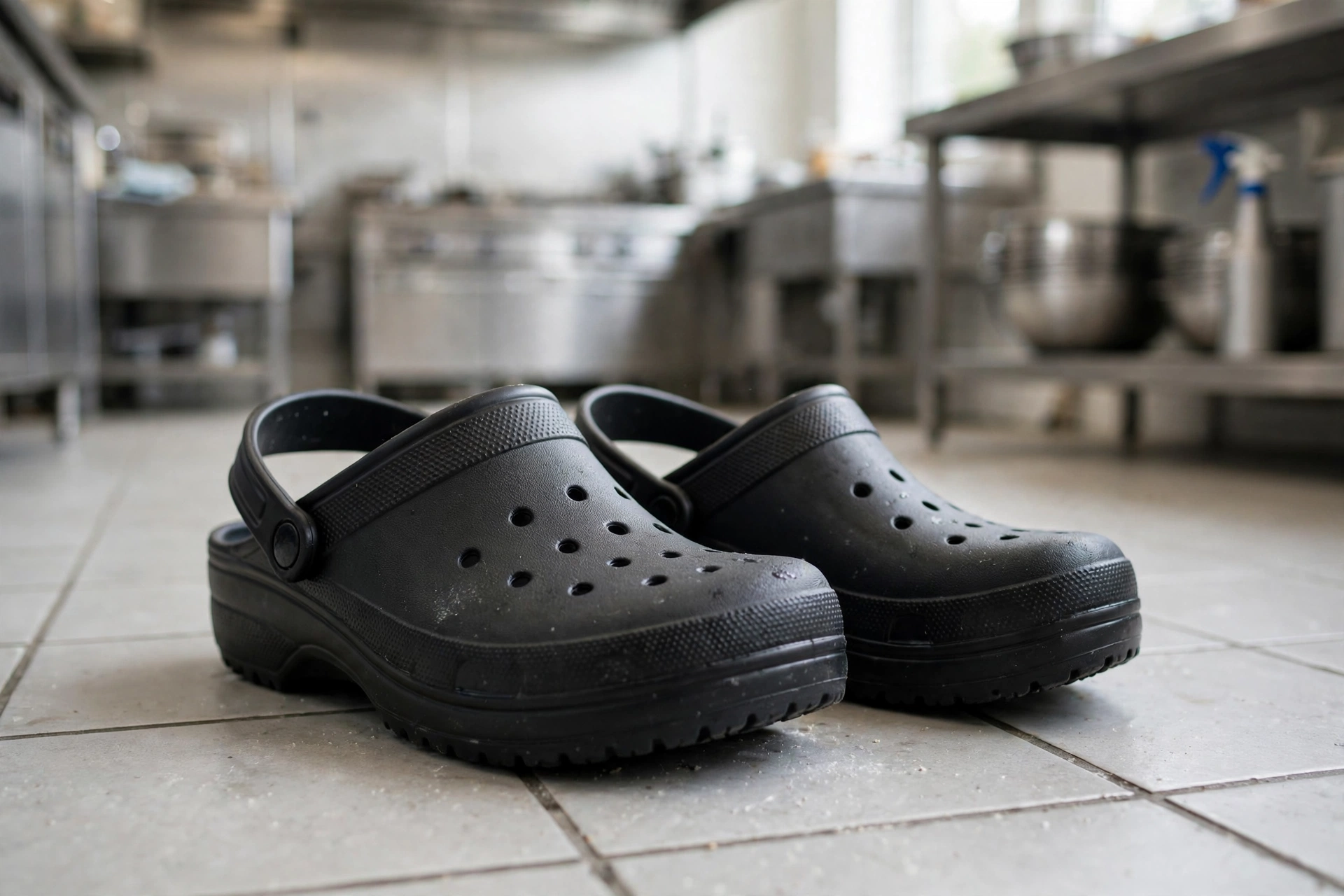
Best Shoes for Chefs (2026): Non-Slip Kitchen Shoes That Survive the Shift
Kitchen floors are the hardest test in this whole cluster: water, grease, food debris and 10-hour shifts on tile. A running shoe — however cushioned — is the wrong tool here. What works is a tested slip-resistant outsole, a wipe-clean upper, and cushioning that survives a double shift.
What chefs’ feet actually go through
- Wet and greasy floors — slips are the #1 kitchen injury risk, not sore feet
- Spills: water, oil, sauces and cleaning chemicals on the upper
- 10–12 hour shifts, mostly standing at a station, on tile or sealed concrete
- Heat from ovens and ranges; breathability matters more than in most jobs
What to look for in chef shoes
- Verified slip resistance: Look for tested ratings (ASTM F2913/F3445 or the manufacturer’s SR designation), not marketing words. Grease defeats ordinary rubber.
- Wipe-clean, water-resistant upper: Leather or synthetic uppers wipe clean in seconds; mesh holds stains and smells.
- Oil-resistant outsole: Kitchen grease is a different problem from water. KEEN’s Wet Trax and Shoes for Crews’ TripGuard are built for it.
The 5 best shoes for chefs (2026)
Crocs Bistro Clog — Best overall
The kitchen default for a reason: proven slip resistance, Croslite cushioning that doesn’t compress out, and a 10-second rinse to clean. The closed heel keeps it work-appropriate.
Best for: Most kitchen staff, dish pits, hot lines Not for: Anyone who needs a lace-up fit or ankle support
KEEN Utility PTC Oxford — Best tested grip
Leather upper, water-resistant, with KEEN’s Wet Trax outsole designed to channel liquid away, and an oil-resistant compound. KEEN cites ASTM F1677-96 Mark II non-slip testing.
Best for: Chefs on greasy floors, cooks who want a real shoe not a clog Not for: Fast movers — it’s firm and fairly heavy (~17 oz)
Skechers Nampa — Best budget default
The proven budget pick across restaurant roundups: leather upper, slip-resistant outsole, Air-Cooled Memory Foam insole, and a Hands Free Slip-ins version.
Best for: Budget buyers, servers who also work the floor Not for: Wet-heavy dish work — clogs clean faster
Shoes for Crews Crossing — Best for line cooks
Built for back-of-house: SFC’s slip-resistant outsole, water resistance and a reinforced toe for the busiest stations.
Best for: Line cooks, dish staff, anyone on wet tile all shift Not for: Front-of-house — it’s a work shoe, not a looker
Skechers Squad SR — Best lightweight budget
Memory foam insole and slip-resistant outsole in a lighter, sneaker-style package for cooks who move fast.
Best for: Fast-moving cooks, smaller kitchens Not for: Heavy grease zones — the Oxford grips better
End-of-shift foot routine for chefs
- Rinse clogs at the end of every shift — dried grease ruins traction faster than wear does.
- Replace shoes when the tread looks smooth, even if the upper looks fine. Smooth tread is how kitchen slips happen.
- If your feet ache after doubles, add a structured insole; the factory insole in most kitchen shoes is the first thing to pack down.
Frequently asked questions
Do chefs have to wear non-slip shoes?
Most kitchens require them, and OSHA guidance treats slip-resistant footwear as basic PPE for wet work. Check your employer’s rule — some pay for them, most don’t.
Are Crocs actually good chef shoes?
The Bistro clog (not the Classic) is: it’s slip-resistant rated and enclosed. Regular fashion Crocs are not work shoes.
Clogs or lace-ups for chefs?
Clogs clean faster and slip on between stations; lace-ups fit more securely for fast movement. Kitchens split about evenly.
How often should kitchen shoes be replaced?
When tread wears smooth — often 6–9 months of daily kitchen use. Don’t wait for the upper to fall apart.
What about waterproof shoes?
Water-resistant uppers matter more than full waterproofing for most cooks; full waterproof boots run hot on the line.
Sources
- Best Slip-Resistant Shoes in 2026 — Best Walking Feet
- Best Shoes for Kitchen Workers — Kitchen Advisor
- Best Non-Slip Shoes for Restaurant Work — Food Handler Gear
Footcarely is reader-supported. We don’t use affiliate links yet — when we do, this page will say so. Prices change; check the current listing before you buy. This guide is general information, not medical advice. Persistent foot pain deserves a podiatrist, not just new shoes.
Related: Best Shoes for Nurses · Best Insoles for Plantar Fasciitis · Foot Problem Finder quiz · Best Shoes by Profession hub