What’s the difference, really?
You’ve probably got one of these right now and you’re not sure which. Here’s the simple version. A corn is small, round, and has a hard center that can feel like a tiny pebble pressed into your skin. It usually shows up on top of a toe, on the side of a toe, or between toes, wherever a bone sits close to the surface and a shoe keeps pressing on it.
A callus is the same idea spread out wider. It’s a broad patch of thick, rough skin, most often on the ball of your foot, your heel, or the side of your big toe. Calluses rarely hurt the way corns do, but they can get dry, cracked, and ugly, and a thick one can make walking feel like you’ve got a wad of cardboard stuck to your sole.
Both are your body’s defense mechanism. Skin thickens because something keeps pressing or rubbing. That’s worth remembering, because it’s the whole reason they come back: if you file the thick skin off but keep wearing the same tight shoes, your foot just rebuilds it.
What causes them
Almost always, it’s pressure plus repetition. Shoes that are too tight in the toe box, high heels that shove your weight forward, walking barefoot on hard floors, or a foot shape that loads one spot harder than the rest — bunions and hammertoes are classic corn factories. Some people also just make calluses faster; if you run, dance, or work on your feet all day, your feet are under more load than average.
One thing people get wrong: corns and calluses aren’t contagious, and they aren’t warts. Warts are caused by a virus, they can have little black dots in them, and they tend to hurt when you squeeze them from the sides. A corn hurts when you press straight down on it. If you’re not sure which one you’ve got, a podiatrist can tell in about ten seconds, and it’s worth the visit rather than guessing.
Safe removal at home
If your feet are healthy — no diabetes, no numbness, no circulation problems — here’s the routine that works:
Soak first. Ten minutes in warm, soapy water softens the thick skin so you can work on it without tearing anything. Dry your feet well afterward.
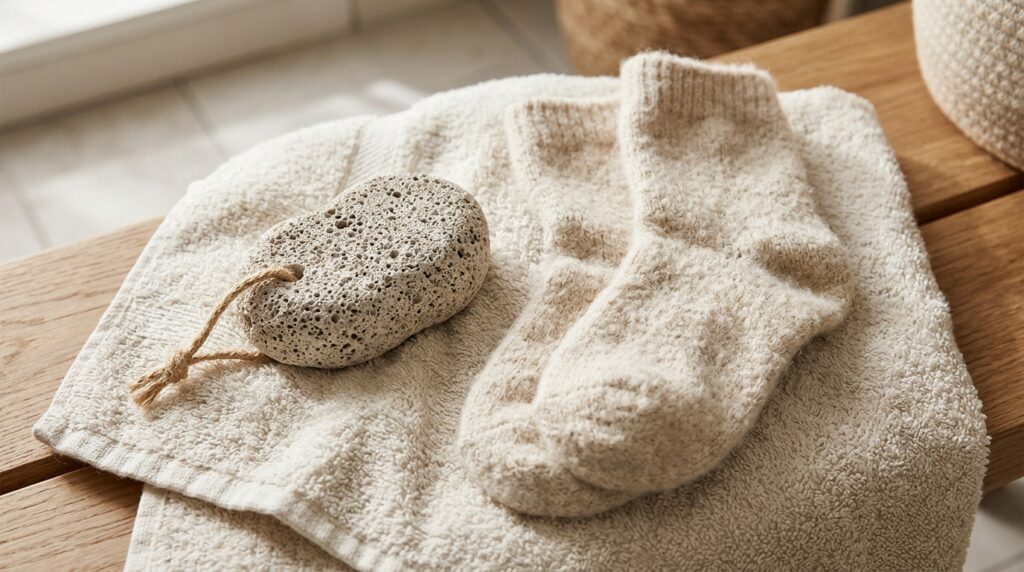
File gently. Use a pumice stone, a foot file, or an emery board and rub lightly over the thickened area. Take off a little at a time, a few minutes, a few times a week. Don’t try to grind the whole thing off in one session — that’s how you break the skin and invite infection. Stop the moment you reach pink, normal-feeling skin.
Moisturize. A thick foot cream or plain petroleum jelly after filing keeps the skin supple so it doesn’t split. Skip lotion between your toes, though — that area stays damp enough on its own.
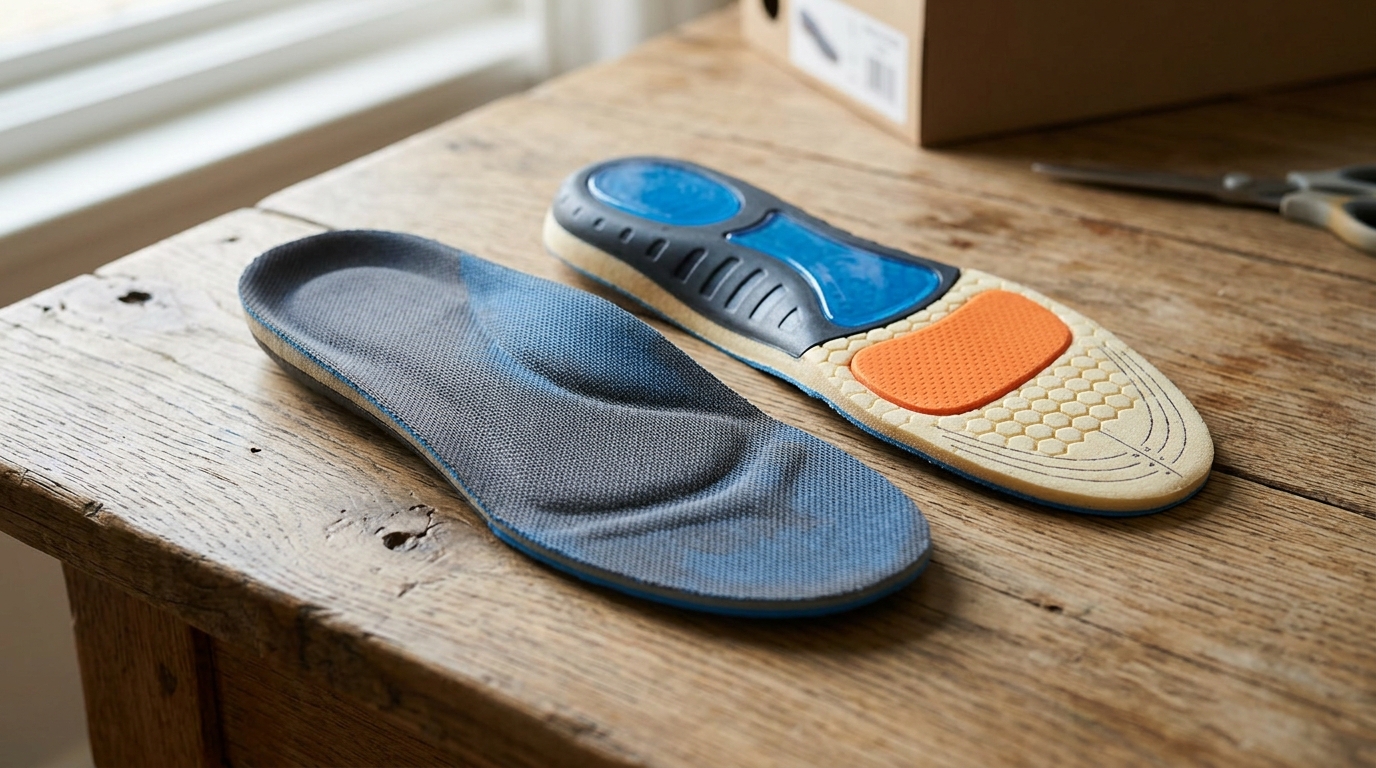
Protect the spot. A donut-shaped corn pad (foam with a hole in the middle) takes pressure off a corn. Moleskin works the same way. For a callus, a cushioned insole that spreads pressure across the ball of your foot helps more than anything topical.
Medicated pads, with caution. Over-the-counter corn removers contain salicylic acid, usually around 40% in patch form, which dissolves thick skin. They can work, but the acid doesn’t know where the corn ends and healthy skin begins, so it can irritate or burn the surrounding skin. If you use one, apply it only to the corn itself, follow the package directions, and stop if the surrounding skin gets red or sore. Never use them if you have diabetes or poor circulation.
What never to do
Don’t cut a corn or callus with scissors, a razor, or a knife. People do this — there’s a whole genre of internet videos about it — and it’s a genuinely bad idea. One slip and you’ve got an open wound on a part of your body that spends all day inside a warm, dark shoe. That’s an infection waiting to happen. A podiatrist can pare thick skin down safely in an office visit; it’s quick, and it usually doesn’t hurt at all because the thick skin has no feeling in it.
Stopping them from coming back
This is the part most people skip, and it’s the only part that actually fixes the problem long term. Look at your shoes honestly. If the toe box squeezes your toes together, that’s your corn’s home address. Shoes with a roomy toe box, soft uppers, and a low heel take pressure off the spots that keep thickening. If a bunion or hammertoe is driving the pressure, padding and wider shoes help, but a podiatrist may suggest orthotics or, in stubborn cases, discuss surgical options.
And keep up the maintenance. A quick pumice pass once a week after a shower takes two minutes and keeps a callus from building back into a slab.
FAQ
Are corns and calluses dangerous?
For healthy feet, no — they’re a nuisance, not a threat. They become dangerous when circulation or feeling is reduced, because a thick callus can hide an ulcer underneath that you can’t feel.
How long does it take to get rid of one?
With gentle filing a few times a week, most corns and calluses thin out noticeably in two to four weeks. If the pressure source stays, they return just as fast.
Can I use a cheese-grater style foot file?
It’s not recommended. Those metal rasps take off too much skin too fast and raise the risk of cuts and infection. A pumice stone or emery board is slower and much safer.
What’s the difference between a corn and a wart?
Warts are viral, often have tiny black dots, and hurt when squeezed from the sides. Corns are pressure-related, have a hard center, and hurt when pressed straight down. When in doubt, get it looked at.
Do I need to see a podiatrist?
Not for a simple, painless callus on a healthy foot. Do go if you have diabetes, numbness, or poor circulation, if it’s very painful, bleeding, or changing color, or if home care hasn’t helped after a few weeks.
Sources
- Mayo Clinic — Corns and calluses: Diagnosis and treatment (salicylic acid patches, pumice use, diabetes warnings)
- American Academy of Dermatology — Corns and calluses care guidance
- American Podiatric Medical Association — Foot care guidance on corns and calluses
Medical disclaimer: This article is for general information only and is not medical advice. If you have diabetes, circulation problems, or numbness in your feet, talk to a clinician before treating corns or calluses at home.