
Why pregnancy is hard on feet
Three things change at once, and your feet feel all three. First, weight. A typical pregnancy adds 25 to 35 pounds, and almost all of it lands on your feet with every step. Second, hormones. Relaxin, the hormone that loosens ligaments so your pelvis can expand for birth, loosens ligaments everywhere — including your feet. Your arches flatten and spread under the extra load, which is why your feet genuinely get longer and wider. A University of Iowa study of 49 first-time mothers found that 60 to 70 percent had feet that measured longer and wider five months after delivery, with arch height permanently decreased — foot length increased by 2 to 10 millimeters. That’s why so many women go up half a shoe size and never quite come back.
Third, fluid. Your blood volume increases by roughly half during pregnancy, and your growing uterus presses on the veins returning blood from your legs. Fluid pools in the lowest places — your ankles and feet — especially in the third trimester, in warm weather, and after a long day standing. The result: shoes that fit in the morning feel like a vise by evening.
What it feels like, day to day
Heel pain and arch ache are the most common complaints, often worst first thing in the morning or after sitting — the same pattern as plantar fasciitis, which pregnancy can trigger because flattened arches strain the plantar fascia. Some women develop overpronation, where the foot rolls inward more than usual, adding stress to the ankles, knees, and lower back. Swollen ankles that dent when you press them (pitting edema) are routine in late pregnancy. Cramping in the calves at night is also common, partly from the extra weight and partly from mineral shifts.
None of this means something is wrong with you. But the line between normal pregnancy discomfort and a warning sign matters, and it’s worth knowing: normal swelling is usually in both feet, worse by evening, and better after a night’s rest with feet elevated. Swelling that appears suddenly, affects one leg much more than the other, or comes with headache, vision changes, or pain in the upper belly is not normal — call your provider the same day.
What actually helps
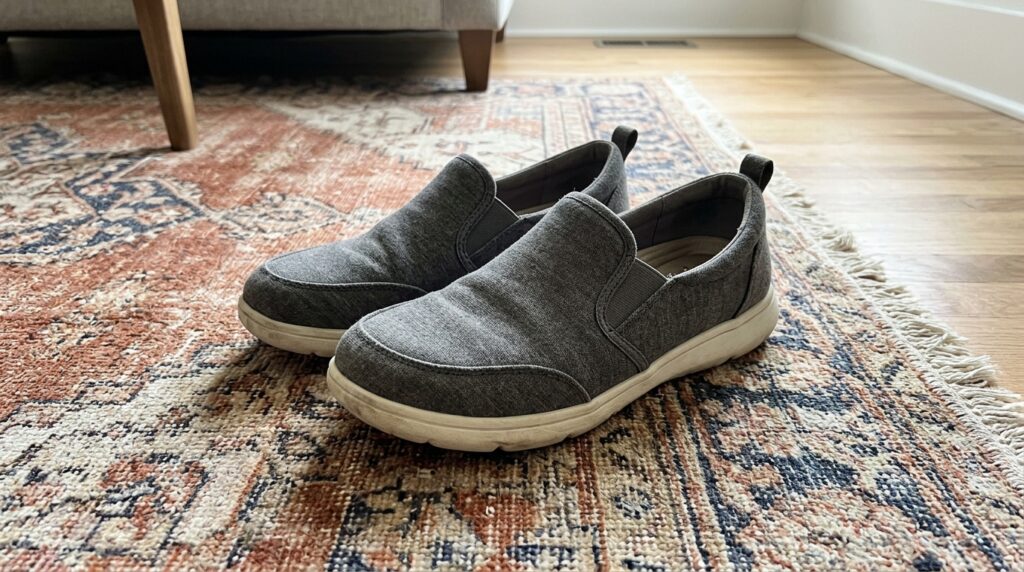
Wear shoes that work with your new feet, not against them. A roomy toe box, adjustable straps or laces (your feet change size through the day), low heels, and real arch support. Slip-on shoes with a wide opening are a blessing once bending gets awkward. If your arches have flattened noticeably, a supportive insole or over-the-counter orthotic can spread the load and ease heel and arch pain significantly. Don’t buy expensive shoes early in pregnancy hoping they’ll last — measure your feet again in the third trimester, because they will have changed.
Elevate, often. Twenty minutes with feet above heart level, a couple of times a day, drains pooled fluid better than anything else. At work, a small footrest under your desk helps; at home, pillows on the couch do the job.
Move regularly. Walking, swimming, and prenatal yoga all keep the calf muscles pumping blood back up. Avoid standing still for long stretches — if your job keeps you on your feet, shift weight, flex your ankles, and sit whenever you can.
Watch salt and water, sensibly. Drinking enough water actually reduces fluid retention (dehydration makes your body hold on to water harder), and cutting back on very salty processed foods helps. But don’t restrict fluids or salt drastically without talking to your provider — you need both, just not in excess.
Compression socks for long days. Graduated compression socks (15–20 mmHg is the usual over-the-counter range) reduce swelling and leg achiness, and they’re especially worth it for long flights or long shifts on your feet. Put them on in the morning before swelling builds, not after.
After delivery
The swelling usually fades within a few weeks as your fluid volume normalizes — many women notice their rings fit again before their shoes do. The arch changes, though, may stick around, especially after a first pregnancy. If your old shoes still pinch months later, it’s not your imagination: get remeasured. And if heel or arch pain persists beyond a few months postpartum, a podiatrist can check whether you need ongoing arch support rather than just waiting it out.
FAQ
Will my feet go back to normal size after pregnancy?
The swelling will, usually within weeks. The structural change — flatter arches, slightly longer and wider feet — is often permanent, especially after a first pregnancy. Many women stay half a size larger.
Is it safe to wear compression socks while pregnant?
Yes, over-the-counter graduated compression socks are widely used in pregnancy and are generally considered safe. If you have circulation problems or diabetes, check with your provider first.
Why do my feet hurt more in the morning?
Overnight, the plantar fascia tightens while you’re off your feet, so the first steps of the day stretch it suddenly. Gentle ankle circles and toe stretches before getting up can soften that first-step pain.
Can I exercise with pregnancy foot pain?
Usually yes — walking and swimming are excellent, and they help swelling too. Avoid high-impact exercise that worsens pain, and stop any activity that causes sharp pain or contractions.
When is swelling an emergency?
Sudden swelling of the face or hands, swelling with headache, vision changes, or upper abdominal pain, or one-sided leg swelling with calf pain — all need same-day medical attention, as they can signal preeclampsia or a blood clot.
Sources
- Segal NA et al. — Pregnancy and the human foot: arch changes and foot length (American Journal of Physical Medicine & Rehabilitation, 2013)
- American College of Obstetricians and Gynecologists — Edema and common discomforts in pregnancy
- Mayo Clinic — Pregnancy: common discomforts and swelling
- Journal of Foot and Ankle Research — Changes in foot biomechanics during pregnancy (2025)
Medical disclaimer: This article is for general information only and is not medical advice. Any sudden, one-sided, or concerning swelling in pregnancy, or symptoms of preeclampsia, should be reported to your healthcare provider immediately.