Quick Answer: Foot pain from cheerleading usually comes from hard landings on unforgiving floors — tumbling passes slam your feet down, and bases hold a flyer’s full weight on the balls of their feet for whole routines. The pain is most often soreness in the soles, arches and heels, and it usually eases with rest, better landing technique and supportive shoes for practice. If it stays sharp or lasts more than a couple of weeks, get it checked by a doctor or podiatrist.
See a doctor promptly if you notice:
- Sharp or severe pain in the heel, arch, or a single spot on a bone
- Pain that makes walking or putting weight on your foot difficult
- Swelling, redness, or warmth that doesn’t settle within a day or two
- Numbness, tingling, or a burning feeling in your foot or toes
- Pain that keeps coming back after every practice, or an ankle that feels unstable
Why Cheerleading Can Hurt Your Feet
Cheerleading looks effortless from the stands, but your feet know the truth. You’re tumbling on hard gym floors, landing jumps on thin mats, and — if you’re a base — holding another person above your head while your feet carry the load. There’s no cleat, no thick sole and often no shoe at all between your feet and the floor.
Unlike most sports, cheerleading asks your feet to do three different jobs in one routine: tumbling is all impact, jumps are all spring, and stunting is all endurance — bases stand planted with a flyer’s weight pressing down through their arches for the whole sequence.
What It Is: The Most Common Causes
Tumbling landings are the biggest culprit. A roundoff, a back handspring, a full — every one of them ends with your feet hitting the floor hard, often with your full weight on the balls of your feet. Do that dozens of times in a practice and the soles get bruised and sore. Our guide to foot pain from jumping covers the same landing soreness in other sports.
Being a base is a different kind of strain. When you’re holding a flyer up, your feet stay planted and your arches carry the load for the whole stunt. It’s not a sharp impact — it’s a long, steady squeeze that leaves your arches tired and achy, with your toes gripping the floor to keep you steady the entire time.
Jumping and dance sections add their own wear. Toe touches, pikes and herkies all demand a quick, powerful push-off and a fast landing, and when you’re doing them in sequence — on a hard floor, in thin cheer shoes or barefoot on a mat — the small muscles in your feet get overworked and your arches start cramping.
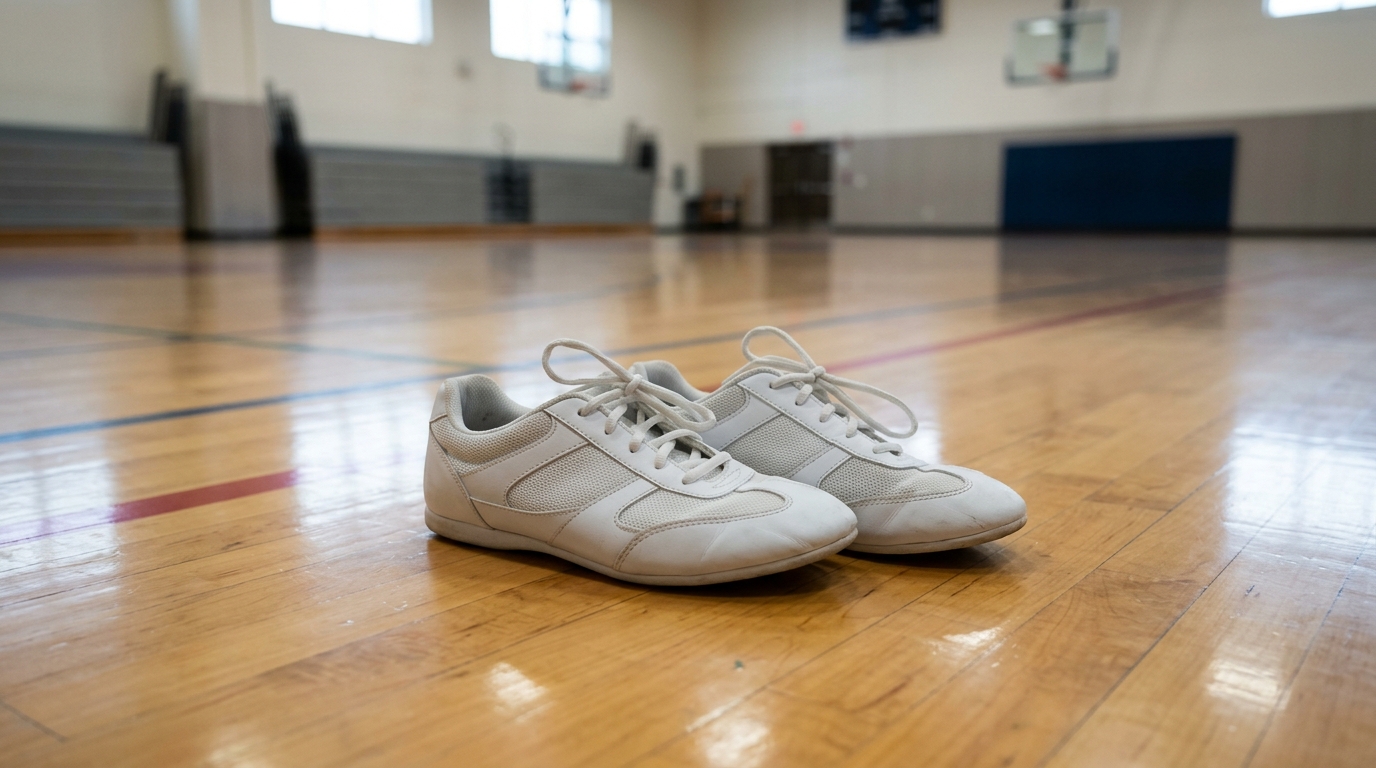
Thin cheer shoes and barefoot practice make everything worse. Cheer shoes are built light and flexible for tumbling, not cushioned for impact, and a lot of tumbling practice happens barefoot on a mat. With almost no cushioning between your soles and the floor, every landing goes straight into your feet.
What Helps: Landing Better and Supporting Your Feet
The first fix is your landing. A controlled landing — feet under your shoulders, knees soft, weight spread across the whole foot instead of just the ball — takes a surprising amount of force off your soles. Practicing landings on a sprung floor or a thick mat before moving to a hard surface helps your body learn the pattern without punishing your feet.
Foot and ankle strength matters more than most cheerleaders realize. The Cleveland Clinic points out that weak foot muscles and tight calves are common reasons arch and heel pain flares during exercise, and cheerleading demands both strength and flexibility at once. Simple drills — toe scrunches, calf raises, and ankle circles — build the support your feet need.
Choose your practice surface wisely. If you can, do your tumbling reps on a sprung floor or a thick mat rather than bare gym flooring, and wear your cheer shoes or a supportive trainer when you’re not tumbling — walking around the gym barefoot adds more impact to feet that are already tired.
Rest between hard sessions. Tumbling every day without a recovery day doesn’t give bruised soles time to heal, and sore feet change the way you land.
What Helps: Recovery After Practice
After a sore practice, roll the bottom of each foot over a tennis ball or a frozen water bottle for a few minutes — it loosens tight tissue and feels great on tired arches. Just keep the pressure gentle if the sole is bruised or tender.
Stretch your calves and feet before you leave the gym. A wall calf stretch and a few slow ankle circles take two minutes and make a real difference the next morning. Our guide to foot pain from basketball has more recovery tips for hard-court sports that translate well to cheer.
Your Daily Routine for Happier Feet in Cheer
Here’s a routine to keep your feet comfortable through the season:
- Warm up your feet: Before practice, spend two minutes spreading your toes and rolling each ankle in circles.
- Practice landings on a mat: A few slow, controlled landings on a thick mat before each session teach your feet to absorb impact gently.
- Strengthen your arches: Toe scrunches and calf raises a few times a week build the support your feet need.
- Rotate hard tumbling days: Give your feet a lighter day between heavy tumbling sessions so bruised soles can recover.
- Roll sore feet: Roll each foot over a tennis ball for a few minutes after practice.
FAQs
Is foot pain from cheerleading normal?
Mild soreness in the soles or arches during a heavy tumbling week is common and usually fades with rest and better landings. Sharp or persistent pain is not normal and should be checked.
Why do my arches hurt after stunting?
When you’re a base, your arches carry a flyer’s weight for the whole stunt, with your feet planted and your toes gripping for balance. That long, steady load tires the arch muscles — strength work and rest between sessions usually help.
Can cheerleading cause plantar fasciitis?
Cheerleading can irritate the plantar fascia, especially with tight calves and hard landings. Rest, calf stretching and softer landing surfaces usually help — persistent heel pain should be checked by a doctor.
Should I wear shoes or go barefoot for tumbling?
It depends on your gym and your coach, but for tumbling reps, a sprung floor or thick mat matters more than footwear. When you’re not tumbling, wear supportive shoes instead of walking barefoot on hard gym floors.
When should I see a doctor about foot pain from cheerleading?
See a doctor promptly if the pain is sharp or severe, if swelling doesn’t settle, if your ankle feels unstable, or if the pain keeps coming back after every practice despite resting and adjusting your technique.
Sources
- Mayo Clinic — plantar fasciitis causes and symptoms
- Cleveland Clinic — arch pain and calf tightness information
- American Podiatric Medical Association — foot strengthening exercises
This article is for general information only and is not medical advice. Talk to your doctor or a podiatrist about your own feet.