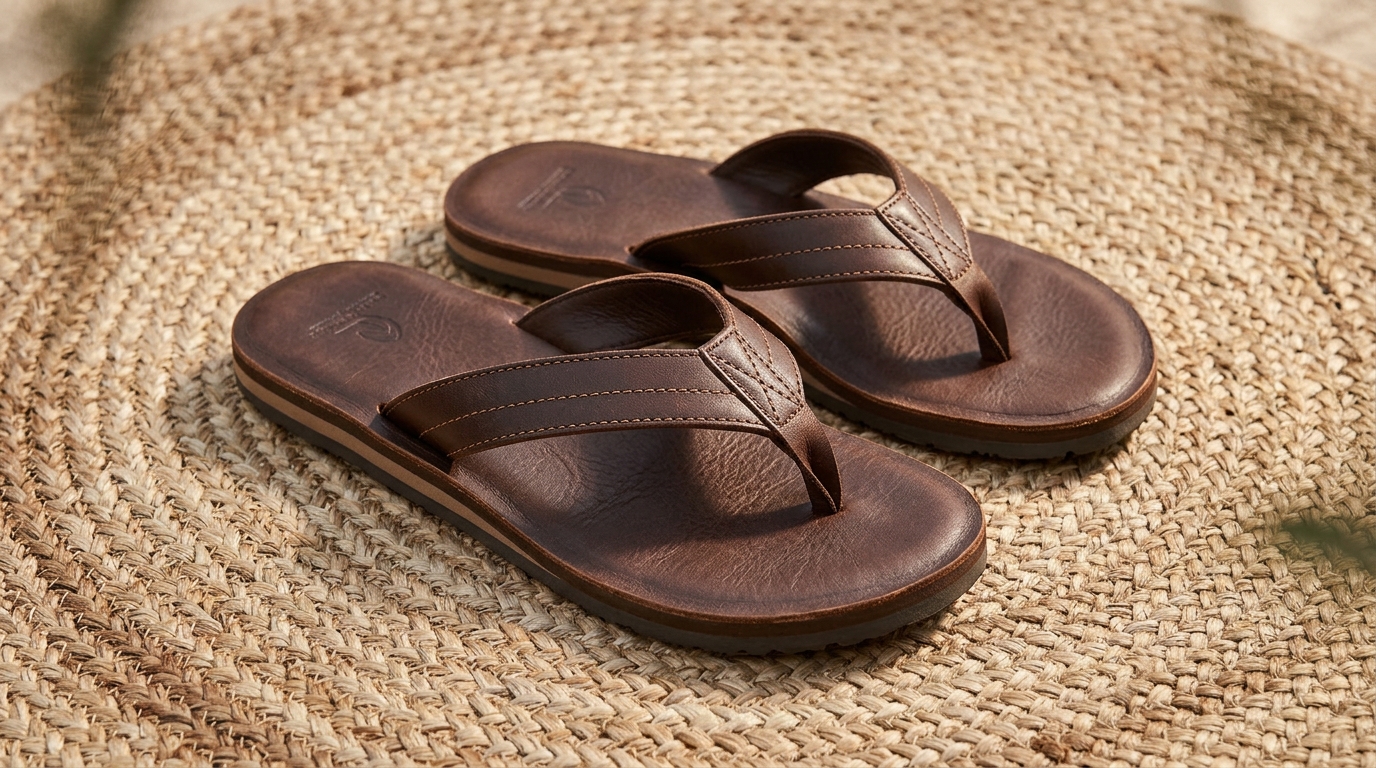
Foot pain from flip flops usually comes down to one thing: almost no support. Flat, thin soles with no arch support force your toes to grip with every step, strain your arches, and let your heels take the full impact of walking. That can leave you with aching arches, sore heels, shin splints, or a stiff, tender foot by the end of the day. Most of the time, switching to supportive sandals, giving your feet rest, and stretching helps — but sharp heel pain that lingers for weeks needs a closer look.
See a doctor promptly if you notice any of these:
- Sharp heel pain that doesn’t improve after a couple of weeks of rest and better footwear
- Swelling, redness, or warmth in the foot that keeps getting worse
- Numbness, tingling, or weakness in the foot
- Pain after an injury, such as twisting your ankle in a flip-flop
- Foot pain if you have diabetes or poor circulation, since foot injuries can escalate quickly
Why flip-flops make your feet hurt
Flip-flops feel like freedom — light, airy, easy to slip on. But your feet do a surprising amount of extra work in them, and by the end of a long day, that work shows up as pain.
The main problem is the lack of support. A typical flip-flop has a flat, thin sole, no arch support, and nothing holding your foot in place except a strap between your toes. Without arch support, your arch flattens more with each step, which strains the plantar fascia — the thick band of tissue along the bottom of your foot — and the small muscles of the foot. Over time, that strain can lead to aching arches, heel soreness, or plantar fasciitis, the stubborn heel pain that hurts most with your first steps in the morning.
Then there’s the gripping. Because nothing holds a flip-flop on your foot, your toes curl and grip the sole with every step to keep it from flying off. That constant gripping overworks the toe muscles and tendons, and it changes how you walk: shorter steps, a flatter foot strike, and more stress on your shins. It’s a common reason people develop shin splints or sore ankles after a summer of living in flip-flops. The American Podiatric Medical Association has long cautioned that flip-flops lack the arch support and heel cushioning feet need for extended walking, and recommends them mainly for short wear — around the pool or beach, not all-day use.
There’s also the impact factor. Thin soles don’t absorb shock, so every step sends more force up through your heels and into your knees and lower back. And because flip-flops offer no ankle support and can catch on uneven ground, they’re a common culprit in trips, stubbed toes, and twisted ankles. None of this means flip-flops are dangerous in small doses — but wearing them as your everyday shoe is asking a lot of a very thin piece of foam.
What helps foot pain from flip flops
The first and most effective step is the simplest: stop wearing the offending pair all day. Give your feet a break in supportive shoes — trainers or sandals with a contoured footbed, arch support, and a back strap that actually holds your foot in place. The Cleveland Clinic recommends supportive footwear with cushioning and arch support for foot pain, and notes that flat, unsupportive shoes are a common aggravator of plantar fascia pain.
Rest and ice help in the short term. If your feet are sore after a day in flip-flops, rest them, elevate them, and apply ice wrapped in a towel for 15 to 20 minutes at a time.
Stretching is worth building into your routine, especially if your arches or heels are the sore spot. A calf stretch against a wall, plus rolling a tennis ball gently under the arch for a minute or two, can loosen the tight tissues that flip-flop walking strains. Go slowly and stop if anything feels sharp.
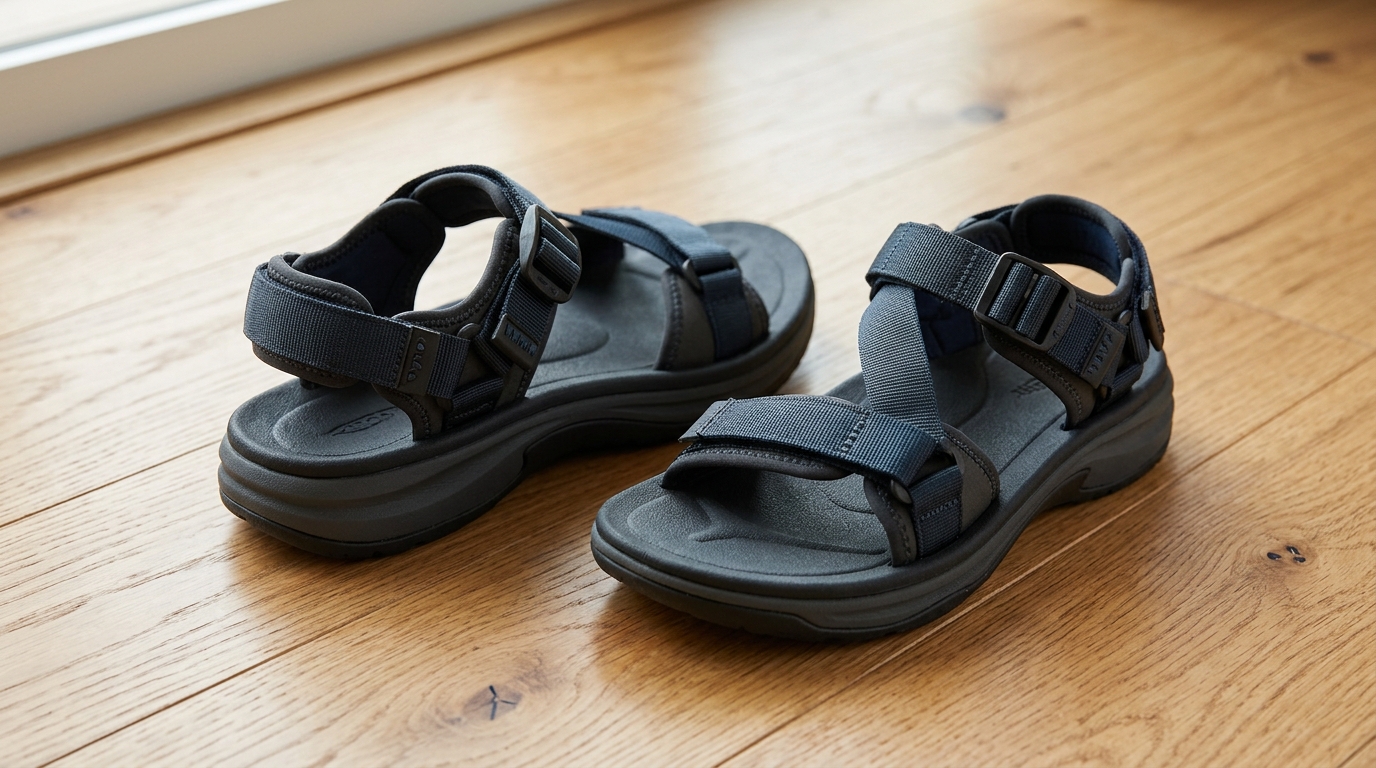
If you love the open feel of flip-flops, you don’t have to give them up entirely — just upgrade them. Look for sandals with a contoured, cushioned footbed, arch support, and a strap system that holds your foot securely. They cost more than foam throwaways, but your feet will notice the difference within a day. Keep the flat pair for the beach and the shower, not for a full day of walking. If pain persists for more than a couple of weeks despite better shoes, rest, and stretching, see a doctor or podiatrist — persistent heel pain may be plantar fasciitis or another condition that benefits from targeted treatment.
A daily routine for flip-flop sore feet
Start the morning with a gentle stretch: calf stretches against a wall and a slow tennis-ball roll under each arch for a minute or two. It loosens the tissues before you load them for the day.
During the day, wear supportive shoes for anything longer than a quick errand. Save the flat flip-flops for the pool, the beach, or a short trip — not a full day on your feet.
In the evening, ice any sore spots for 15 minutes, elevate your feet for a bit, and repeat the calf stretches before bed. If the same spot is sore again the next morning, that’s your cue to switch footwear for good, not just for a day.
Frequently asked questions
Are flip-flops bad for your feet?
Not in small doses, but they’re poor everyday shoes. Flat soles with no arch support force your toes to grip and your arches to flatten, which strains the foot over time. They’re fine for the beach or pool, but not ideal for all-day walking.
Can flip-flops cause plantar fasciitis?
They can contribute to it. The lack of arch support and cushioning strains the plantar fascia, and that repeated strain is a known aggravator of plantar fasciitis. If you already have heel pain, flat flip-flops will usually make it worse.
What sandals are better than regular flip-flops?
Look for sandals with a contoured footbed, real arch support, cushioning under the heel, and a strap that holds your foot in place. Supportive sandals give you the open feel without forcing your toes to grip all day.
How long does foot pain from flip-flops take to go away?
Mild soreness often settles within a few days of switching to supportive shoes and resting. If the pain is in the heel and lingers for more than a couple of weeks, get it checked — it may be plantar fasciitis or another condition.
Is it okay to wear flip-flops if my feet already hurt?
It’s best not to. Flat, unsupportive flip-flops will keep straining the same tissues that are already sore. Switch to supportive shoes until the pain settles, then keep flip-flops to short wear only.
Related reading: Foot Pain from Tight Shoes and Plantar Fasciitis Stretches.
Sources
- American Podiatric Medical Association — Flip-Flops and Foot Health
- Cleveland Clinic — Plantar Fasciitis: Causes, Symptoms and Treatment
- Mayo Clinic — Plantar Fasciitis: Self-Care and Treatment
This article is for information only and is not medical advice. If your foot pain is sharp, lingers for more than a couple of weeks, or comes with swelling, numbness, or a foot injury, talk to a healthcare professional rather than relying on self-care alone.