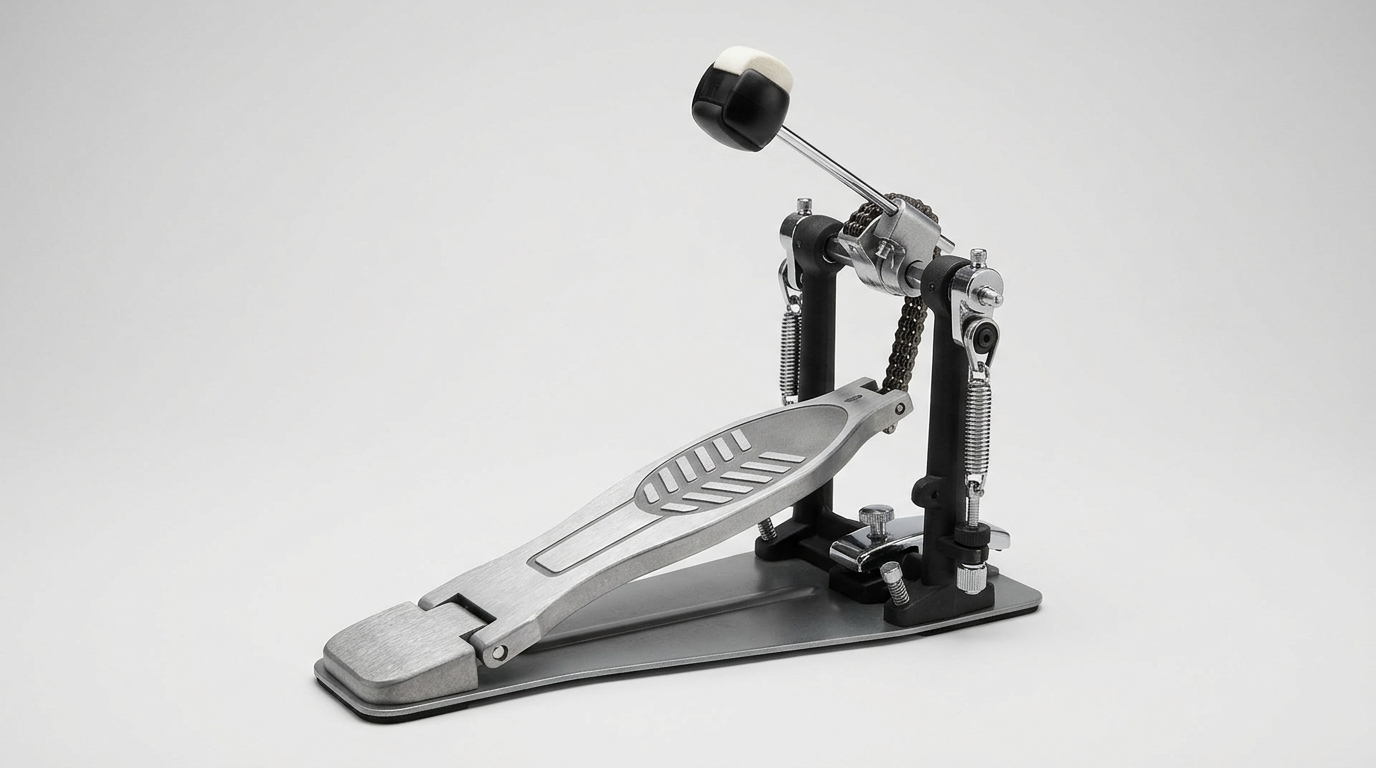
Quick Answer: In short, foot pain from playing drums usually comes from the bass-drum pedal — your foot makes thousands of small, fast ankle movements in one practice session, pumping the pedal with the forefoot while your heel stays planted. That repetitive motion strains the Achilles tendon, the shin muscles, and the ball of the foot. The fix is mostly about pedal setup, good shoes, and building up your playing time instead of jumping into long sessions.
See a doctor promptly if you notice:
- Sharp or severe pain in the heel, arch, or one spot on a bone
- Swelling, redness, or warmth that doesn’t settle after a day or two of rest
- Numbness, tingling, or a burning feeling in your feet or toes
- Pain that makes walking or putting weight on your foot difficult
- A wound, sore, or blister that won’t heal — especially if you have diabetes
Why Drumming Can Hurt Your Feet
Drumming looks like an arm workout, but your feet work just as hard. In a rock or pop kit, your right foot drives the bass-drum pedal — tapping, pumping, and stomping for the length of the song — while your left foot works the hi-hat pedal. A single session can mean thousands of ankle movements, and your feet rarely get a real break.
The pedal is what makes it different from other seated activities. With a heel-up technique, your forefoot stays on the pedal while your heel floats, so your calf and Achilles power every stroke. With heel-down, your heel stays planted and your ankle does all the flexing. Either way, one small joint and one small set of muscles does the work of thousands of beats. That’s why foot pain from playing drums usually shows up in the ankle, the Achilles, and the ball of the foot — and why it creeps up over weeks of regular playing instead of after one session.
Then there’s the imbalance. Most drummers lean on one foot far more than the other — the bass-drum foot works harder, faster, and longer than the hi-hat foot. Add in a throne set too low or too far from the pedals, and your ankle works at an awkward angle all session. Your toes grip the pedal for control, your shin muscles tire, and by the end of a long rehearsal your foot aches.
What It Is: The Most Common Causes
Achilles tendinitis is the most common complaint. The Achilles tendon loads with every pedal stroke, and thousands of fast repetitions can irritate it. The classic sign is stiffness and tenderness just above the heel, worst in the morning or at the start of your next session. Tight calves make it worse, and heavy pedal spring tension makes it worse still.
Shin splints come next — a dull, aching pain along the front of your lower leg. The muscles that lift your foot do the work of every pedal lift, and they tire fast if you jump into long sessions without building up. It builds during playing and eases once you stop.
Metatarsalgia — pain in the ball of your foot — rounds out the picture. Your forefoot presses the pedal hundreds of times a session, and a hard pedal plate with thin shoes can bruise the tissue under the metatarsal heads. Our guide to foot pain from cycling covers how the same repeated ankle motion strains the foot and what helps.
What Helps: Pedal and Throne Setup
The biggest single change is your pedal tension. Most bass-drum pedals let you adjust the spring — a lighter setting means less force on every stroke. If your pedal feels stiff and unresponsive, try a different one. The same goes for your beater: a lighter beater needs less effort per hit.
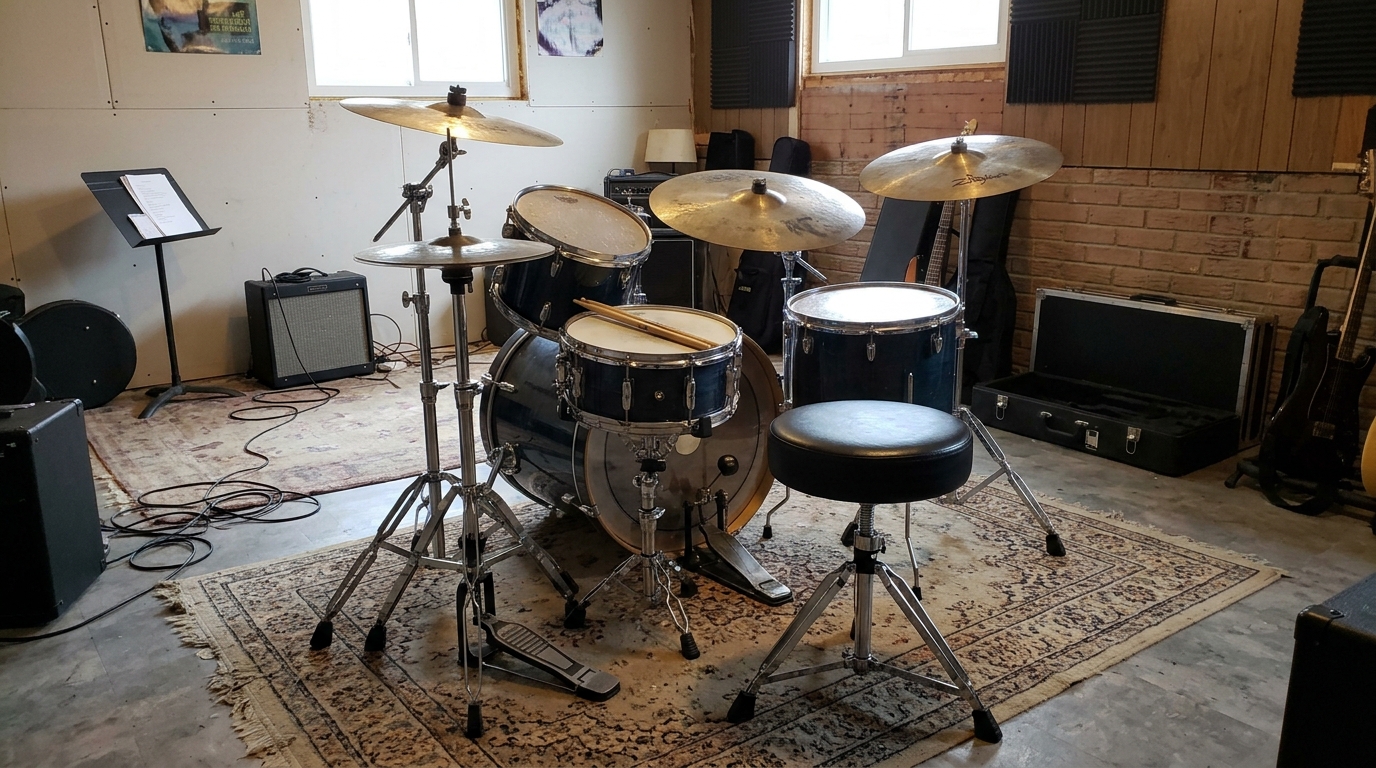
Next, check your throne height and distance. Sit with your thighs sloping slightly down and your feet resting naturally on the pedals — if your knees are higher than your hips, your ankle works at a bad angle. Slide the throne until your ankle moves freely. Five minutes of setup can save your feet hours of ache.
And wear proper shoes. Thin-soled shoes or playing barefoot leave your forefoot unprotected against a hard pedal plate. A light, flexible shoe with a thin but cushioned sole gives you pedal feel without bruising the ball of your foot. Our guide to foot pain after sitting all day explains how seated posture affects your feet over long sessions.
What Helps: Recovery After Playing
When the session is over, give your feet the same care you’d give any hard workout. Roll the bottom of each foot over a tennis ball or frozen water bottle, and stretch your calves against a wall: step one foot back, press the heel down, hold for thirty seconds a side. Tight calves make Achilles and heel pain worse.
Ice the sore spot if it aches — ten to fifteen minutes on the Achilles or the ball of the foot, with a thin cloth between the ice and your skin. Then rest: don’t jump into another long practice the next day. Alternate heavy practice days with lighter ones, and build up gradually.
Your Daily Routine for Happier Feet Behind the Kit
A routine that keeps your feet happy:
- Lighten your pedal spring: Less tension means less force on every stroke.
- Set your throne height: Thighs sloping slightly down, ankles moving freely.
- Wear light, cushioned shoes: Enough sole to protect your forefoot, thin enough to feel the pedal.
- Stretch your calves after playing: Thirty seconds a side against a wall.
- Roll your feet each evening: A tennis-ball roll loosens tired arches and Achilles tendons.
FAQs
Is foot pain from playing drums normal?
Mild aching in the ankle or the ball of the foot after a long session is common — your feet aren’t used to thousands of fast pedal strokes. Sharp or persistent pain should be checked.
Why does my right foot hurt more than my left when I drum?
Your bass-drum foot works harder, faster, and longer than your hi-hat foot, so it takes more strain. Most drummers also favor one technique on that side, which loads the same muscles session after session.
Is heel-up or heel-down better for your feet?
Neither is wrong — heel-up loads the calf and Achilles more, while heel-down loads the shin muscles and ankle joint more. Mix the two and switch when one starts to ache.
What shoes are best for drumming?
A light, flexible shoe with a thin but cushioned sole — enough padding to protect the ball of your foot, but thin enough to feel the pedal. Avoid thick, heavy shoes that dull your control.
How do I stop my feet hurting after drumming?
Lighten your pedal spring, fix your throne height, wear cushioned shoes, and build up gradually. Stretch your calves after every session and roll your feet over a tennis ball in the evening.
Sources
- Mayo Clinic — Achilles tendinitis causes and treatment
- Cleveland Clinic — shin splints and metatarsalgia
- American Podiatric Medical Association — foot care for musicians
This article is for general information only and is not medical advice. Talk to your doctor or a podiatrist about your own feet.