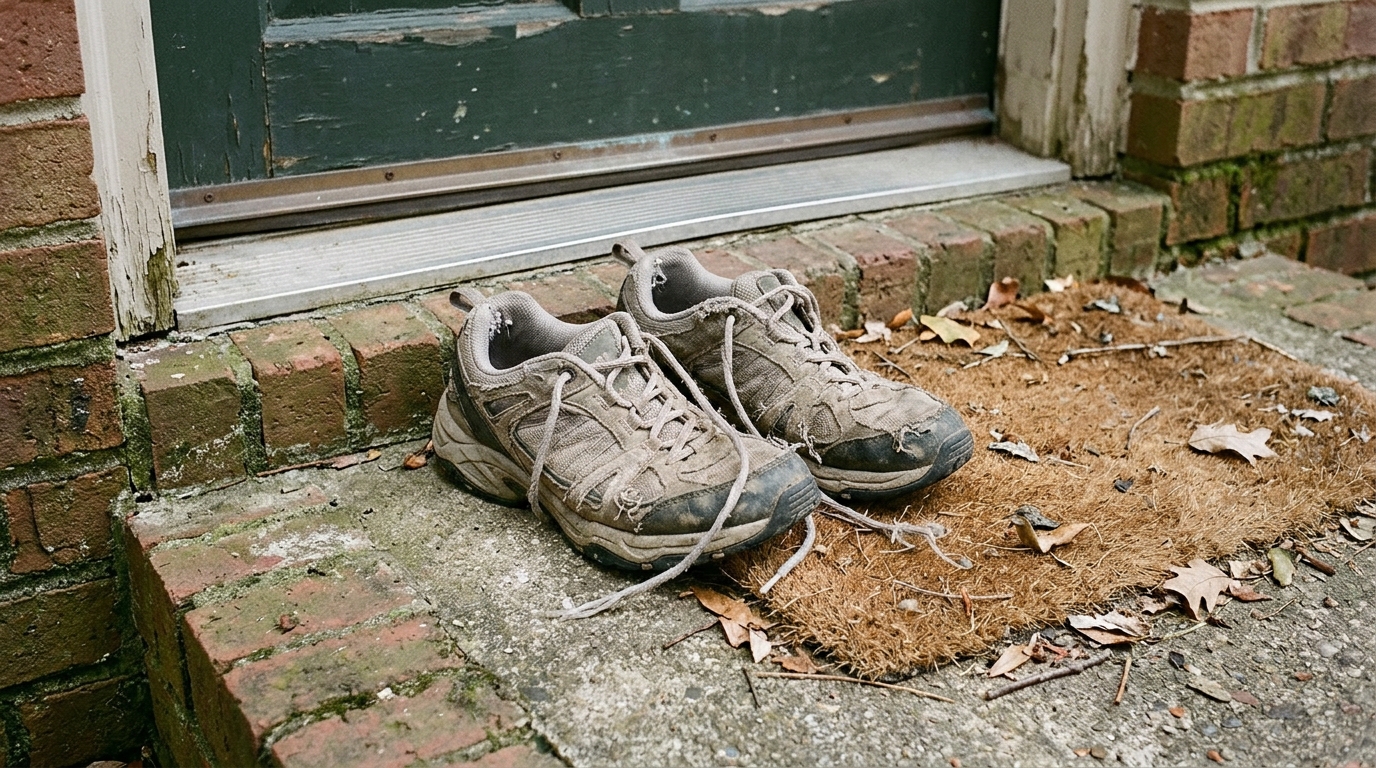
The story behind foot pain from worn out shoes is simple: the cushioning and support that used to protect your feet have broken down, so every step sends more impact straight into your heels, arches, and forefoot. The usual signs are pain that creeps in by the end of the day, soreness in a spot that never used to hurt, and shoes that look lopsided, creased, or compressed on one side. If new shoes make the pain fade within a week or two, your old pair was almost certainly the problem.
See a doctor promptly if you notice any of these:
- Pain that doesn’t improve after switching to supportive new shoes
- Sharp pain in the heel or arch first thing in the morning that lasts for weeks
- Swelling, redness, or a hot spot on one foot
- Numbness, tingling, or a foot that keeps rolling or giving way
- A wound, blister, or sore on your foot that won’t heal
Why worn-out shoes hurt your feet
Shoes don’t last forever, and they don’t usually fail all at once. The midsole — the foam layer between the outsole and your foot — slowly compresses with every step. After a few hundred miles, it stops springing back. The heel counter softens, the arch support flattens, and the outsole wears unevenly. You might not notice any of it happening, because the change is gradual and your feet quietly adapt — until one day they can’t, and the ache shows up.
When support breaks down, your foot starts moving in ways it shouldn’t. A shoe that once held your heel steady now lets it tilt inward or outward, which strains your ankle tendons and plantar fascia. The forefoot takes more pressure too, since the cushioning under the ball of your foot is usually the first thing to go flat. That’s why worn-out shoes so often show up as heel pain, arch ache, ball-of-foot soreness, or shin splints — the foot’s shock absorbers are gone, and the rest of your body picks up the slack.
How fast this happens depends on the shoe and how you use it. According to the American Academy of Orthopaedic Surgeons, running shoes generally need replacing every 300 to 500 miles, and everyday walking shoes often last around a year of regular use. Heavier runners, people who walk on hard surfaces all day, and anyone whose gait wears one side of a shoe faster will wear shoes out sooner. Cheap foam breaks down faster than quality foam, too.
How to tell your shoes are done
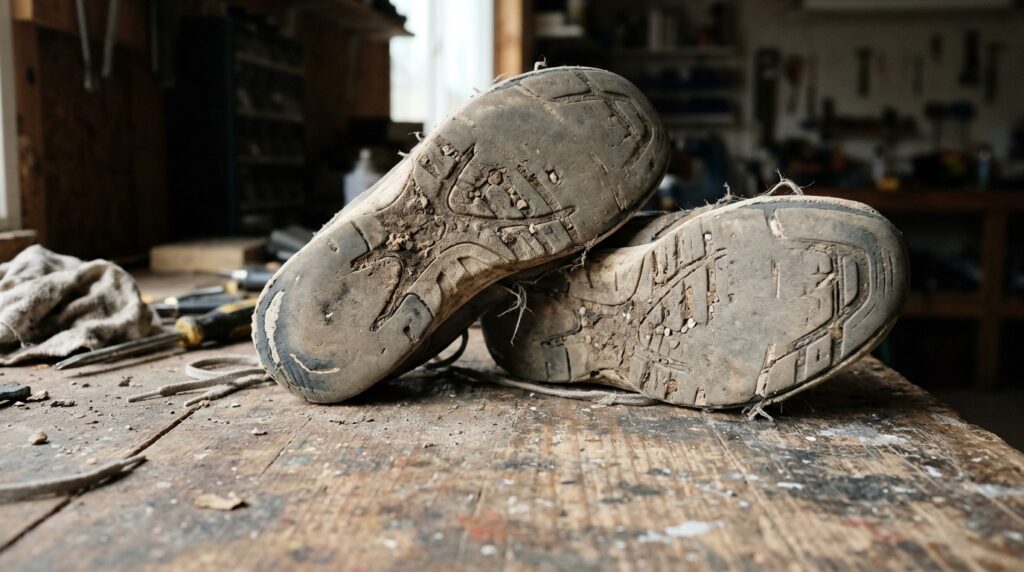
The simplest test is the table test. Put your shoes on a flat surface and look at them from behind: if they lean to one side, the heel counter has collapsed. Press your thumb into the midsole — if it feels hard and flat instead of springy, the cushioning is spent. Check the outsole tread: bald patches, especially worn through on one side, mean the shoe is steering your foot unevenly with every step.
Your body gives clues as well. Pain that appears late in the day, after months of comfortable wear, is a classic sign. New blisters in familiar shoes, a feeling that your feet are tired in a way they weren’t before, or a shoe that suddenly feels “flat” are all worth listening to. And if your shoes have developed a permanent crease across the forefoot that folds sharply when you walk, the midsole has cracked inside — no insole will fix that.
One thing people get wrong is thinking an insole can rescue a dead shoe. A fresh insole adds a little cushion, but it can’t restore a collapsed heel counter or a cracked midsole. If the shoe’s structure is gone, the honest fix is a new pair. Save the insoles for the new shoes, where they’ll actually do some good.
A daily routine that keeps your feet happy
Start by rotating your shoes if you can. Wearing the same pair every single day compresses the foam without a rest day to rebound, and it traps moisture that breaks materials down faster. Two pairs in rotation last noticeably longer than one pair worn twice as hard, and your feet get a slightly different support pattern each day, which is good for them.
When you get home, take your shoes off and let them air out — stuffing them with newspaper or using shoe trees helps them hold their shape. Wipe off mud and grit, which grind the outsole down, and check the heels and tread every couple of weeks so wear doesn’t sneak up on you.
For your feet themselves, a quick evening routine pays off: roll a ball under each foot for a minute, stretch your calves for 30 seconds a side, and flex and spread your toes a few times. If you’ve been on your feet all day in tired shoes, 15 minutes with your feet up and an ice pack on any sore spot will settle things down. And when you do buy new shoes, shop late in the day when your feet are slightly swollen — that’s the size your feet actually are when they need the room.
Frequently asked questions
How long should a pair of shoes last?
It depends on use. Running shoes: roughly 300 to 500 miles. Everyday walking shoes: often 8 to 12 months of daily wear. Work shoes worn on concrete all day may last less. Mileage and wear pattern matter more than the calendar, so check the shoe itself, not just the purchase date.
Can worn-out shoes cause plantar fasciitis?
They can contribute to it. When arch support and heel cushioning break down, the plantar fascia takes more strain with every step, and over time that irritation can develop into plantar fasciitis. Worn shoes alone rarely cause it in a healthy foot, but they’re a common trigger when other risk factors are already there.
Is it worth buying expensive shoes?
Not necessarily expensive, but well-made. What matters is a durable midsole, a solid heel counter, and a fit that matches your foot. Mid-range shoes from reputable running or walking brands usually outlast bargain pairs by a wide margin, which makes them cheaper per mile in the end.
Do insoles extend the life of old shoes?
Only a little, and only early on. A new insole can add cushioning to a shoe that’s starting to feel flat, but it can’t fix a collapsed heel counter, a cracked midsole, or a worn-through outsole. If the shoe leans or the tread is bald, replace the shoe, not the insole.
Should I keep old shoes for gardening or short errands?
Short, low-impact use is fine — a quick trip to the bin in old shoes won’t hurt you. Just don’t let “garden shoes” quietly become your daily walking shoes, because that’s exactly how worn-out-shoe pain creeps back in unnoticed.
Sources
- American Academy of Orthopaedic Surgeons — Footwear and foot health guidance
- Cleveland Clinic — Foot pain: causes and when to seek care
- Mayo Clinic — Plantar fasciitis: symptoms and causes
This article is for information only and is not medical advice. If your foot pain is severe, persistent, or getting worse, talk to a healthcare professional.