Metatarsalgia: Ball-of-Foot Pain Causes & Relief
The ball of your foot takes your full body weight with every push-off. When that pressure concentrates on one or two metatarsal heads — the five bones at the bases of your toes — the area becomes inflamed. The result is metatarsalgia: aching, burning or sharp pain under the forefoot, sometimes with a feeling like stepping on a pebble.
When to see a doctor
See a clinician if pain is severe, if one spot is very tender and worsening (possible stress fracture), if there is swelling, bruising or numbness, if you cannot bear weight, or if pain does not improve after a few weeks of home care. Anyone with diabetes, poor circulation or numb feet should get forefoot pain checked promptly rather than filing calluses or self-treating.
What causes metatarsalgia
- High-impact activity: running, jumping and court sports repeatedly load the forefoot.
- Footwear: high heels push weight forward; thin soles, worn-out cushioning and narrow toe boxes concentrate pressure.
- Foot shape: high arches, a second toe longer than the big toe, bunions, hammertoes or a prominent metatarsal bone.
- Ageing: the fat pad under the ball thins with age, leaving less natural cushioning.
- Weight and conditions: excess body weight, arthritis, stress fractures and Morton’s neuroma can all drive or mimic it.
Symptoms
- Sharp, aching or burning pain in the ball of the foot, worse standing, walking or running, better with rest
- A pebble-in-the-shoe sensation under the forefoot
- Numbness, tingling or shooting pain into the toes
- More pain barefoot on hard floors; calluses forming on the ball
- Pain that builds over weeks or months rather than appearing overnight
What actually helps
- Rest, ice, elevation: rest the foot, ice the ball 15–20 minutes a few times a day, and use over-the-counter pain relief for flare-ups.
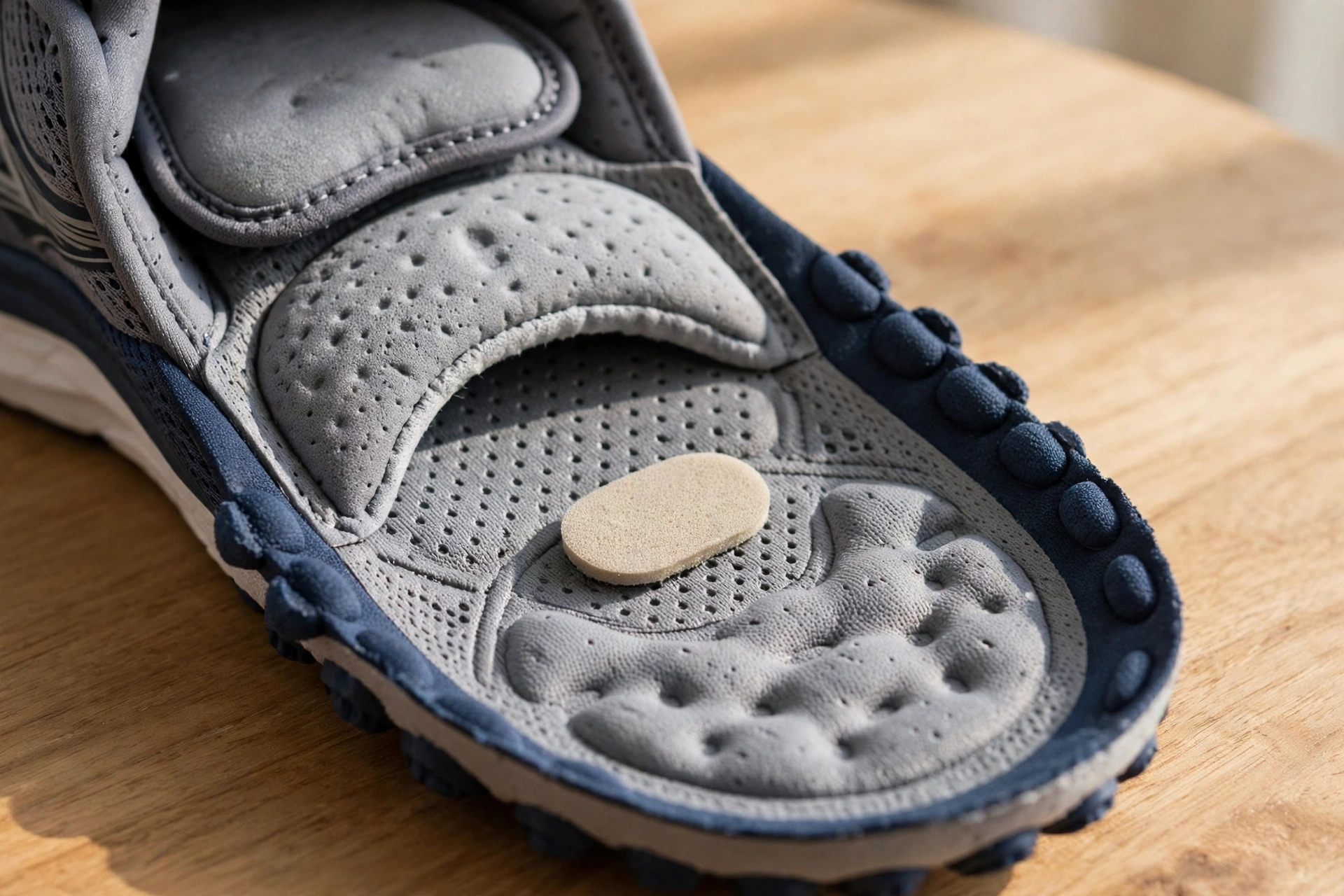
- Metatarsal pads: a pad placed just behind the painful area lifts and offloads it. Inserts with built-in metatarsal pads work the same way.

- Shoes: low heels, thick padded soles, a wide toe box and real arch support. Avoid high heels and thin-soled shoes until it settles.

- Insoles: cushioned, shock-absorbing insoles spread forefoot pressure.
- Callus care: soak, then gently file a callus with a pumice stone — never cut it, and never file if you have diabetes.
- Load management: build running and standing time gradually, stretch and warm up before exercise, and keep weight in check.
Daily routine for ball-of-foot pain
- Morning: check your shoes — cushioned, wide, low heel — with metatarsal pads positioned behind the sore spot.
- Through the day: sit and rest the foot when pain rises; avoid barefoot hard floors.
- Evening: ice 15 minutes, gentle toe stretches, and file any callus after a warm soak.
- Weekly: if pain is unchanged after 2–3 weeks, book a podiatry check.
Frequently asked questions
Does metatarsalgia go away on its own?
It can improve with rest, ice and better shoes, but it usually returns unless the cause — footwear, overload or foot shape — is addressed.
Where exactly does a metatarsal pad go?
Just behind the painful area, not under it. Mark the sore spot, step into the shoe to transfer the mark to the insole, and place the pad just behind that mark.
Is it metatarsalgia or Morton’s neuroma?
Both cause forefoot pain, but neuroma pain is more burning or tingling between the toes, often with a pebble feeling and numbness. A clinician can tell them apart; treatment overlaps but is not identical.
Can I keep running with metatarsalgia?
Ease off until pain settles, then return gradually in cushioned shoes with metatarsal pads. Running through sharp forefoot pain risks a stress fracture.
When is surgery needed?
Rarely. Most cases settle with conservative care; surgery (such as removing part of a bone) is reserved for persistent cases where everything else has failed.
Sources
- Treating Metatarsalgia — Veterans Health Library
- Metatarsalgia: Symptoms, Causes, Diagnosis, Treatment — WebMD
- What to Do About Pain in the Ball of Your Foot — Aloha Foot and Ankle
Footcarely is reader-supported. We don’t use affiliate links yet — when we do, this page will say so. This guide is general information, not medical advice. Persistent foot pain deserves a podiatrist, not just new shoes.
Related: Best Insoles for Plantar Fasciitis · Best Shoes by Profession · Foot Pain Map · Foot Problem Finder quiz