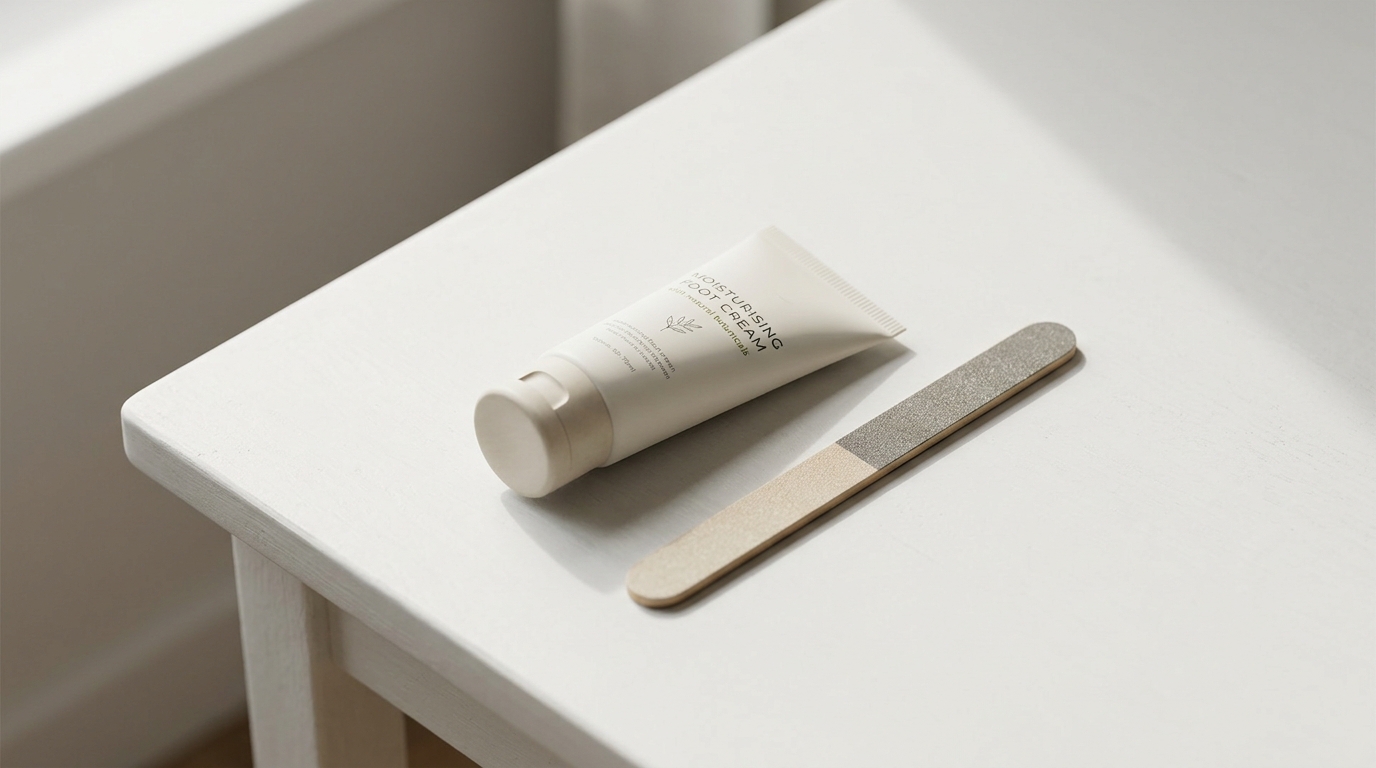
Cracked toenails are annoying, sometimes painful, and very common. The most common cracked toenails causes are dryness, a fungal infection, an old injury, and the natural thinning that comes with aging. Nails crack when they lose moisture and flexibility, or when infection or injury weakens the nail plate. Most cracked toenails improve with moisturising, careful trimming, and well-fitting shoes. If a crack is deep, bleeding, or the nail is thick and discoloured, see a doctor to rule out a fungal infection.
See a doctor promptly if you notice any of these:
- A deep crack that bleeds or exposes the nail bed
- Signs of infection: increasing pain, swelling, warmth, or pus
- The nail is thick, yellow, crumbly, or smells odd
- Cracks keep coming back despite proper nail care
- You have diabetes or poor circulation and any nail damage
What cracked toenails are
Your toenails are made of keratin, the same tough protein as hair. A healthy nail is smooth, flexible, and strong enough for the pressure of walking. When a nail cracks, it splits — a thin line down the middle, a horizontal break across the tip, or a jagged split at the corner that catches on socks. A crack can be cosmetic, or deep enough to hurt, snag, and leave the nail bed exposed to infection.
Nails crack when the nail plate loses flexibility. Think of a dry twig versus a green one: a well-hydrated nail bends slightly under pressure, while a dry, brittle nail snaps. That is why cracked toenails often appear in winter, when cold air and hot showers strip moisture, and why they get more common with age.
Why toenails crack
Dryness is the number one culprit among cracked toenails causes. Nails absorb and lose water constantly, and repeated wetting and drying leaves them brittle. Harsh soaps and acetone-based removers strip the nail’s natural oils. If your hands and feet feel dry, your nails probably are too.
Fungal infection is the second big cause, and easy to miss at first. It makes the nail thick, yellow or white, crumbly at the edges, and prone to splitting. The crack is not the disease itself — it is a symptom of a nail the fungus has already weakened. If your cracked nail is also thick, discoloured, or ragged, moisturiser alone will not fix it.
Injury is the third common cause. Dropping something on your toe, stubbing it hard, or years of toes pressing against the front of tight shoes can damage the nail matrix — the growth centre hidden under the skin at the base of the nail. A damaged matrix grows a nail with a weak line in it, so the nail keeps cracking in the same place.
Aging plays a role too. As you get older, your nails grow more slowly and become thinner and drier. Low iron, low biotin, and low zinc have all been linked to brittle nails, though a true deficiency is less common than simple dryness. Thyroid problems and psoriasis can also change nail texture, so persistent splitting without an obvious cause is worth mentioning to a doctor.
What helps cracked toenails heal
Start with moisture — it is the simplest fix and it works. Apply a thick moisturiser, petroleum jelly, or urea-based foot cream to your nails and the skin around them daily — ideally after a shower, while the nail is still slightly damp, so the cream seals the moisture in. Cuticle oil helps too. Avoid acetone and polish remover, and give your nails a break from polish so you can see how they are healing.
Trimming matters just as much. Cut your toenails straight across with clean, sharp clippers, and file the edges smooth so no rough corner can catch and split further. Do not cut them too short, and do not round the corners — that invites ingrown toenails. If a crack has already started, smooth it with a nail file and cover it with clear nail tape or a dab of nail glue to stop it snagging while it grows out. Never use superglue on a nail bed or broken skin.
Wear shoes that fit. Tight, narrow shoes press the toes together and put pressure on the nail, so a weak nail splits. Choose a wide toe box and about a thumbnail’s width of space beyond your longest toe. If you run or hike, go up half a size — feet swell during exercise and toes hit the front of the shoe.
If you suspect a fungal infection — the nail is thick, yellow, crumbly, or smells strange — an over-the-counter antifungal cream may help in mild cases, but topical treatments take months and often struggle to reach the infection. If the nail does not improve, a doctor can confirm the diagnosis and prescribe stronger treatment.
A daily routine for stronger nails
Keep it simple and do it every day. After your morning shower, pat your feet dry — especially between the toes — and rub moisturiser or petroleum jelly into each nail. Wear clean cotton or moisture-wicking socks, and change them if they get sweaty. At night, a thicker layer of cream before bed gives it hours to soak in. Trim your nails once a week, straight across, and file rough edges smooth straight away. Wear flip-flops in communal showers to avoid picking up a fungal infection. Eat a balanced diet with enough protein, iron, and zinc — nails are made of protein, and a poor diet often shows up there first.
Frequently asked questions
Why do my toenails keep cracking?
The most common reasons are dryness, fungal infection, an old injury, and aging. If one nail always cracks in the same place, an old injury to the matrix is likely. If several nails are thick and discoloured, a fungal infection is more likely.
Can a cracked toenail heal on its own?
Yes, if the cause is dryness or a minor injury. A crack grows out with the nail over several months, and moisturising and trimming help it along. A crack caused by fungus will not heal properly until the infection is treated.
How do I stop my toenails from splitting?
Moisturise your nails daily, avoid acetone and harsh nail products, trim straight across and file edges smooth, and wear shoes with a wide toe box. Keep your feet dry and wear flip-flops in communal showers.
Should I see a doctor for a cracked toenail?
See a doctor if the crack is deep or bleeding, if there are signs of infection, if the nail is thick, yellow, or crumbly, or if cracks keep returning. People with diabetes or poor circulation should get nail damage checked promptly.
Can nail polish make toenails crack?
Yes. Nail polish and especially acetone-based removers dry out the nail plate and strip its natural oils. Give your nails regular breaks from polish, and use a gentle acetone-free remover.
Sources
- Cleveland Clinic — Brittle Nails: Causes, Symptoms, and Treatment
- Mayo Clinic — Fungal Nail Infection: Symptoms and Causes
- NHS — Brittle Nails and Fungal Nail Infection
- American Podiatric Medical Association — Toenail Problems
This article is for information only and is not medical advice. If your foot pain is severe, sudden, or not improving, talk to a healthcare professional for a proper diagnosis.