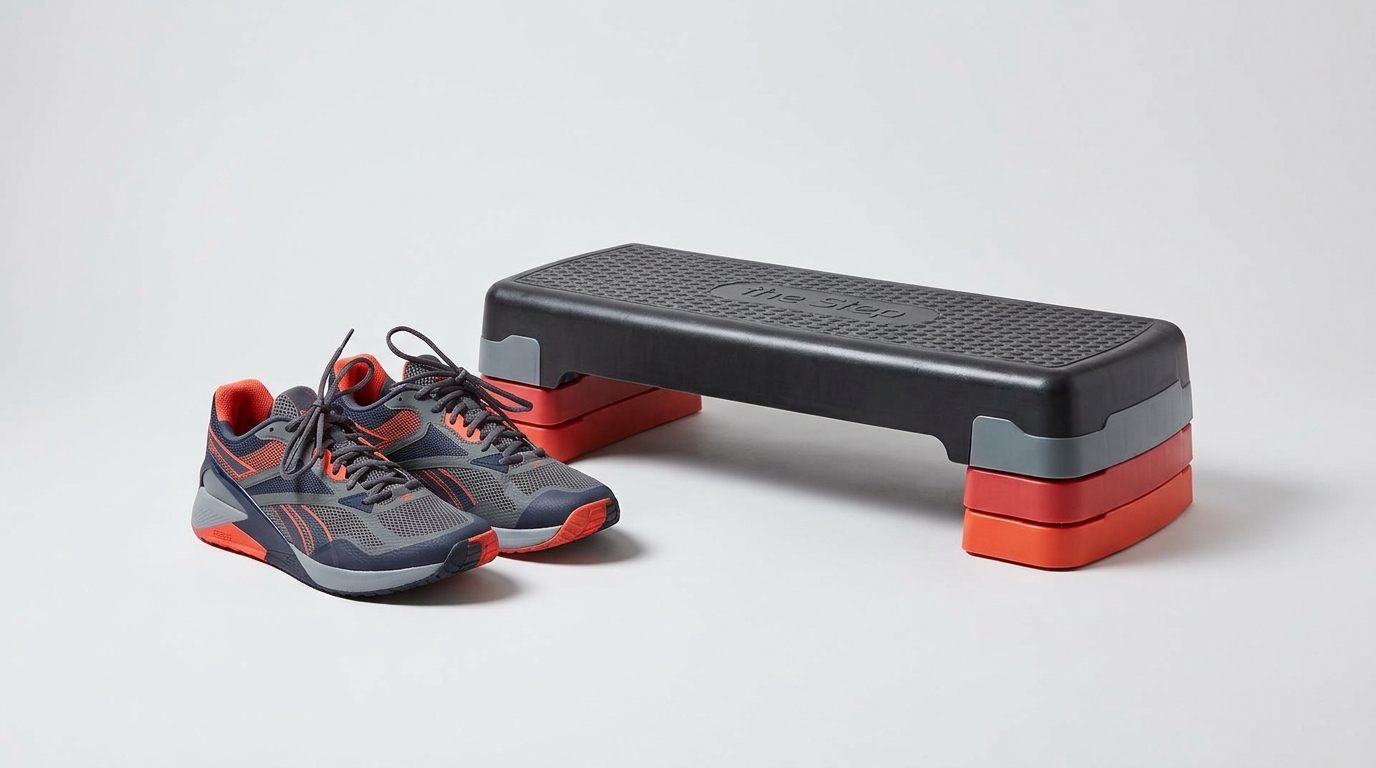
Quick Answer: In short, foot pain from step aerobics usually comes from the hundreds of step-ups in a single class — each one lands your weight on the ball of your foot as you push up, then loads it again as you step back down. That repeated forefoot impact irritates the arch, the ball of the foot, and the Achilles tendon. The fix is mostly about good shoes, a sensible platform height, and easing into the intensity instead of going all-out from day one.
See a doctor promptly if you notice:
- Sharp or severe pain in the heel, arch, or one spot on a bone
- Swelling, redness, or warmth that doesn’t settle after a day or two of rest
- Numbness, tingling, or a burning feeling in your feet or toes
- Pain that makes walking or putting weight on your foot difficult
- A wound, sore, or blister that won’t heal — especially if you have diabetes
Why Step Aerobics Can Hurt Your Feet
Step aerobics looks low-impact next to running, but your feet work harder than you think. Every step-up drives your weight through the ball of your foot, and every step-down loads it again as you brake. One class can mean several hundred landings, all on the same small patch of your foot.
The platform is what makes it different from walking or even jumping. In a normal stride your heel strikes first and rolls through to the toes, spreading the load. On a step, your forefoot takes the weight first and stays loaded while you push up — there’s no heel-to-toe roll to share the work, so the ball of your foot and your Achilles absorb far more force. That’s why foot pain from step aerobics often shows up in the forefoot and heel, and why it can feel worse the day after class, not during it.
Then there’s the rhythm. Step classes keep you moving at a steady beat, so you rarely rest between landings. Side steps, knee lifts, and turns mean your feet land at slightly different angles each time. Your toes grip for balance, your ankle rolls a little, and your arch flattens. By the last ten minutes your feet are tired, your form slips, and the impact gets worse — which is exactly when most of the soreness is created.
What It Is: The Most Common Causes
Metatarsalgia — pain in the ball of your foot — is the most common complaint. The forefoot takes the brunt of every push-off and landing, so the tissue under the metatarsal heads gets bruised and inflamed. It feels like a sharp or burning ache under the ball of the foot, worse when you press on it.
Plantar fasciitis comes next. The plantar fascia runs along the bottom of your foot, and repeated pushing off the platform stretches it again and again. The classic sign is heel pain with your first steps in the morning, easing as you move.
Achilles tendinitis rounds out the picture. Every step-up flexes your ankle and loads the Achilles tendon, and tight calves make it worse. It feels stiff and tender just above the heel, especially in the morning or at the start of your next class. Our guide to foot pain from jumping covers the same kind of repetitive impact and how to protect your feet from it.
What Helps: Shoes and Platform Setup
The biggest single change is your shoes. Step aerobics needs a supportive cross-trainer, not a running shoe and definitely not a flat sneaker. Look for a firm heel counter, a cushioned but stable sole, and a snug fit — your toes shouldn’t slide forward on every step-down. If your shoes are worn out, replace them before your next class.
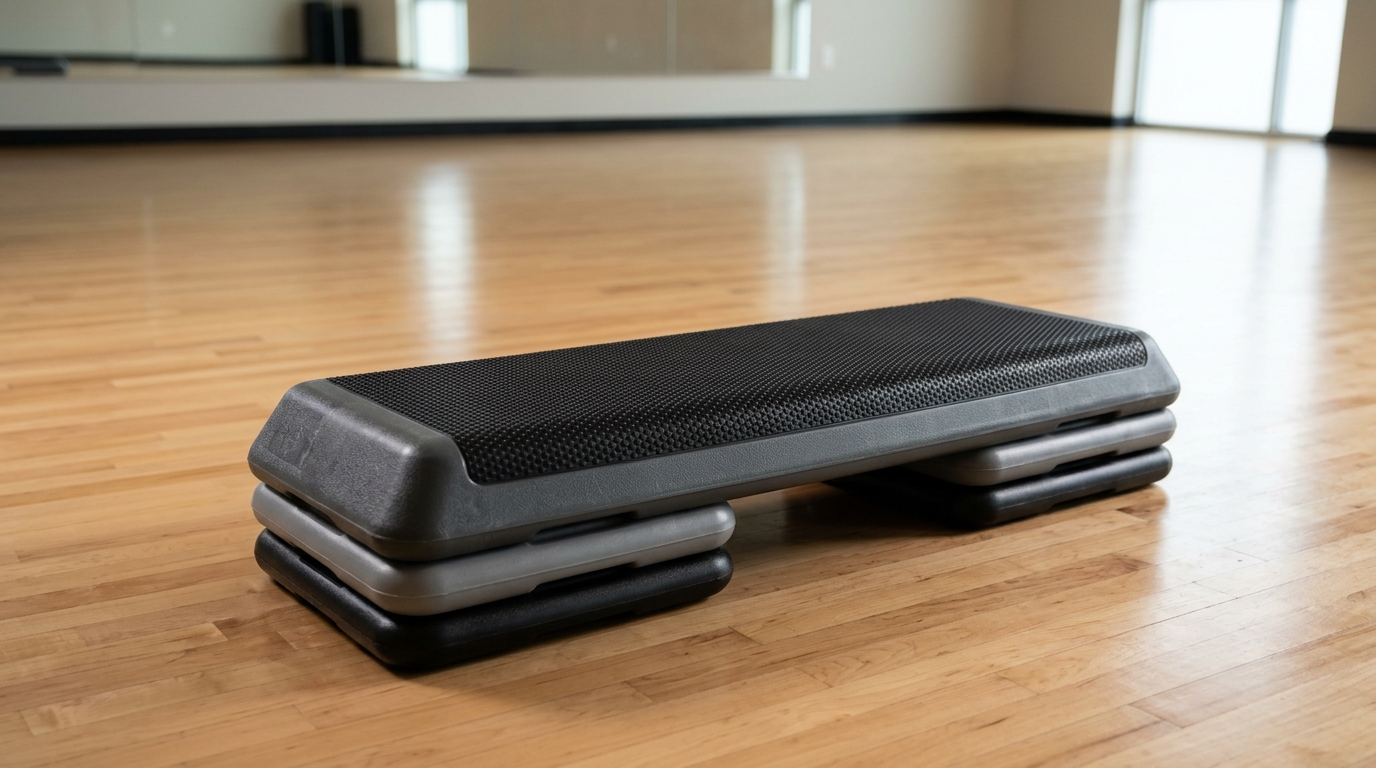
Next, check your platform height. Most classes use a step of four to eight inches, and higher isn’t better — every extra inch adds load to your forefoot and Achilles. If you’re new to step, start on the lowest setting and raise it only once your feet feel comfortable for a full class.
And keep your whole foot on the step. Hanging your heel off the edge forces your forefoot and Achilles to do all the work. Place your whole foot on the platform, heel included, and step down with control instead of dropping your weight. Our guide to foot pain from dancing explains how the same whole-foot landing idea protects your feet in other rhythmic classes.
What Helps: Recovery After Class
When class is over, give your feet the same care you’d give any hard workout. Roll the bottom of each foot over a tennis ball or frozen water bottle, and stretch your calves against a wall: step one foot back, press the heel down, hold for thirty seconds a side. Tight calves make heel and Achilles pain worse.
Ice the sore spot if it aches — ten to fifteen minutes on the ball of the foot or the heel, with a thin cloth between the ice and your skin. Then rest: don’t jump straight into another high-impact class the next day.
Your Daily Routine for Happier Feet in Step Class
A routine that keeps your feet happy:
- Wear a proper cross-trainer: Firm heel counter, stable cushioning, snug fit — every class.
- Start on the lowest platform: Four inches is plenty until your feet are used to it.
- Land with your whole foot: Heel on the platform, step down with control.
- Stretch your calves after class: Thirty seconds a side against a wall.
- Roll your feet each evening: A tennis-ball roll loosens tired arches and forefeet.
FAQs
Is foot pain from step aerobics normal?
Mild aching in the ball of the foot or the heel after your first few classes is common — your forefoot isn’t used to that much repeated impact. Sharp, one-sided, or persistent pain should be checked.
Why does the ball of my foot hurt after step aerobics?
Every step-up pushes your weight through the ball of your foot, and every step-down lands on it again. Hundreds of those impacts can bruise the tissue under the metatarsal heads.
What shoes are best for step aerobics?
A cross-trainer with a firm heel counter, a cushioned but stable sole, and a snug fit that stops your foot sliding forward. Running shoes are too soft for the lateral moves, and flat sneakers offer no cushioning at all.
How high should my step platform be?
Four inches is a good starting point, and eight inches is the upper end for most people. Start low and raise it only once your feet handle a full class without soreness.
How do I stop my feet hurting after step aerobics?
Wear a supportive cross-trainer, use a lower platform, land with your whole foot on the step, and stretch your calves after class. Roll your feet over a tennis ball in the evening and rest between hard classes.
Sources
- Mayo Clinic — metatarsalgia causes and treatment
- Cleveland Clinic — plantar fasciitis and Achilles tendinitis
- American Podiatric Medical Association — exercise and foot health
This article is for general information only and is not medical advice. Talk to your doctor or a podiatrist about your own feet.