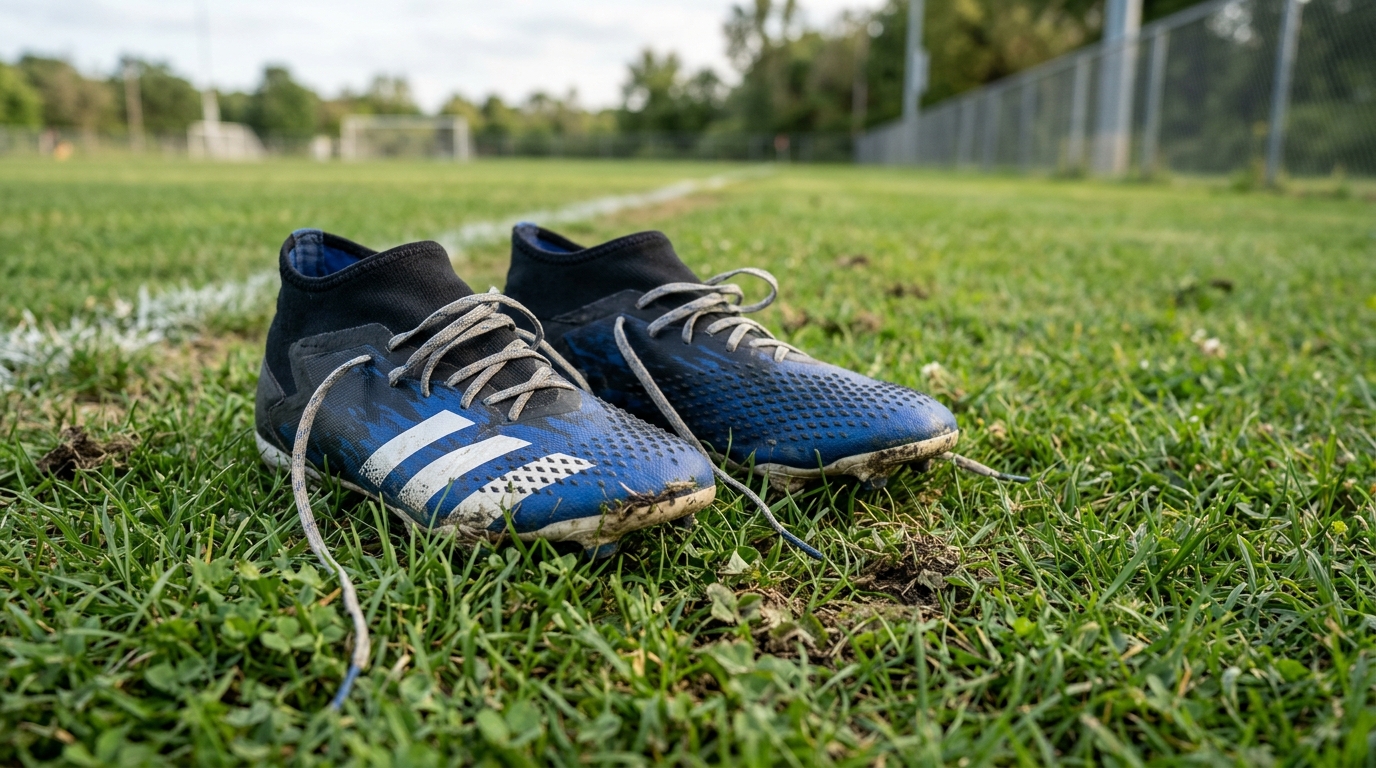
Foot pain from soccer cleats usually comes down to fit and stud pressure: cleats are built light and snug with a firm sole, so if they’re too tight, too narrow, or the studs concentrate pressure on one spot, your feet protest. The most common complaints are forefoot ache, blisters, bruised toenails, and heel or arch soreness after games. Most of it improves with the right size, a proper break-in, and the right stud pattern for your surface.
See a doctor promptly if you notice any of these:
- Pain that lasts more than a few days after a game, or gets worse instead of better
- Swelling, bruising, or a foot you can’t put weight on
- Numbness or tingling in the toes that doesn’t fade
- A toenail that turns black and is very painful, or a nail that lifts
- A cut or blister on the foot that becomes red, hot, or infected-looking
Why soccer cleats hurt
Soccer cleats are designed for grip and ball feel, not comfort. The sole is stiff and thin so you can feel the ball, the upper is snug so your foot doesn’t slide inside, and the studs bite into the ground so you can cut and sprint. That’s great for performance, but it leaves very little cushioning between your foot and the ground — and on firm or artificial surfaces, every sprint, stop, and jump sends shock straight up through the sole.
Fit is the biggest culprit. Cleats that are too tight squeeze the forefoot and crush the toes together, which causes blisters, numbness, and bruised toenails. Cleats that are too loose let the foot slide, so the toes jam into the front on every sprint and stop. A narrow last on a wide foot is a classic mismatch — you’ll feel it as pinching along the outside of the foot or a burning ache across the ball of the foot by halftime.
Stud pattern matters too. Firm-ground studs on hard, dry pitches concentrate pressure under the forefoot and heel, which is why heel and arch soreness shows up after games on baked summer fields. On artificial turf, the wrong studs can grip too hard, twisting the foot while the body keeps moving — that’s a recipe for ankle and knee complaints as well as foot pain. According to the American Academy of Orthopaedic Surgeons, matching footwear to the playing surface is one of the simplest ways to reduce sports foot injuries.
What helps foot pain from soccer cleats
Start with fit, and be honest about it. Your cleats should have about a thumb’s width between your longest toe and the end of the shoe, and your foot shouldn’t spill over the edge of the sole on either side. If you have wide feet, look for brands and models that actually come in a wide fit rather than just sizing up — a longer shoe doesn’t fix a narrow one. Try cleats on with the socks you’ll play in, and walk and jog in them in the store if you can.
Break new cleats in gradually. Wear them around the house for short sessions, then for a light training session, before a full match. Leather uppers mould to your foot over time; synthetic uppers much less so, which means a synthetic cleat that pinches in the store will probably keep pinching. Lacing technique helps too — skipping a lace cross over a sore spot (a “window” lace) or using a heel-lock loop can stop the foot sliding without cranking the whole shoe tighter.
Insoles made for cleats are thinner than regular insoles, but a low-profile cushioned insole or a thin orthotic can take the edge off forefoot pressure without making the shoe feel cramped. And match your studs to your surface: firm-ground studs for natural grass, turf-specific short studs or turf shoes for artificial surfaces, and soft-ground studs only for genuinely muddy pitches.
After games, take care of the feet, not just the kit. Ice any sore spot for 15 minutes, stretch your calves, and roll a ball under each foot.
A match-day routine for happier feet
Before the game, check your studs — worn or missing studs change how pressure spreads across the sole, and a quick tighten takes seconds. Tape any spot that usually blisters, and lace up with a heel-lock if your foot tends to slide forward.
After the game, get the cleats off promptly and let your feet breathe. A cool-down stretch for calves and Achilles, plus a minute of rolling each foot over a ball, helps the fascia settle after an hour of hard impact. Clean and cover any bruised toe or blister, and watch it for a couple of days.
Between games, rotate a second pair if you play often, and always let cleats dry fully before the next use — damp boots soften and stretch unevenly, and they smell terrible besides. Check insoles and the stud plate every few weeks — a cracked plate means it’s time to replace them.
Frequently asked questions
Should soccer cleats hurt when they’re new?
A little snugness that eases as leather breaks in is normal; real pain is not. If a cleat pinches, crushes your toes, or causes numbness in the store, it won’t magically fix itself on the pitch — especially synthetic models, which stretch very little. Find a pair that fits from day one.
Are firm-ground cleats okay on artificial turf?
Not really. Firm-ground studs are longer and grip turf too aggressively, which increases twisting forces on your foot and ankle and concentrates pressure. Turfshoes or short-stud turf cleats are designed for that surface and are much kinder to your feet.
Why do my toenails turn black after soccer?
Repeated toe jamming — sprinting, stopping, and shooting in cleats that are too tight or too long in the wrong way — bruises the nail bed. It’s the same mechanism as runner’s black toenail. Correct fit, proper lacing, and trimming your nails straight across usually stop it.
Can I put regular insoles in soccer cleats?
Usually not — standard insoles are too thick and will make the cleat feel cramped or push your heel up out of the shoe. Use low-profile sports insoles designed for cleats, or a thin custom orthotic if a podiatrist has made one for you.
When should a young player’s cleat pain be checked?
If pain lasts more than a few days, if there’s swelling or limping after games, or if the same spot keeps hurting week after week, get it looked at. Growing feet are more vulnerable to stress injuries, and a pain that a young player keeps playing through can turn into something that needs real time off.
Sources
- American Academy of Orthopaedic Surgeons — Sports footwear and foot injuries
- Cleveland Clinic — Foot pain in athletes: causes and care
- Mayo Clinic — Blisters and toenail injuries: first aid
This article is for information only and is not medical advice. If your foot pain is severe, persistent, or getting worse, talk to a healthcare professional.