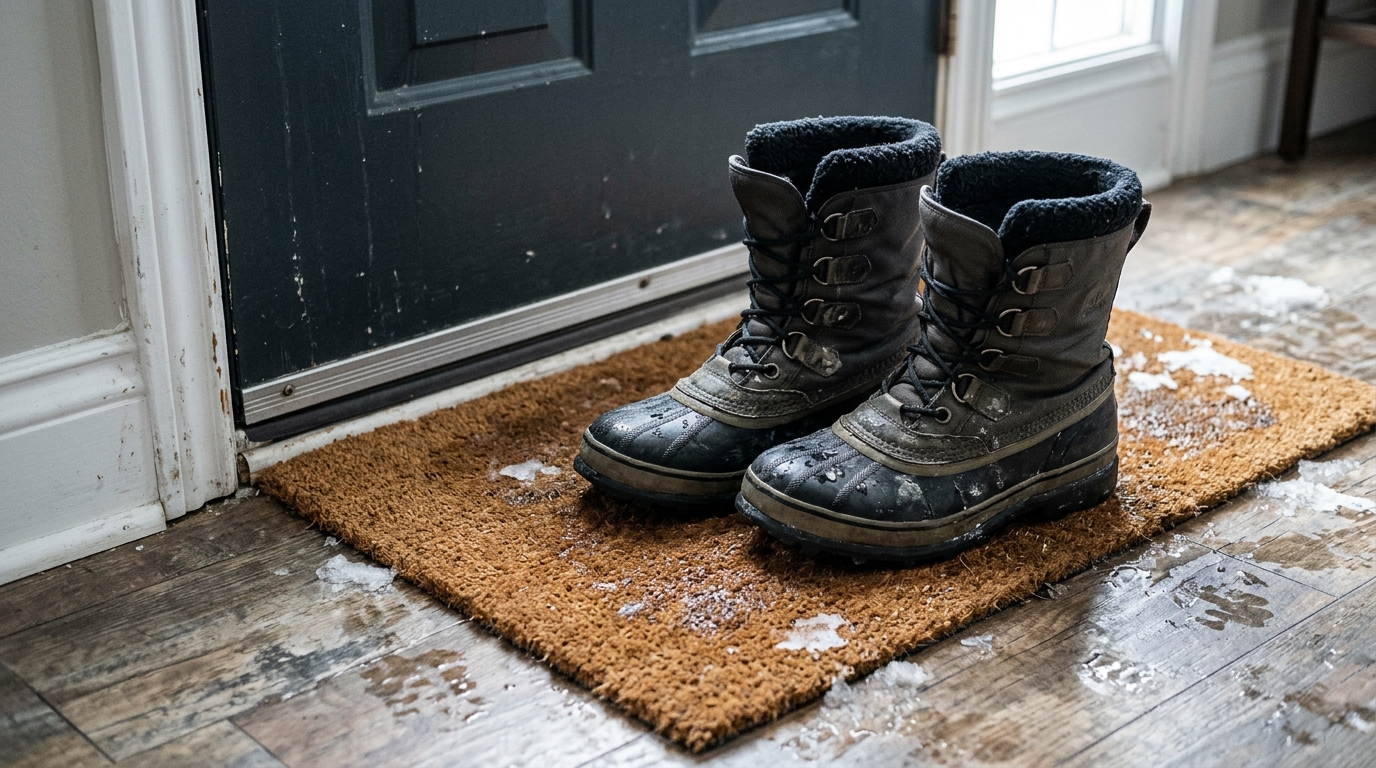
Foot pain from snow boots usually comes from a stiff, heavy boot that locks your ankle, flattens your arch, and makes your feet work harder with every step through snow and ice. Add cold, damp socks and a boot that’s a size off, and you’ve got a recipe for aching arches, sore heels, and cramped toes. The good news: the right fit, a supportive insole, and a few minutes of warming up and stretching usually sort it out.
See a doctor promptly if you notice any of these:
- Toes that stay white, blue, or numb after warming up
- Blisters, open sores, or skin that won’t heal — especially with diabetes
- Sharp pain, swelling, or a suspected sprain after a slip or fall
- Pain that doesn’t improve after a week in better-fitting boots
- Signs of frostbite: hard, waxy, or discoloured skin
Why winter boots hurt your feet
Snow boots are built to keep you warm and upright, not to support your stride. Most are heavy, with thick, stiff soles and tall shafts that restrict your ankle’s natural movement. When your ankle can’t flex normally, your foot compensates by rolling inward or slapping down harder, and that extra work lands on your arches, your heels, and the tendons around your ankle. After a long walk through snow — which is already harder work than walking on pavement — your feet are exhausted in a way they wouldn’t be in a normal shoe.
Then there’s the fit problem. People often buy snow boots a size up to make room for thick socks, but a boot that’s too big lets your foot slide forward with every step, jamming your toes and raising blisters on your heels. Buy too small, and thick socks compress your toes and cut off circulation, which is why feet can go numb and achy in the cold. According to the Cleveland Clinic, cold exposure narrows blood vessels in the feet, which can worsen pain and numbness — so a tight, cold boot is a double problem.
And don’t underestimate dampness. Sweat builds up inside a waterproof boot, socks get wet, and wet skin blisters far more easily than dry skin. Wet, cold feet also lose feeling, so you keep walking on a developing blister or pressure spot without noticing. By the time you take the boots off, the damage is done.
What helps: fit, support, and warmth
Start with fit, and fit them the way you’ll actually wear them — with the thick socks on. Your toes should have wiggle room, your heel should stay put when you walk, and you shouldn’t feel pressure across the top of your foot when the boot is laced. If the boot has no removable insole, that’s a warning sign: it means you can’t add support or replace a flattened footbed.
A supportive insole is the single best upgrade for most snow boots. According to the American Podiatric Medical Association, proper arch support helps distribute weight evenly across the foot, which matters even more in a heavy boot that already changes your gait. Choose an insole with a real arch shape and a deep heel cup, and trim it to fit the boot. If your boots came with a thin foam liner, swapping it out is an immediate improvement.
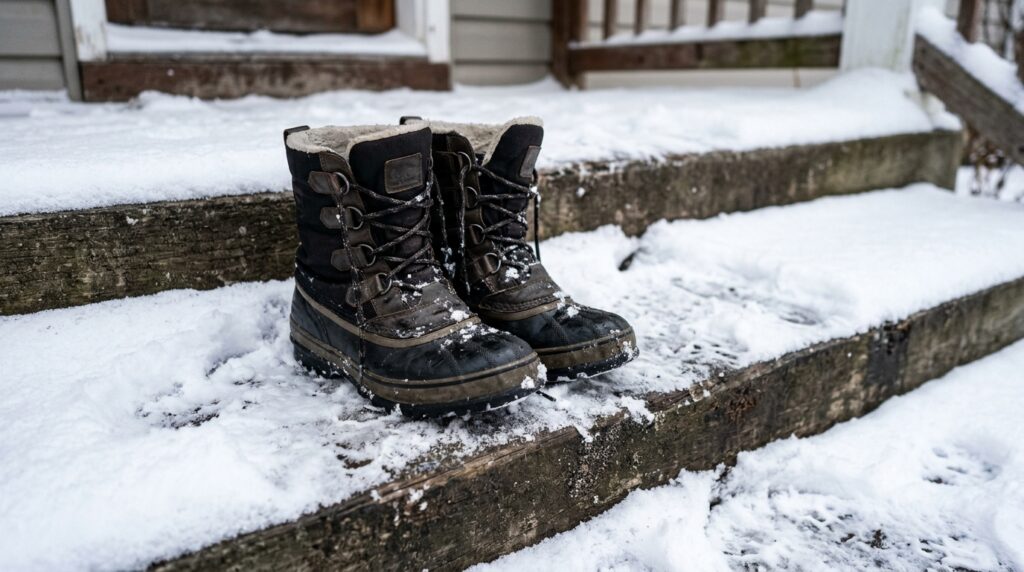
For warmth and blister prevention, wear a thin moisture-wicking sock under a warm wool sock rather than one very thick cotton pair. Cotton holds sweat against your skin; wool and synthetics move it away. Change out of damp socks as soon as you’re indoors, and let boots dry fully between wears — stuffing them with newspaper overnight helps. If your boots are heavy, build up gradually: wear them for shorter walks first so your legs and feet adapt before a long day in the snow.
A daily routine for winter feet
When you come in from the cold, warm your feet gradually — lukewarm water or a warm room, never a hot radiator or heating pad on numb feet, since you can burn skin you can’t feel properly. Once they’re warm and dry, roll a ball under each foot for a couple of minutes and stretch your calves against a wall, thirty seconds per side. Snow walking tightens calves fast, and tight calves drag on your heels.
Before you head out, do ten ankle circles in each direction and ten toe spreads to wake up the small foot muscles. Lace your boots snugly around the ankle but leave a little room over the toes, and re-lace after ten minutes of walking — boots settle and loosen as you move. At the end of the day,check your feet for red spots or blisters, especially between the toes, and moisturise dry skin to stop winter cracks from splitting.
Frequently asked questions
Should snow boots be a size bigger?
Usually half a size up from your normal shoe, fitted with your winter socks on — not a full size. Too much extra room lets your foot slide and jam your toes, while too little room compresses your toes and cuts circulation. Fit them with the socks you’ll actually wear.
Why do my toes go numb in snow boots?
Most often it’s a combination of tight fit and cold narrowing your blood vessels. Loosen the lacing over the forefoot, switch to warmer moisture-wicking socks, and check that your toes have wiggle room. If numbness persists after warming up, or one foot is affected more than the other, get it checked.
Can I put arch support insoles in snow boots?
Yes, and it’s one of the best upgrades you can make. Remove the boot’s factory footbed if it comes out, and replace it with a shaped insole with arch support and a heel cup. This works best in boots with a removable liner or footbed.
Are pac boots or lace-up boots better for foot pain?
Lace-up boots usually win, because you can adjust the fit around your ankle and forefoot separately. Slip-on pac boots are warmer and easier, but a loose fit means more sliding and toe-jamming. If you choose pac boots, make sure the fit is snug enough that your heel doesn’t lift when you walk.
How do I stop blisters in winter boots?
Keep feet dry with moisture-wicking socks, make sure the boot fits without heel slip, and tape known hot spots before a long walk. Change damp socks promptly — wet skin blisters much faster than dry skin, and you may not feel it happening in the cold.
Sources
- Cleveland Clinic — Cold Feet: Causes and Treatment
- American Podiatric Medical Association — Footwear guidance
- Mayo Clinic — Frostbite: Symptoms and Causes
This article is for information only and is not medical advice. If you have ongoing or severe foot pain, talk to a qualified healthcare professional.