Why your feet go cold first
Your body is ruthless about priorities. When your core temperature drops even a little, blood vessels in your hands and feet narrow — vasoconstriction — so warm blood stays where your organs are. Your feet are the farthest outpost, so they feel it first. That’s why your feet can be freezing while the rest of you feels fine.
Some people just run colder than others. Women tend to have colder feet than men, partly because of differences in muscle mass and circulation. Thin people, older adults, and anyone who sits still for hours also feel it more. And if you’ve ever had frostbite or you deal with stress a lot, your blood vessels may overreact to cold — a condition called Raynaud’s phenomenon, where fingers and toes go white, then blue, then red as blood returns.
The everyday causes (and what fixes them)
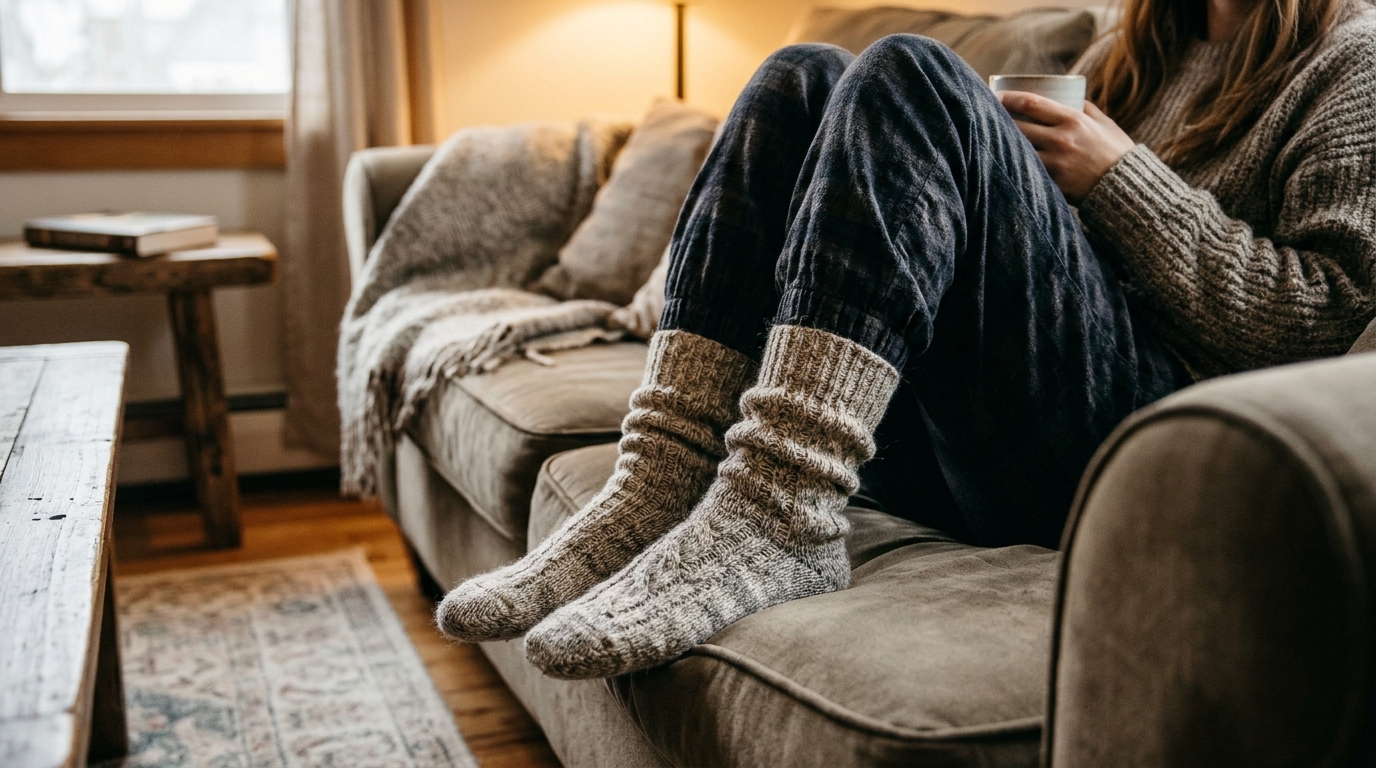
You’re just cold. Obvious, but it covers most cases. Floors are cold, shoes are thin, and socks are thinner. Wool or thermal socks beat cotton every time — cotton holds sweat and then cools you down. A pair of warm slippers indoors does more than you’d think.
You’re sitting still. Desk job, long drive, evening on the couch — when your calf muscles aren’t working, blood pools and slows in your lower legs. Your calves are basically a second heart for your legs; every step squeezes veins and pushes blood back up. Get up every hour, do ten ankle circles and ten calf raises, and you’ll feel the difference fast.
Your shoes are too tight. Tight shoes, tight socks, boots laced too snugly — anything that compresses your foot squeezes blood vessels and traps less warm air around the foot. If your toes tingle or go numb in a particular pair, that’s a fit problem, not a you problem.
Smoking and caffeine. Nicotine narrows blood vessels directly, and heavy caffeine intake does something similar on a smaller scale. Cutting back won’t warm your feet overnight, but it’s one of the few fixes that actually improves circulation long term.
When cold feet mean something more
Sometimes cold feet are a symptom, not just a nuisance. Peripheral artery disease (PAD) narrows the arteries in your legs, so less warm blood reaches your feet. It often comes with leg cramping or pain when you walk that eases with rest — doctors call that claudication. Diabetes can damage nerves and blood vessels in the feet, which is why cold, numb feet in someone with diabetes always deserve attention. An underactive thyroid slows your whole metabolism, and cold hands and feet are one of its classic early signs. Anemia — low iron — can leave you feeling cold all over, not just in your feet.
The pattern matters more than any single episode. Both feet cold on a winter evening? Normal. One foot cold and the other warm, or feet that stay cold through summer, or cold feet plus a sore that won’t heal? That’s a conversation with your doctor, and sooner rather than later.
What actually warms them up
Move first, then insulate. A brisk five-minute walk or a set of calf raises gets blood moving; socks and slippers then trap the warmth. Doing it the other way around — wrapping up cold, still feet — is much slower.
Warm water, not hot. A foot soak in comfortably warm water feels wonderful, but keep it moderate, especially if you have reduced feeling in your feet. You can scald yourself without realizing it. Test the water with your elbow or a thermometer, and never use a heating pad on numb feet while you sleep.
Layer smart. A thin moisture-wicking sock under a wool sock beats one thick cotton sock. At night, a pair of loose bed socks works better than an electric blanket on your feet, which is a burn risk if you fall asleep with it on.
Check your iron and thyroid if it’s constant. If you’re always cold, tired, and your feet never warm up, a simple blood test can rule out anemia and hypothyroidism. Both are common and both are treatable.
FAQ
Why are my feet cold at night in bed?
Your core temperature drops as you fall asleep, and your body pulls blood inward. Add cold sheets and still legs, and your feet are last in line. Loose wool bed socks and a warm foot bath before bed usually fix it.
Is it normal for one foot to be colder than the other?
A small difference can happen, but a clearly cold foot on one side only — especially with pain, color change, or numbness — should be checked promptly, since it can signal a circulation problem in that leg.
Do foot warmers or heated insoles help?
Yes, for comfort, and they’re safer than heating pads if used as directed. Just avoid them if you have numbness or diabetes-related nerve damage, since you may not feel overheating.
Can cold feet be a sign of diabetes?
They can be one sign among others, because diabetes can damage blood vessels and nerves in the feet. Cold feet alone don’t mean diabetes, but cold feet plus numbness, tingling, or slow-healing sores should prompt a check.
When should I worry?
See a doctor if cold feet are new and persistent, one-sided, come with walking pain or color changes, or you have diabetes, heart disease, or a history of circulation problems. Sudden severe coldness and pain in one leg needs emergency care.
Sources
- Mayo Clinic — Raynaud’s disease; Peripheral artery disease (PAD)
- Cleveland Clinic — Cold feet: causes and when to seek care
- American Heart Association — Peripheral artery disease symptoms
- NHS — Raynaud’s phenomenon
Medical disclaimer: This article is for general information only and is not medical advice. Persistent, one-sided, or painful cold feet — especially with diabetes or circulation problems — should be evaluated by a clinician.