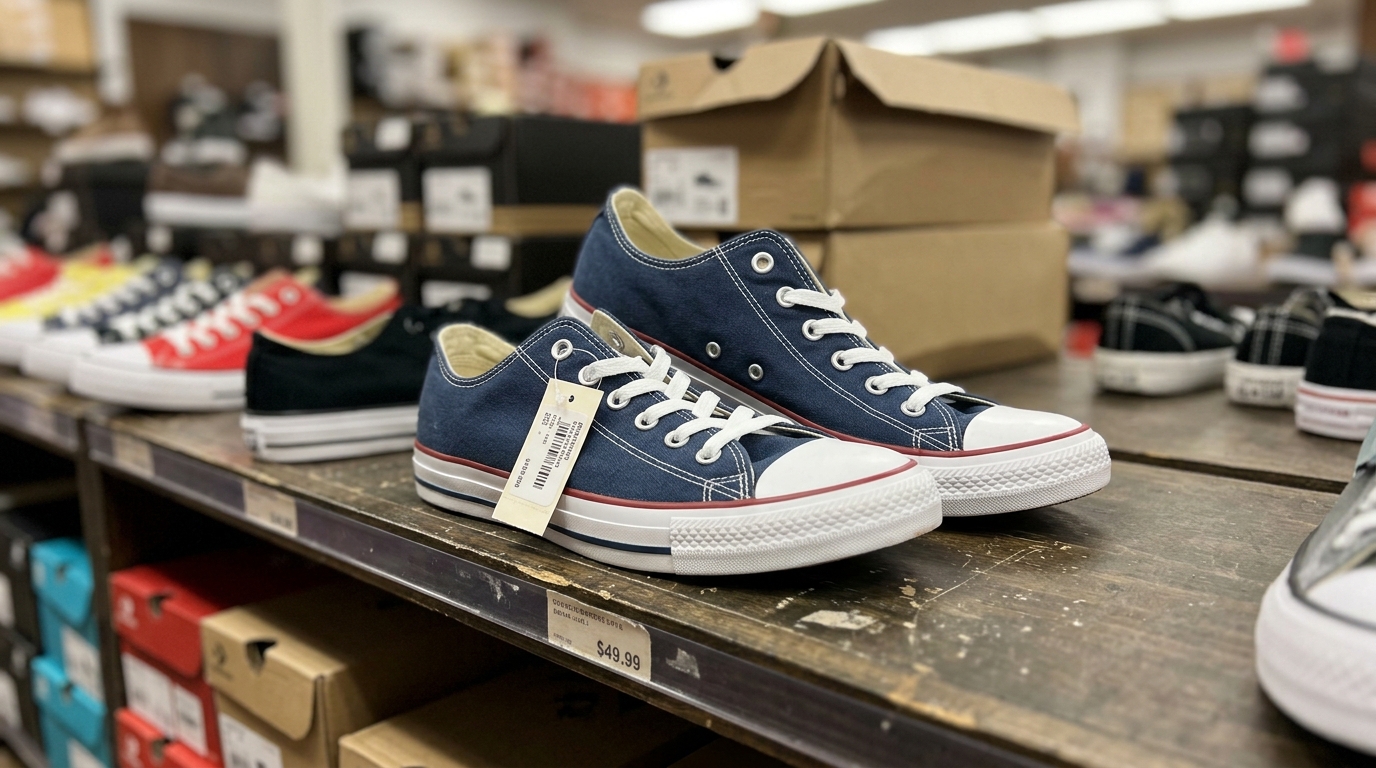
Foot pain from cheap shoes usually comes down to flat, unsupportive soles and thin cushioning that leave your arches, heels, and the balls of your feet to absorb every step on their own. The fix is rarely to push through it — it’s to add real support, cushion the pressure points, and give your feet time to recover. If the pain is sharp, one-sided, or doesn’t ease within a week or two of better footwear, get it checked.
See a doctor promptly if you notice any of these:
- Sharp or stabbing pain that doesn’t ease with rest
- Swelling, redness, or warmth in one foot that keeps getting worse
- Numbness, tingling, or a foot that changes colour
- Pain after an injury, twist, or fall
- Foot pain plus diabetes, poor circulation, or a weakened immune system
What cheap shoes actually do to your feet
There’s nothing wrong with spending less on shoes. The problem is what gets cut to hit a low price: the midsole. In a well-made shoe, the midsole is a shaped layer of foam that supports your arch, absorbs shock, and keeps your foot aligned as you walk. In a very cheap shoe, that layer is often a thin slab of flat foam that compresses within days. Once it’s flat, your foot is basically walking on a hard board with a bit of fabric on top.
When support disappears, your foot compensates. Your arch collapses inward with each step, which pulls on the plantar fascia — the thick band of tissue along the bottom of your foot — and strains the tendons around your ankle. Your heel takes harder impacts because there’s nothing left to absorb them. And because the shoe has no structure, your toes grip harder to keep the shoe on, which can leave the tops of your feet and your toes aching by the end of the day.
Cheap materials cause trouble in other ways too. Stiff synthetic uppers don’t stretch, so they rub blisters at the heel and pinch toes into cramped positions. Thin, slippery insoles slide around inside the shoe, creating friction and hot spots. None of this means a budget shoe will injure you overnight, but worn all day, every day, the small stresses add up — and that’s usually when the ache starts.
What helps when your shoes are the problem
The quickest test is simple: if your feet feel noticeably better in a different pair of shoes, the shoes were the problem. From there, you have a few practical options, and you don’t have to throw every budget pair away.
First, try a supportive insole. According to the Cleveland Clinic, over-the-counter arch supports can help relieve foot pain by redistributing pressure and supporting the arch, and they’re a sensible first step before custom orthotics. Look for an insole with a defined arch shape and a cushioned heel cup rather than a flat gel pad — flat pads feel soft but add no structure. Swap them between pairs so your cheapest shoes get the same support as your best ones.
Second, check the fit. Your toes should have room to wiggle, your heel should stay put without slipping, and the widest part of your foot should match the widest part of the shoe. A shoe that’s too narrow will hurt no matter how good the insole is. According to the American Podiatric Medical Association, it’s best to shop for shoes later in the day, when your feet are slightly swollen to their normal walking size, so you don’t buy a pair that only fits in the morning.
Third, rotate your shoes. Wearing the same pair every day compresses the cushioning faster and never lets it rebound. Even alternating two pairs gives each one a day to recover its shape, and it gives you a comparison — if one pair always leaves you sore and the other doesn’t, you’ve found your culprit.
A daily routine that takes the pressure off
You don’t need an elaborate routine — a few minutes at the right times does more than an hour once a week. When you get home, kick the shoes off and roll a tennis ball slowly under each foot for two or three minutes, pressing just enough to feel a good stretch, not pain. Follow that with a calf stretch against a wall: one foot back, heel down, hold for thirty seconds per side. Tight calves pull on the heel and arch, so this one stretch helps more than people expect.
Before bed, spend a minute spreading and scrunching your toes, then flexing your feet up and down ten times. It keeps the small muscles in your feet active instead of letting them go stiff overnight. And in the morning, put your supportive insoles in before you put the shoes on — not after your feet already hurt. Prevention beats rescue every time.
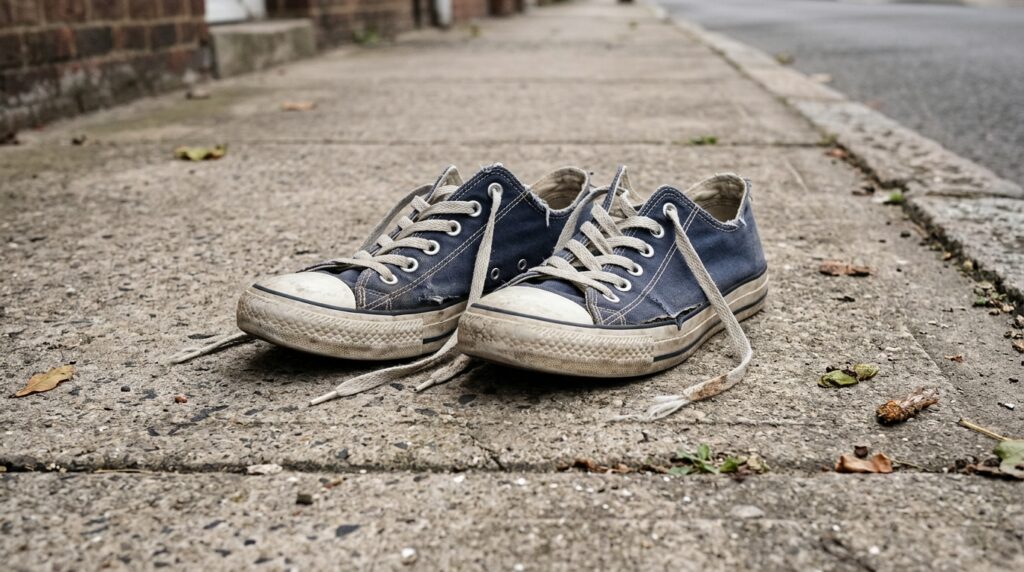
Finally, be honest about when a pair is done. If the sole is worn smooth on one side, the heel counter collapses when you squeeze it, or the insole is permanently compressed flat, no insole will save it. Retiring one pair is cheaper than weeks of sore feet.
Frequently asked questions
Can cheap shoes really cause lasting foot problems?
On their own, occasionally worn, usually not. But worn all day for months, unsupportive shoes can contribute to plantar fasciitis, metatarsalgia (pain in the ball of the foot), and Achilles irritation. The risk rises if you walk a lot, stand for work, or already have flat feet or high arches.
Are expensive shoes always better for your feet?
No. Price is a rough guide, not a guarantee. What matters is structure: a shaped midsole, a firm heel counter, and a fit that matches your foot. Some mid-priced shoes beat luxury fashion shoes easily, and some expensive shoes are built for looks, not walking.
Will insoles fix a bad pair of shoes?
Often, yes — if the shoe itself fits well and has a removable insole. A good insole adds the arch support and cushioning the shoe lacks. But insoles can’t fix a shoe that’s too narrow, too short, or structurally collapsed, so check the fit and the sole first.
How do I tell if a shoe has good support before buying it?
Try three quick tests in the shop: bend the shoe — it should flex at the ball of the foot, not fold in half. Twist it — it should resist twisting through the middle. And press the heel counter — it should feel firm, not collapse. If a shoe fails all three, its support won’t last long.
How long should I rest my feet before the pain should improve?
With better footwear and support, most mild shoe-related soreness eases within one to two weeks. If it hasn’t improved at all in that time, or if it’s getting worse, see a podiatrist or your doctor rather than trying more insoles.
Sources
- Cleveland Clinic — Foot Pain: Causes, Treatment and Prevention
- American Podiatric Medical Association — Footwear guidance
- Mayo Clinic — Plantar fasciitis: Symptoms and Causes
This article is for information only and is not medical advice. If you have ongoing or severe foot pain, talk to a qualified healthcare professional.