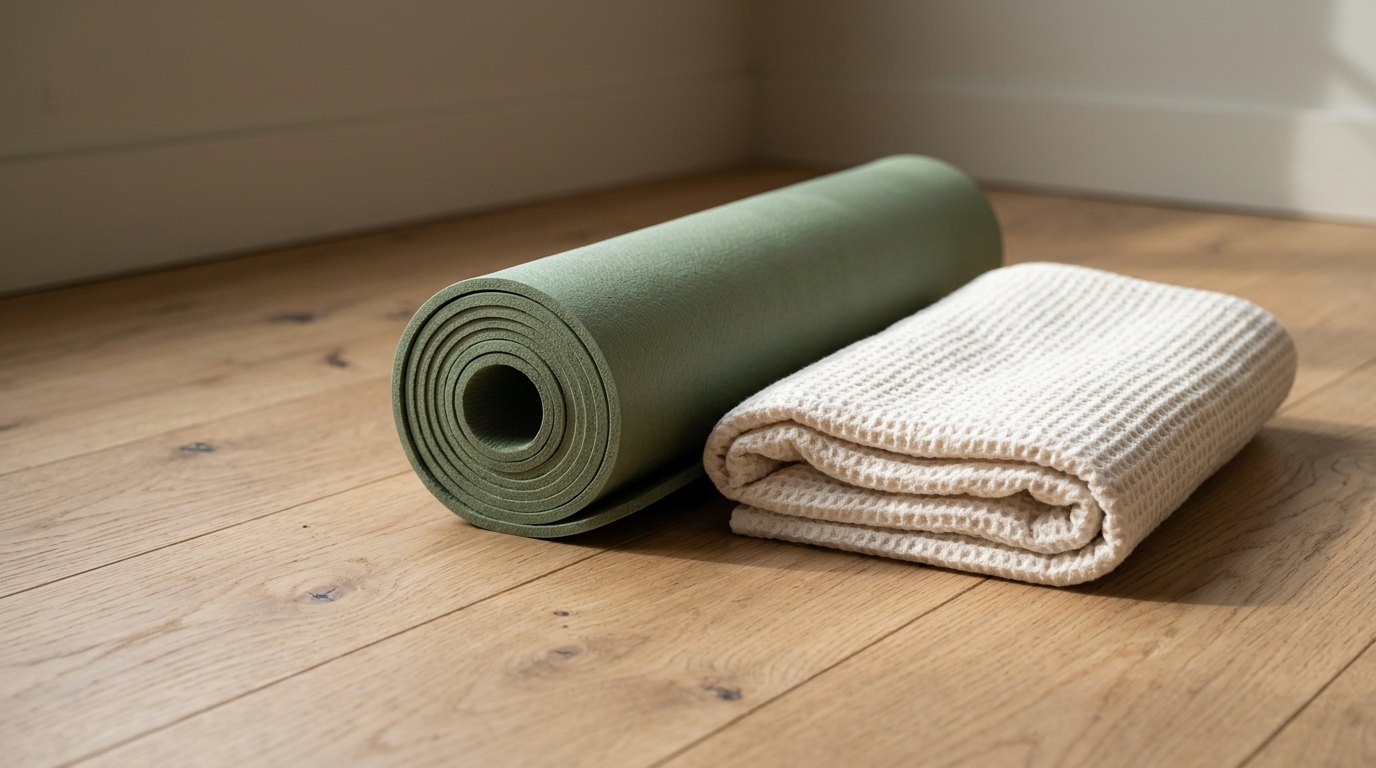
A foot stretching routine for beginners should be gentle, short, and done daily. The best starting routine takes about ten minutes and covers the arches, toes, calves, and ankles: toe spreads and curls, a towel stretch for the plantar fascia, calf stretches against a wall, and ankle circles. Done every day, it loosens stiff feet, eases morning heel pain, improves balance, and lowers the risk of common problems like plantar fasciitis and Achilles tightness. Stretch slowly, hold each stretch for 20 to 30 seconds, and never force a stretch into pain — a mild pull is enough.
Stop stretching and see a doctor promptly if you notice any of these:
- Sharp or sudden pain during a stretch
- Pain that gets worse over days despite gentle stretching
- Swelling, bruising, or a foot that cannot bear weight
- Numbness or tingling that does not fade after stretching
- A foot deformity or injury you have not had checked
Why stiff feet need stretching
Feet stiffen up for simple reasons. Shoes hold them in one position for hours, sitting keeps the calves and Achilles short, and age gradually reduces flexibility in the tendons and joints. The result is familiar to millions of people: stiff ankles in the morning, sore arches after standing, tight calves, and that first painful step out of bed.
Stretching works because it targets the whole chain, not just the foot. The calf muscles and Achilles tendon connect directly to the heel and the plantar fascia, so tight calves pull on the arch with every step. Stretching the calves often relieves foot pain more than stretching the foot itself. Meanwhile, the small muscles inside the foot — the ones that support the arch and spread the toes — weaken when they never move through their full range, and gentle stretching wakes them back up.
The research backs a simple daily routine. Stretching programs are a first-line recommendation for plantar fasciitis, and regular calf and foot stretching is associated with less heel pain and better ankle flexibility. You do not need special equipment or a long session. Ten minutes a day, done consistently, is enough to notice a difference within two to three weeks.
A beginner foot stretching routine
Do this routine once a day, ideally in the morning or after a warm shower when tissues are warm. Sit or stand as described, move slowly, and breathe normally throughout.
Start with toe spreads and curls. Sit down, lift one foot, and spread your toes as wide as you can, hold for five seconds, then curl them tightly and hold for five seconds. Repeat five times per foot. This wakes up the small foot muscles and improves toe mobility.
Next, the towel stretch for the arch. Sit with your leg straight out in front of you, loop a towel around the ball of your foot, and gently pull the towel toward you until you feel a stretch along the sole and calf. Hold for 30 seconds, release, and repeat three times per foot. This is the classic stretch for plantar fascia tightness and morning heel pain.
Then stretch the calves against a wall. Stand facing a wall, step one foot back, keep the back heel flat on the floor, and lean forward until you feel a stretch in the back calf. Hold 30 seconds, then bend the back knee slightly to stretch the deeper calf muscle, and hold another 30 seconds. Repeat on the other side. Tight calves are the most common hidden cause of foot pain, so do not skip this one.
Finish with ankle circles and a seated arch roll. Lift one foot and draw slow circles with the ankle, ten in each direction, then roll the sole over a tennis ball for a minute per foot. This loosens the ankle joint and massages the arch at the same time.
Building the habit and avoiding mistakes
Attach the routine to something you already do — after your morning shower, or while the coffee brews — and it will stick far better than a vague plan to “stretch more.” Start with five minutes if ten feels like too much, and add stretches gradually over a couple of weeks.
The most common beginner mistakes are bouncing, forcing, and skipping the calves. Never bounce into a stretch; it triggers a reflex that tightens the muscle you are trying to loosen. Never push into sharp pain — a mild pull is the right intensity. And always include the calves, since they drive so much foot pain. If a stretch consistently causes pain in the same spot, stop and get it checked rather than pushing through.
After two to three weeks of daily stretching, most people notice looser mornings, less arch ache after standing, and better balance. If nothing has changed, or pain is getting worse, see a podiatrist — stretching helps stiffness and tightness, but it does not fix fractures, nerve problems, or structural issues.
Frequently asked questions
How long should I hold each foot stretch?
Hold each stretch for 20 to 30 seconds, and repeat two to three times. Shorter holds do little, and longer holds add little benefit for beginners.
Is it better to stretch feet in the morning or evening?
Morning is best if you have heel pain on your first steps, since it loosens the plantar fascia before you load it. Evening stretching helps after a long day standing. Either is fine — consistency matters most.
Can stretching cure plantar fasciitis?
Stretching is a key part of managing plantar fasciitis and often reduces pain significantly, but it works best combined with supportive footwear, rest from aggravating activity, and sometimes orthotics.
Should stretching hurt?
No. You should feel a mild pull, not pain. Sharp, shooting, or worsening pain means you should stop and get the foot checked.
Do I need equipment for foot stretching?
No. A towel and a tennis ball cover the whole routine. A wall is all you need for calf stretches.
Sources
- Mayo Clinic — Plantar Fasciitis: Diagnosis and Treatment
- Cleveland Clinic — Foot and Ankle Stretches
- American Podiatric Medical Association — Foot Stretching and Flexibility
This article is for information only and is not medical advice. If your foot pain is severe, sudden, or not improving, talk to a healthcare professional for a proper diagnosis.