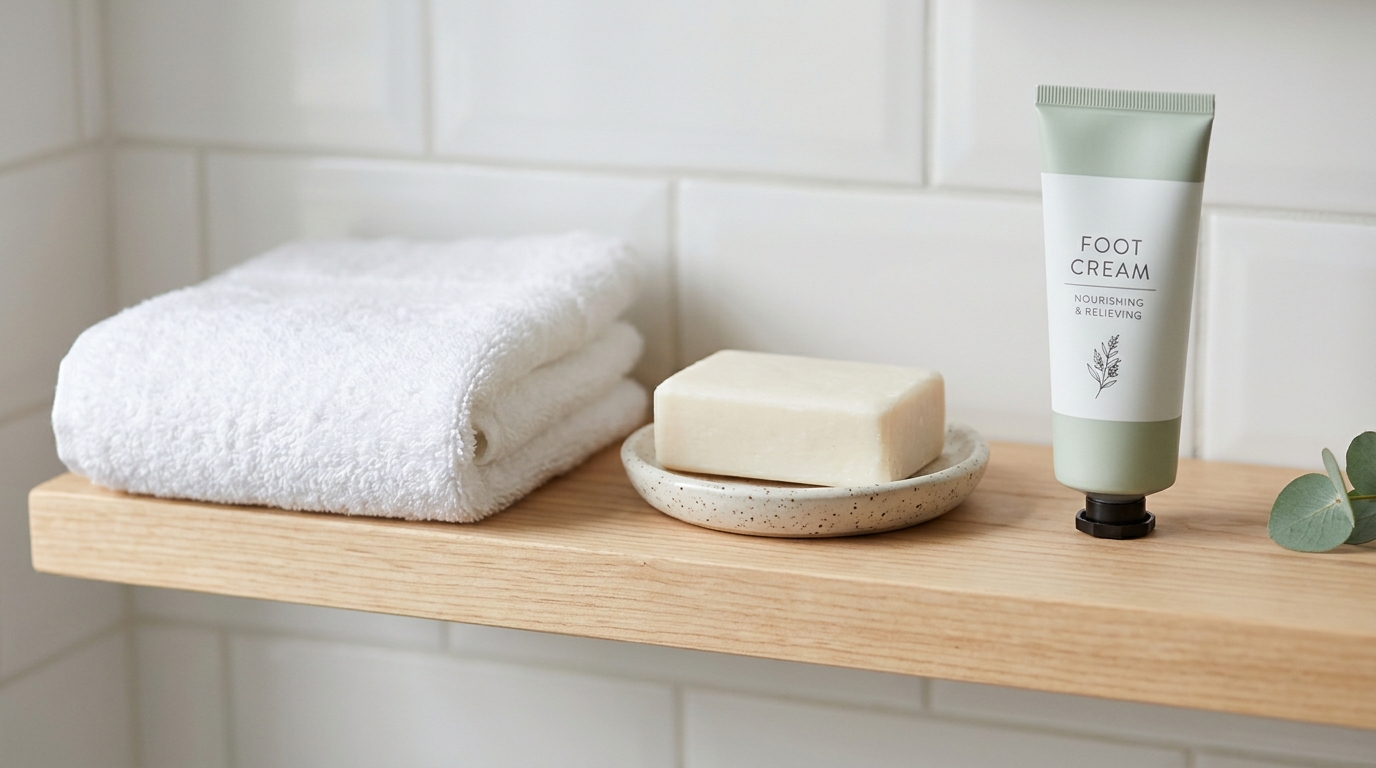
A foot hygiene routine does not need to be complicated. Wash your feet daily with warm water and mild soap, dry them thoroughly — especially between the toes — moisturize the soles and heels but not between the toes, change socks daily, and trim nails straight across. That simple routine prevents most common foot problems: odor, athlete’s foot, cracked heels, and ingrown toenails. The step people skip most often is drying between the toes, and it is the one that matters most, because fungus thrives in warm, damp spaces.
See a doctor promptly if you notice any of these:
- Redness, itching, or peeling between the toes that does not improve with basic care
- A sore, blister, or cut on the foot that will not heal
- Thick, discolored, or crumbling toenails
- Foot odor with sores, swelling, or drainage
- Any foot wound if you have diabetes or poor circulation — do not wait
Why foot hygiene matters more than you think
Feet live in a warm, dark, damp environment for most of the day, inside socks and shoes. That is exactly the environment where fungi and bacteria thrive, and it is why foot problems are so common: athlete’s foot affects a large share of adults at some point, foot odor is caused by bacteria breaking down sweat, and cracked heels start when dry skin is neglected. Most of these problems are preventable with a few minutes of daily care.
Good foot hygiene is also an early-warning system. Washing and drying your feet every day means you actually look at them, and that is how you catch problems early: a small blister before it becomes infected, a nail starting to grow inward, a cut you did not feel, or a change in skin color. For people with diabetes, this daily check is genuinely important, because reduced feeling means injuries can go unnoticed and become serious.
The routine below takes about five minutes a day. It is not glamorous, but it is one of the highest-return habits in foot care.
A daily foot hygiene routine
Wash every day with warm water and mild soap. In the shower, wash the tops and soles of your feet and between the toes — do not rely on soapy water running down from your legs, because it does not clean between the toes. Use warm, not hot, water, since hot water dries the skin and can scald feet with reduced feeling.
Dry thoroughly, especially between the toes. Pat dry with a towel rather than rubbing, and take a few extra seconds on the spaces between the toes. If your feet sweat heavily, you can use a hair dryer on a cool setting, or dust a little antifungal powder between the toes. Moisture left between the toes is the number one cause of athlete’s foot.
Moisturize the soles and heels daily, but never between the toes. A plain moisturizer or foot cream keeps the skin supple and prevents cracking, especially on the heels. Putting cream between the toes traps moisture and encourages fungus, so skip those spaces.
Change socks every day, and shoes when you can. Clean, dry socks — cotton or moisture-wicking blends — keep feet drier and reduce odor. If your feet sweat a lot, change socks midday. Rotate shoes so each pair gets a day to dry out, and avoid wearing the same pair two days running.
Trim nails straight across, not curved. Cut toenails straight across and file the edges smooth, keeping them level with the tip of the toe. Cutting them too short or rounding the corners encourages ingrown toenails. If you cannot comfortably reach your feet, or you have diabetes, have a professional trim them.
Weekly extras and common mistakes
Once a week, give your feet a little extra attention. Check your shoes for worn insoles or debris inside, wash your insoles if they are removable, and inspect your feet closely for any changes. A pumice stone used gently on damp heels once a week helps keep calluses under control — never cut calluses with a blade, which risks infection.
The most common mistakes are simple: skipping the drying step, moisturizing between the toes, wearing the same socks two days in a row, and cutting nails too short or curved. Fix those four and most routine foot problems never get started.
If odor, itching, or peeling persists despite a good routine, an over-the-counter antifungal cream usually helps athlete’s foot, but see a doctor if it does not improve within two weeks, or immediately if you have diabetes and any foot problem at all.
Frequently asked questions
How often should I wash my feet?
Every day, with warm water and mild soap. People who sweat heavily or work on their feet may benefit from a second wash or a sock change midday.
Should I moisturize between my toes?
No. Moisturizer between the toes traps dampness and encourages fungal infection. Moisturize the soles and heels only, and keep between the toes dry.
What is the best way to dry feet?
Pat dry with a towel, paying special attention to the spaces between the toes. A cool hair dryer or antifungal powder helps if your feet stay damp.
How should I cut my toenails?
Straight across, level with the tip of the toe, then file the edges smooth. Avoid cutting them short or rounding the corners, which causes ingrown nails.
Can good hygiene prevent athlete’s foot?
It greatly reduces the risk, especially drying between the toes and changing socks daily. But athlete’s foot can still spread from shared showers or floors, so wear sandals in public showers and pools.
Sources
- American Diabetes Association — Foot Care
- Mayo Clinic — Athlete’s Foot: Prevention
- Cleveland Clinic — Foot Hygiene and Skin Care
This article is for information only and is not medical advice. If your foot pain is severe, sudden, or not improving, talk to a healthcare professional for a proper diagnosis.