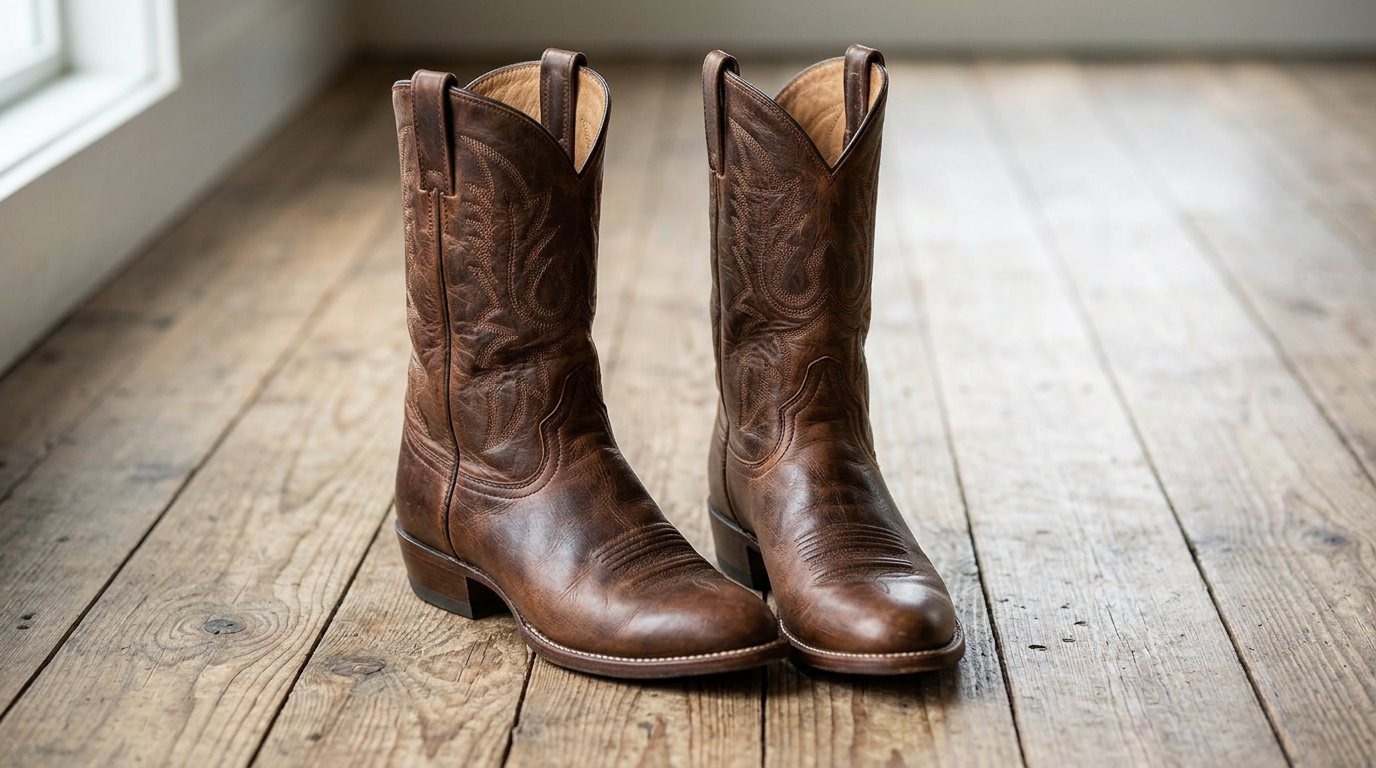
Quick Answer: In short, foot pain from cowboy boots comes from three things working together: stiff leather that doesn’t flex with your foot, a raised heel that shifts your weight forward, and a pointed toe box that squeezes your toes. Most of the pain shows up in the balls of your feet, your arches, or your toes — and it usually eases with a proper break-in, supportive insoles, and boots that fit. If the pain is sharp, in one spot, or lasts more than a week or two, see a podiatrist.
See a doctor promptly if you notice:
- Sharp, severe, or worsening pain in one spot
- Numbness, tingling, or pins and needles in your toes
- Toes that stay bent, stiff, or painful after you take the boots off
- Blisters, sores, or redness that won’t heal
- Pain that makes walking difficult or lasts more than two weeks
Why Cowboy Boots Can Hurt Your Feet
Cowboy boots were designed for riding horses, not walking around all day — and your feet notice the difference. The high shaft, stiff leather, and raised heel were made to sit in a stirrup, where your foot barely moves. On the ground, that same design fights the way your foot naturally bends with every step.
The biggest issue is stiffness. New boots barely flex, so your foot works harder to bend them, and the pressure lands on the ball of your foot and your toes. Add a heel of an inch and a half or more, and your weight shifts forward onto the forefoot with every step.
What It Is: The Most Common Causes
Forefoot pain is the most common complaint. The raised heel throws your weight forward, so the balls of your feet carry more load than they’re used to — and after hours on your feet, that pressure turns into a burning ache. If you wear other heeled shoes too, our guide to foot pain from high heels explains the same forward-weight problem.
Toe pain comes next, usually from a pointed or narrow toe box. Cowboy boots often taper sharply, squeezing your toes together and pressing on the sides of your big and little toes. Over time that pressure can cause corns, calluses, and even bunions.
Arch pain is common too, especially in boots with flat insoles and no real arch support. The stiff sole doesn’t bend with your arch, so the muscles along the bottom of your foot work overtime — and by the end of the day your arches ache.
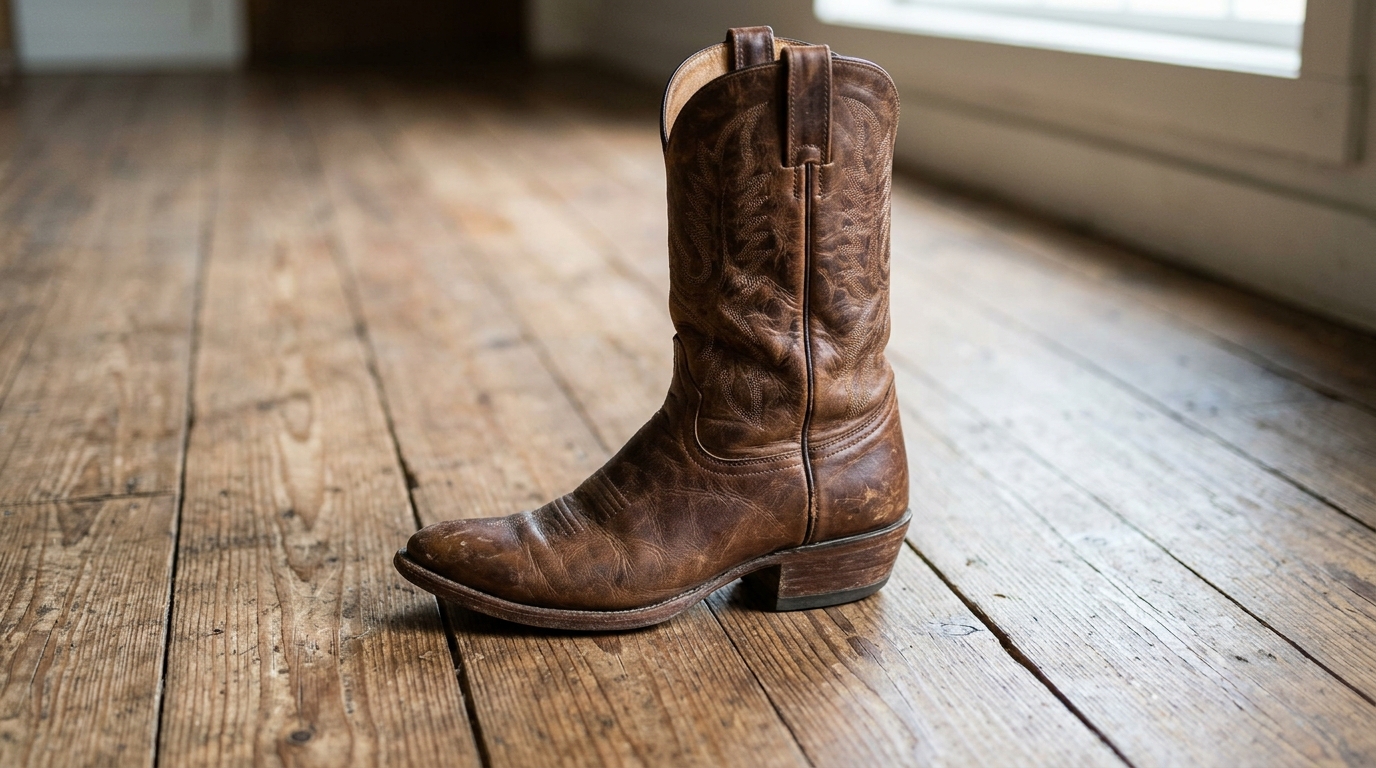
Blisters are almost a rite of passage with new boots. The stiff leather rubs the heel and ankle, and once a blister forms, every step hurts. The Mayo Clinic notes that blisters come from repeated friction, and new leather is one of the worst offenders because it hasn’t softened to your foot’s shape yet.
What Helps: Fit, Break-In, and Insoles
Fit matters more than anything. Your toes should have room to wiggle — if they feel pinched in the shop, they’ll feel worse after an hour on your feet. Try boots on in the afternoon, when your feet are slightly swollen, wearing the socks you’d normally wear with them. The heel should slip just slightly when you walk; if it doesn’t move at all, the boot may be too tight across the instep.
Break new boots in gradually — wear them around the house for an hour or two at a time before a full day out, and use a leather conditioner or boot stretcher to soften stiff spots. The Cleveland Clinic advises protecting any rubbing spot with a blister plaster or moleskin before it turns into a blister — prevention beats treatment.
Supportive insoles are the easiest fix for arch and forefoot pain. The American Podiatric Medical Association recommends insoles that support the arch and cushion the ball of the foot, and many boot owners find a full-length cushioned insole transforms a painful pair into a comfortable one. Pick a slim insole that fits the boot’s shape — a thick one can make the fit tighter.
What Helps: When to See a Podiatrist
Most boot pain fades once the leather softens and you’ve found the right fit. But if the same pain comes back every time you wear them, or your toes stay sore after you take them off, get it checked. A podiatrist can tell whether you’re dealing with a bunion, a neuroma, or simply boots that don’t suit your foot shape.
Bring the boots to your appointment. The wear pattern inside the boot and the shape of the toe box often tell the story — and a podiatrist can suggest insoles, padding, or a different style. If stiff dress shoes cause similar trouble, our guide to foot pain from dress shoes covers the same fitting and break-in fixes.
Your Daily Routine for Comfortable Boots
Here’s a routine that keeps your feet happy in cowboy boots:
- Break them in slowly: Wear new boots for one to two hours at home, adding time each day — never start with a full day on your feet.
- Protect hot spots: Put moleskin or a blister plaster on any rubbing spot before you head out, not after it hurts.
- Stretch your feet: Roll each foot over a tennis ball and stretch your calves for a few minutes each morning.
- Give your feet a rest: Alternate boot days with more comfortable shoes, and ice sore spots for 15 minutes after a long day in boots.
FAQs
Are cowboy boots bad for your feet?
They can be, if they don’t fit well or you wear them all day. But the right fit, a proper break-in, and supportive insoles make most boots comfortable.
How long does it take to break in cowboy boots?
Usually one to two weeks of gradual wear — an hour or two a day at first, building up to full days. Don’t rush it or you’ll get blisters.
Why do my toes hurt in cowboy boots?
Most often it’s the pointed toe box squeezing your toes together. A rounded or square toe gives them more room, and if the pain persists after switching styles, see a podiatrist to rule out a bunion or neuroma.
Should I wear insoles in cowboy boots?
Yes, if your arches ache or the balls of your feet hurt. A slim, full-length insole with arch support and forefoot cushioning helps most people — as long as it doesn’t make the boot too tight.
When should I see a doctor about foot pain from cowboy boots?
See a podiatrist promptly if the pain is sharp or in one spot, if you have numbness or tingling in your toes, if blisters or sores won’t heal, or if it lasts more than two weeks.
Sources
- Mayo Clinic — foot pain causes and when to seek care
- Cleveland Clinic — blister prevention and foot care information
- American Podiatric Medical Association — footwear and insole guidance
This article is for general information only and is not medical advice. Talk to your doctor or a podiatrist about your own feet.