Quick Answer: In short, foot pain from golf usually comes from miles of walking, the repeated twisting of your swing, and shoes that don’t support your feet on hard, uneven ground. The most common culprits are sore arches, heel pain, and blisters — and most of it eases with better shoes, supportive insoles, and stretching. If the pain is sharp, in one spot, or lasts more than a week or two after a round, get it checked by a podiatrist.
See a doctor promptly if you notice:
- Sharp, severe, or worsening pain in one spot
- Pain that makes it hard to walk or put weight on your foot
- Numbness, tingling, or pins and needles in your foot
- Swelling that doesn’t go down within a day or two
- A blister that looks infected — spreading redness, warmth, or pus
Why Golf Can Hurt Your Feet
Golf looks like a gentle game, but your feet do a lot of work during a round. A typical 18 holes means walking four to five miles, often over slopes and uneven ground. Your feet also anchor every swing, so it’s no surprise they ache by the back nine.
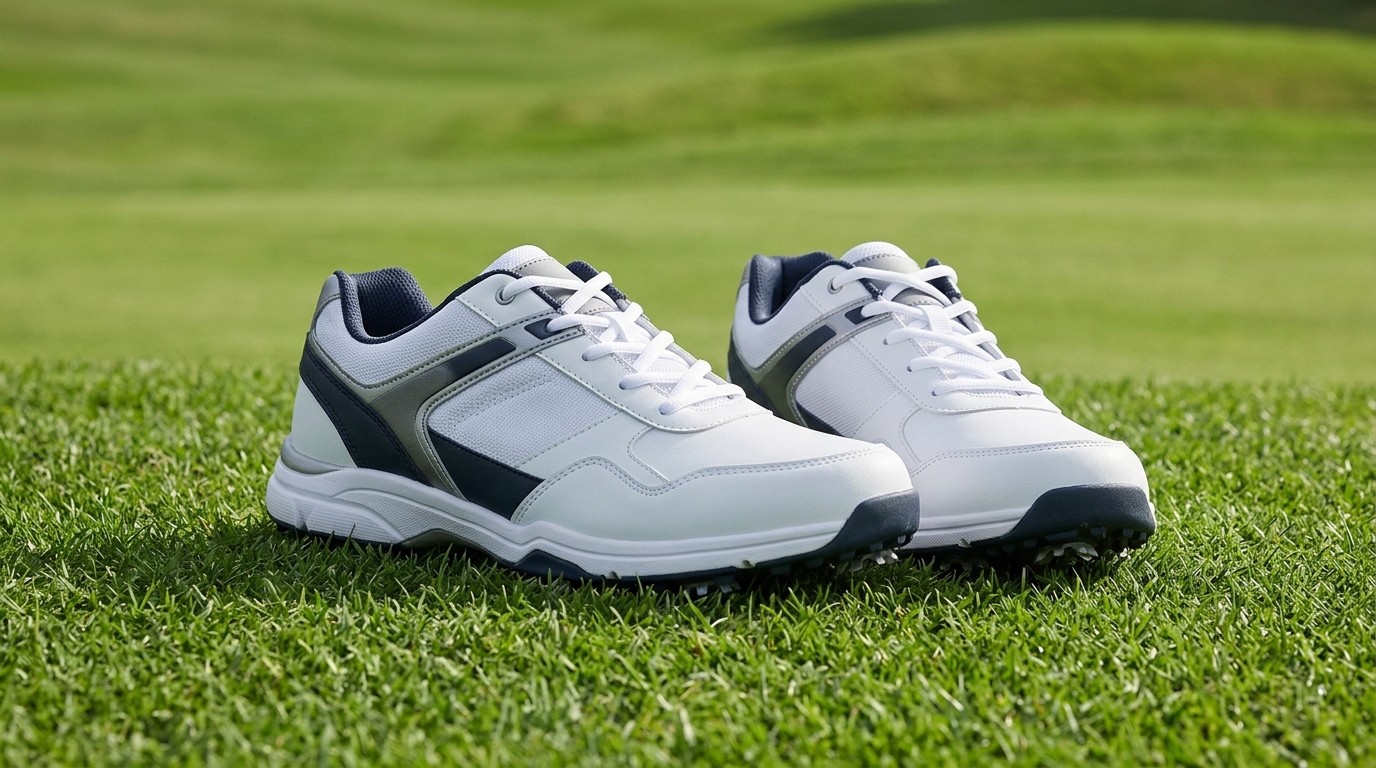
Most golf shoes are built for grip, not comfort. Spiked or spikeless soles are stiff, and many offer little arch support or cushioning. Walk five miles in stiff shoes and your arches, heels, and the balls of your feet take the strain — and if you already have flat feet, high arches, or plantar fasciitis, golf brings those problems to the surface fast.
What It Is: The Most Common Causes
Plantar fasciitis is one of the biggest culprits. The long walk, especially on hilly courses, strains the thick band of tissue along the bottom of your foot, and it often shows up as a sharp heel ache when you take your first steps after sitting in the cart — or the morning after a round. Our guide to foot pain from walking too much explains how distance and hard surfaces add to the strain.
Blisters are another common problem, especially in new golf shoes or on hot days when your feet sweat. They form where the shoe rubs again and again — usually the heel or the side of the big toe — and once one appears, every step stings.
The swing can cause trouble too. Each shot twists your lead foot hard against the ground as your body rotates, straining the arch and the joints in the midfoot. Over 70 or 80 swings in a round, that twisting adds up — especially if your shoes are too tight or your feet slide around inside them.
Standing on the range or the practice green for long stretches can also leave your feet aching. The Mayo Clinic notes that standing for long periods on hard surfaces is a common cause of foot pain — and a putting green is no exception.

What Helps: Shoes, Insoles, and Smarter Rounds
The single biggest fix is your footwear. Look for golf shoes with real arch support, a cushioned midsole, and a roomy toe box — your toes shouldn’t be squeezed. Try them on at the end of the day, when your feet are slightly swollen, and walk around the shop in them before you buy.
Supportive insoles can make a big difference, especially if your shoes feel flat. The American Podiatric Medical Association recommends insoles that support your arch and cushion the heel, and a good over-the-counter pair often helps golfers with sore arches. Swap the thin factory insole out rather than stacking a new one on top of it.
Break new golf shoes in gradually — wear them for a few holes or a practice session before a full 18, since stiff leather needs time to mould to your feet. Wear moisture-wicking golf socks too: the Cleveland Clinic notes that keeping feet dry reduces friction and blister risk, and a blister plaster on any hot spot before you tee off can save you a miserable back nine.
What Helps: When to See a Podiatrist
Most golf foot pain fades within a day or two of rest. But if the same pain comes back after every round, or it keeps you from finishing one, get it checked. A podiatrist can tell whether you’re dealing with plantar fasciitis, a stress injury, or simply the wrong shoes — and the fixes are very different.
Bring your golf shoes to the appointment. A podiatrist can look at the wear pattern on the soles and see how your feet move inside them, which often reveals the problem straight away. Custom orthotics are an option if over-the-counter insoles aren’t enough — they’re shaped to your feet, not to an average foot.
If you’re on your feet all day at work too, the strain adds up — our guide to foot pain from a standing desk covers how to manage the same all-day foot fatigue.
Your Daily Routine for Golf-Ready Feet
Here’s a routine that keeps your feet in shape between rounds:
- Stretch every morning: Do a calf stretch against a wall and roll each foot over a tennis ball for a few minutes — it loosens the plantar fascia before you load it.
- Strengthen your arches: Try toe curls with a towel on the floor for a couple of minutes a day — stronger foot muscles cope better with long walks.
- Ice after a round: If your heels or arches ache after 18 holes, roll your foot over a frozen water bottle for 10 to 15 minutes.
- Rest and rotate: Give your feet a day off after a long round, and don’t play two hard rounds back to back until the soreness settles.
FAQs
Why do my feet hurt after playing golf?
Most often it’s the distance — four to five miles of walking on uneven ground in stiff shoes — plus the twisting force of your swing.
Are golf shoes bad for your feet?
They can be, if they’re stiff, flat, or too tight. Good golf shoes have arch support, cushioning, and a roomy toe box — and adding supportive insoles fixes many of the problems with cheaper models.
Can golf cause plantar fasciitis?
Golf can trigger or worsen plantar fasciitis, especially on hilly courses or if you play often. Heel pain first thing in the morning is the classic sign.
Should I wear insoles in my golf shoes?
Yes, if your shoes feel flat or your arches ache after a round. Over-the-counter insoles with arch support and heel cushioning help most golfers — just remove the factory insole first.
When should I see a doctor about foot pain from golf?
See a podiatrist promptly if the pain is sharp or in one spot, if it stops you walking normally, or if it returns after every round.
Sources
- Mayo Clinic — foot pain causes and when to seek care
- Cleveland Clinic — blister prevention and foot care information
- American Podiatric Medical Association — footwear and insole guidance
This article is for general information only and is not medical advice. Talk to your doctor or a podiatrist about your own feet.