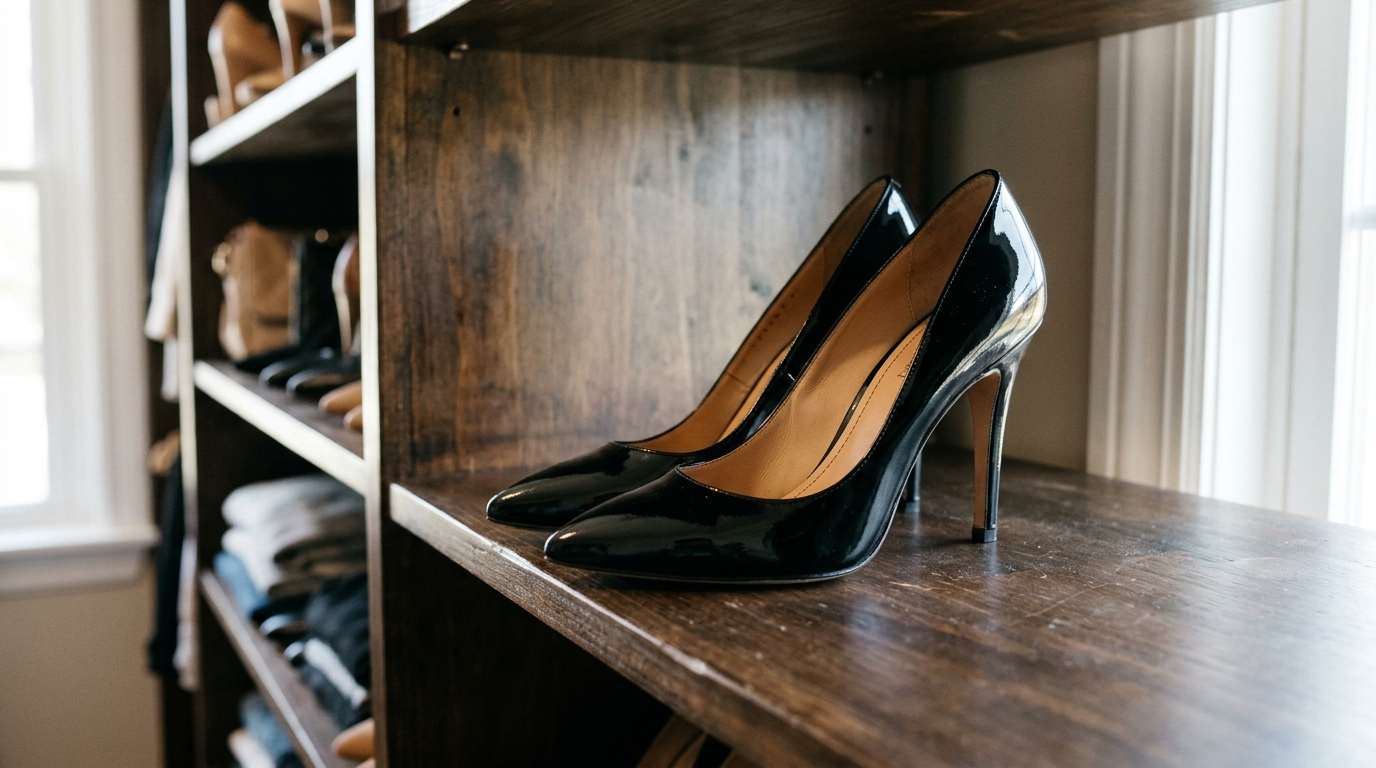
If you are dealing with foot pain from high heels, you are not imagining it — and you are definitely not alone. High heels shift your body weight forward onto the balls of your feet, squeeze your toes into a narrow toe box, and force your ankles and calves into an unnatural position. The result can be burning pain in the ball of the foot, aching arches, sore toes, and stiff calves. Most heel-related pain eases with better shoes, stretches, and regular breaks.
See a doctor promptly if you notice any of these:
- Pain that does not ease after several days off your feet or out of heels
- A toe that is bent, stiff, or stuck in one position and will not straighten
- Numbness, tingling, or burning between your toes that keeps coming back
- Swelling, redness, or a wound on your foot that will not heal, especially if you have diabetes
- Ankle pain after a twist or fall in heels, or pain so severe you cannot bear weight
What high heels do to your feet and why they hurt
Think about what happens the moment you step into a high heel. Your heel rises, your foot tilts forward, and a much bigger share of your weight lands on the ball of your foot — the area just behind your toes. In flat shoes, your heel and forefoot share the load more evenly. In a three-inch heel, that balance tips dramatically, and the small bones and soft tissues under the ball of your foot take a pounding with every step.
At the same time, most high heels have a narrow, pointed toe box. Your toes get squeezed together, which can irritate the joints and the nerves between them. That is why so many heel wearers end up with bunions, hammertoes, corns, and that sharp, burning ache between the toes that doctors call Morton’s neuroma. None of that happens overnight. It builds up over months and years of wearing shoes that force your feet into a shape they were never designed to hold.
Then there is your calf and Achilles tendon. A high heel holds your foot in a pointed position, so your calf muscle stays shortened all day. When you finally kick the shoes off and walk barefoot, that shortened calf suddenly has to stretch — and that is often when the aching and stiffness hit hardest. Over time, regularly wearing high heels can leave your calves tight and your Achilles tendon less flexible, which can contribute to heel pain and even plantar fasciitis.
The higher and narrower the shoe, and the longer you wear it without a break, the more strain your feet absorb.
What helps foot pain from high heels
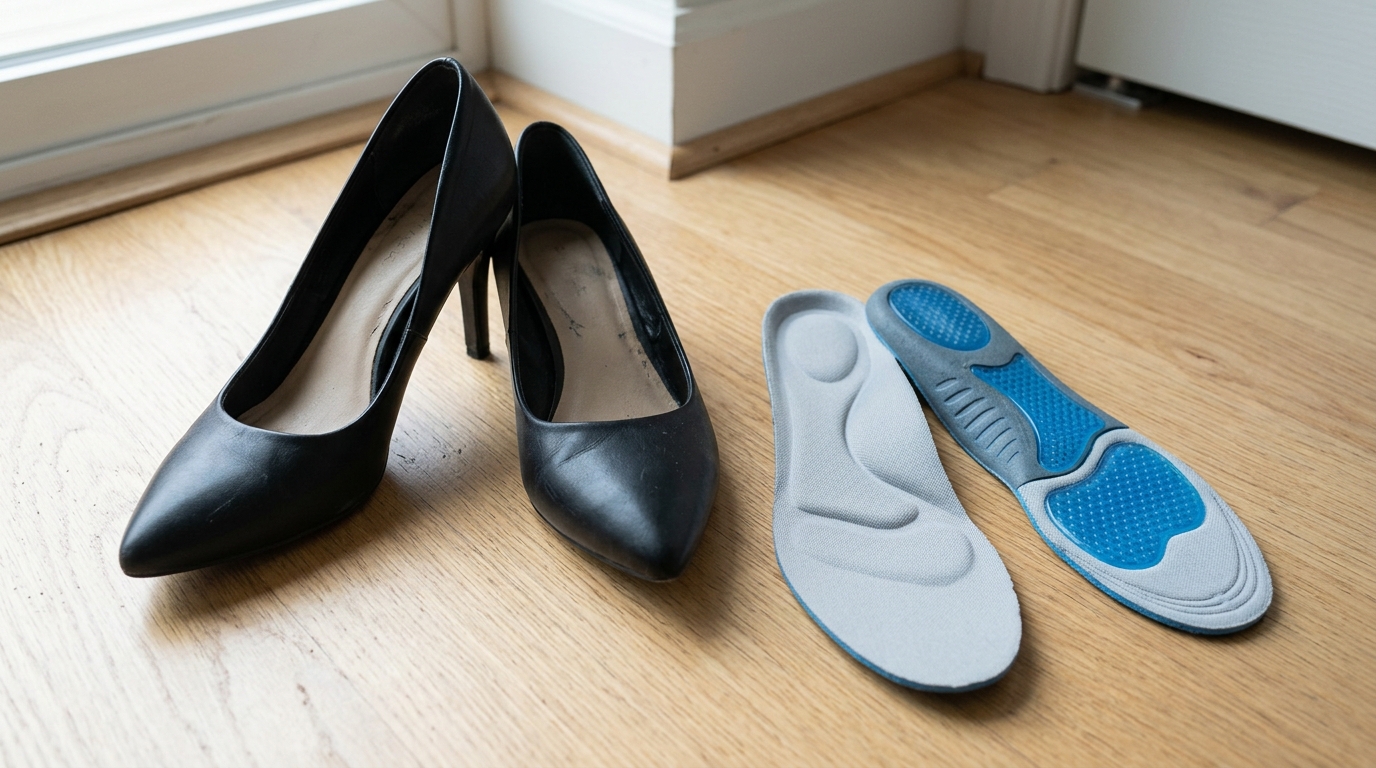
Start with the shoe itself, because that is where the biggest relief usually comes from. A lower heel — two inches or less — puts far less pressure on the ball of your foot than a stiletto. A wider toe box lets your toes spread naturally instead of being crushed together, and a platform or block heel spreads your weight over a bigger base than a thin spike heel. Cushioned insoles or metatarsal pads can also help by spreading pressure away from the ball of the foot. According to the Mayo Clinic, choosing shoes with a low heel, a roomy toe box, and good arch support is one of the most effective ways to reduce forefoot pain.
Stretching matters just as much as shoe choice. When you get home, stretch your calves against a wall — one leg back, heel on the floor, hold 30 seconds, then switch. Roll a tennis ball or a frozen water bottle gently under the arch of your foot for a few minutes to ease tension. Spread and wiggle your toes, and try picking up a towel with them. These moves take five minutes and make a real difference done most days.
Rest and recovery count too. If you will be in heels for a long event, sit whenever you can and switch to flats for the journey home. Ice the balls of your feet for 10 to 15 minutes after a long day if they feel hot and sore.
If pain persists despite better shoes and stretching, a podiatrist can check for bunions, neuromas, or stress fractures, and may suggest orthotics or physical therapy.
A daily routine for happier feet in heels
Before you put your heels on, spend two minutes stretching your calves and rolling your ankles. Slip in a cushioned insole or metatarsal pad if your shoes allow it, and make sure your toes are not already pinched — if they are, skip that pair for a long day.
During the day, sit whenever you can and slip the heels off for a minute to flex your feet. Keep flats in your bag for walking between places, and save the heels for when you actually need them.
In the evening, take the heels off as soon as you get home, stretch your calves again, and roll your feet over a ball. If your feet feel swollen, prop them up on a pillow for 15 minutes.
Frequently asked questions
Why do high heels hurt the balls of my feet?
High heels tilt your foot forward, so most of your weight presses on the ball of your foot instead of being shared with your heel. That concentrated pressure irritates the joints and soft tissue there, which is why the ache builds the longer you stand or walk in heels.
Can high heels cause permanent foot damage?
Wearing high heels regularly over many years can contribute to bunions, hammertoes, and shortened calf muscles, according to the Cleveland Clinic. Lower heels, wider toe boxes, and regular breaks greatly reduce that risk.
What heel height is safest for my feet?
Most foot specialists suggest keeping everyday heels at two inches or lower, with a wider base and a roomy toe box. Higher heels are easier on your feet when worn for short periods rather than all day, and a block heel is generally kinder than a stiletto of the same height.
Do insoles really help with heel pain?
Yes, for many people they do. Cushioned insoles and metatarsal pads spread pressure across a wider area of the foot instead of letting it concentrate on the ball. They work best alongside a better-fitting shoe — an insole cannot fully fix a shoe that is far too narrow or too high.
When should I see a doctor about heel-related foot pain?
See a clinician if pain lasts more than a week or two despite rest and better shoes, if a toe is changing shape, if you have numbness or tingling, or if you have diabetes and any foot pain or wound. A podiatrist can identify the underlying cause and suggest treatment before the problem gets worse.
Sources
- Mayo Clinic — Foot pain: causes, shoes, and when to seek care
- Cleveland Clinic — High heels and foot problems
- American Podiatric Medical Association — Footwear and foot health guidance
This article is for information only and is not medical advice. If your foot pain is severe, persistent, or accompanied by swelling, numbness, or a change in toe shape, talk to a healthcare professional.