Quick Answer: In short, foot pain from snowboarding usually comes from stiff boots, tight straps, and the pressure of holding an edge — your feet stay locked in one position, pushing your toes or heels into the boot with every turn. The pain is usually mild and fades with rest and better boot fit. If it stays sharp or lasts more than a couple of weeks, see a doctor or podiatrist.
See a doctor promptly if you notice:
- Sharp or severe pain in the heel, arch, or a single spot on a bone
- Pain that makes walking or putting weight on your foot difficult
- Swelling, redness, or warmth that doesn’t settle within a day or two
- Numbness, tingling, or a burning feeling in your foot or toes
- Pain that keeps coming back every run and isn’t improving
Why Snowboarding Can Hurt Your Feet
Snowboarding looks like a leg sport, but your feet do a surprising amount of the work. Both feet are strapped to one board, and every turn starts with your feet — toes down for a toe-side turn, heels dug in for a heel-side turn. That constant pushing loads muscles most of us rarely ask that much of.
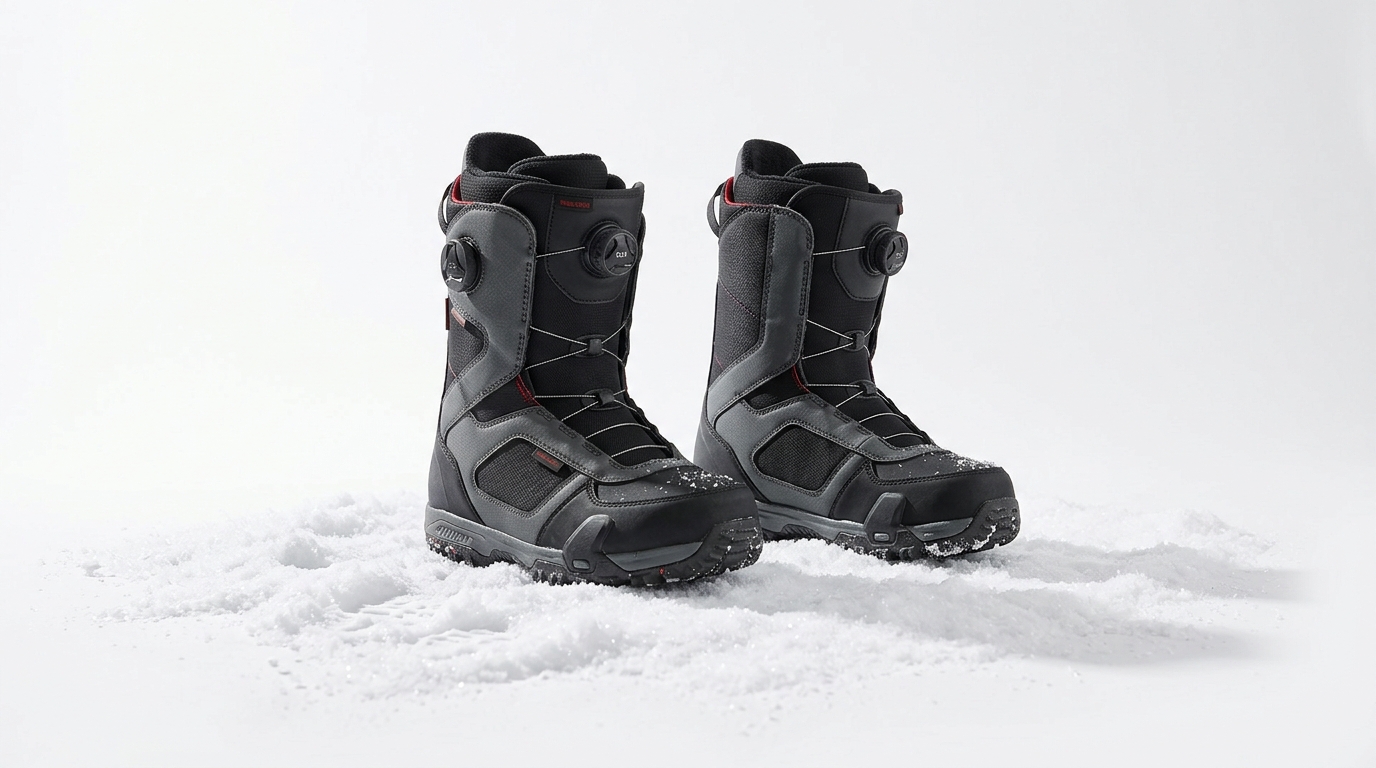
Then there’s the boot. A snowboard boot is built stiff and supportive — great for control, terrible for comfort if the fit is even slightly off. Your foot barely moves inside it for hours, so any pressure point gets pressed again and again until it hurts. Cold makes it worse: cold feet lose circulation, so you tighten the straps harder.
What It Is: The Most Common Causes
Boot fit is the biggest culprit by far. Boots that are too small cramp your toes; boots that are too big let your heel slide up and down with every turn, bruising the heel and Achilles. The Cleveland Clinic lists poorly fitting footwear among the most common causes of foot pain during sport.
Strap and lace pressure is another frequent problem. Over-tightened straps press on the top of the foot, where bones and tendons sit close to the surface, causing a deep ache across the midfoot. The classic sign: pain that eases within minutes of unbuckling.
Edge pressure builds up over a long day. Toe-side turns load the balls of your feet and your big toes; heel-side turns load your heels and calves. Beginners feel this most, holding one edge for a long stretch instead of flowing between turns. Cold weather adds its own trouble — our guide to foot pain in cold weather explains why.
Fatigue plays a part too. The small muscles in your feet work constantly to keep you balanced, and by the afternoon they’re tired — and tired muscles cramp easily, especially the big toe pressing against the end of the boot.
What Helps: Fixing Your Boots and Straps
The single most useful fix is getting your boots fitted properly. Go to a shop that knows snowboard boots, try them on with the socks you’ll ride in, and stand in them for ten minutes — a boot that feels fine for thirty seconds can start pinching by minute five.
Don’t over-tighten your straps. They should feel snug, not crushing — you should be able to slide a finger underneath. Tighten the ankle strap first, then the toe strap, and re-check both after your first run.
Heat-moldable liners and custom insoles make a real difference. Many boots come with liners a shop can heat and mold to your feet, and a supportive insole spreads pressure across the whole foot. The American Podiatric Medical Association recommends them for anyone whose feet ache during sport.
Good socks matter more than you’d think. Thin, moisture-wicking snowboard socks keep your feet warm and dry and stop the cold-tight-sore cycle before it starts. Avoid thick cotton socks — they bunch up, hold sweat, and make your feet colder.
What Helps: Riding Smarter and Recovering
Take breaks between runs, even short ones. Unbuckle your boots on the lift, wiggle your toes, and let the blood flow back into your feet. Warm up before your first run too: a few minutes of ankle circles and calf stretches loosens the muscles that will be working all day.
If your feet ache after riding, rest them and roll the bottom of each foot over a tennis ball for a few minutes — gentle pressure only. Skiers deal with a very similar problem in a different boot, and our guide to foot pain from ski boots covers boot-fit fixes that apply just as well on a snowboard. If you only ride a few times a season, build up gradually from half days to full days.
Your Daily Routine for Happier Feet on the Mountain
Here’s a routine to keep your feet comfortable when you ride:
- Get fitted properly: Try boots on with your riding socks and stand in them for ten minutes.
- Warm up first: Spend five minutes on ankle circles, calf stretches, and toe spreads before your first run.
- Strap snug, not crushing: Tighten the ankle strap first, then the toe strap, and re-check both after your first run.
- Unbuckle on the lift: Loosen your boots between runs, wiggle your toes, and let the circulation come back.
- Roll and soak after: Roll the bottom of each foot over a tennis ball, then soak your feet in warm water.
FAQs
Is foot pain from snowboarding normal?
Some soreness is common if you’re new to the sport, your boots aren’t fitted well, or you’ve ridden a full day after a long break. Mild aching that fades overnight is normal — sharp or persistent pain is not.
Why do my toes go numb when I snowboard?
Numb toes usually mean your straps or laces are too tight, or your boots are cutting off circulation — often worse in the cold. Loosen the straps and wiggle your toes on the lift, and check your socks aren’t bunching up.
Should my snowboard boots hurt?
New boots can feel stiff for the first few days as the liners break in, but they shouldn’t cause real pain. If one spot keeps hurting run after run, the fit is wrong — get the boots heat-molded or try a different size.
Do custom insoles help with snowboarding foot pain?
Yes — a supportive insole spreads pressure across the whole foot, supports the arch, and stops your foot sliding around inside the boot. They’re one of the best fixes for arch ache and heel bruising.
When should I see a doctor about foot pain from snowboarding?
See a doctor promptly if the pain is sharp or severe, if there’s swelling that doesn’t settle, if you have numbness or tingling after riding, or if the pain keeps coming back every time you ride.
Sources
- Mayo Clinic — winter sports injury prevention and muscle strain
- Cleveland Clinic — foot pain causes and poorly fitting footwear
- American Podiatric Medical Association — supportive insoles and sports foot care
This article is for general information only and is not medical advice. Talk to your doctor or a podiatrist about your own feet.