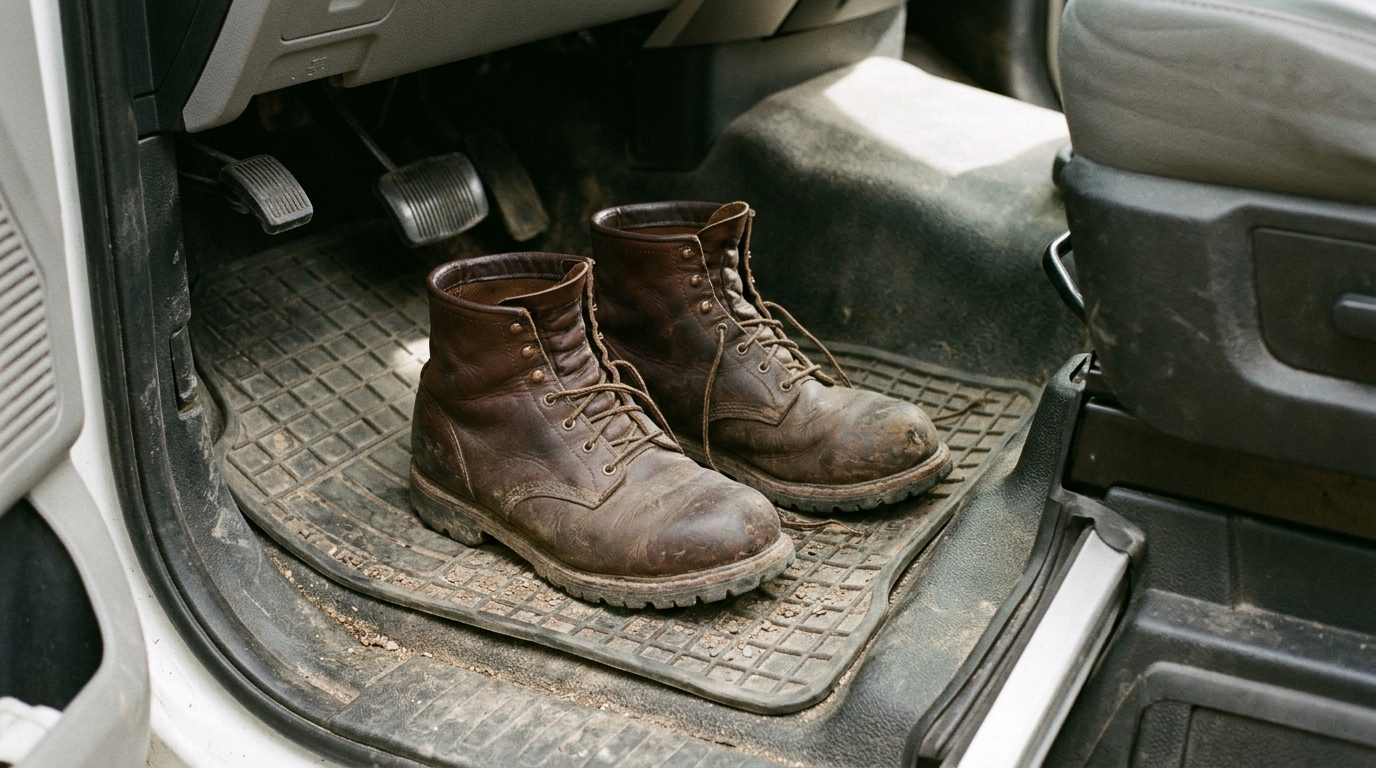
Quick Answer: In short, foot pain from truck driving usually comes from sitting still for hours with your feet on the pedals, then walking hard on concrete at fuel stops and loading docks. Your arches stiffen, your calves tighten, and the same small muscles work the clutch and brake all day. It usually eases with rest, supportive shoes, and calf stretching. If the pain is sharp, one-sided, or doesn’t fade after a couple of days off, get it checked by a doctor or podiatrist.
See a doctor promptly if you notice:
- Sharp or severe pain in the heel, arch, or one spot on a bone
- Swelling, redness, or warmth that doesn’t settle after a day or two of rest
- Numbness, tingling, or a burning feeling in your feet or toes
- Pain that makes walking or putting weight on your foot difficult
- A wound, sore, or blister that won’t heal — especially if you have diabetes
Why Truck Driving Can Hurt Your Feet
Most people picture truck driving as a sitting job. Your feet know it as a stop-start job. You sit for hours with your right foot on the accelerator and your left foot working the clutch — then at every fuel stop and loading dock you’re suddenly on your feet, walking across concrete and climbing in and out of the cab.
That switch is the problem. Hours of stillness stiffen your arches and tighten your calves, then a long walk on hard concrete asks those cold, stiff feet to work hard with no warm-up. Your shoes have to do all the cushioning — if they’re worn out or flat, your feet take the hit directly.
Then there’s the pedal work itself. Pressing a stiff clutch hundreds of times a day loads the same small muscles in your ankle and arch over and over, and a heavy brake pedal does the same to your heel. That dull afternoon ache is the signature of foot pain from truck driving.
What It Is: The Most Common Causes
Plantar fasciitis tops the list for drivers. The plantar fascia is the band of tissue along the bottom of your foot, and sitting for hours, then walking hard, stretches and irritates it. The classic sign is heel pain with your first steps in the morning, which eases as you move, then returns by day’s end.
Achilles tightness is the close second. Your calves shorten while your feet rest on the pedals for hours, and the tendon pulls tight when you finally stand and walk. That first walk after hours of driving — stiff, sore, almost limping — is the tendon complaining. Our guide to foot pain after a long drive covers the same stiff-feet-after-sitting problem — long-haul driving adds heavy pedals and hard walking.
Blisters and sore toenails are the smaller miseries. Damp socks make skin blister faster, and boots a half size too small jam your longest toe forward every time you climb down from the cab. Metatarsalgia — pain in the ball of your foot — comes from all that pedal pressing and hard landings when you jump down from the cab steps.

What Helps: Getting Through the Day on the Road
The biggest single change is your footwear — it doesn’t have to mean expensive boots. Look for a cushioned sole, real arch support, and a roomy toe box — your toes should be able to spread, not squeezed together. Replace them when the cushioning feels flat or the tread is worn smooth.
Use your stops properly. When you pull in for fuel, take five minutes to walk around the lot and stretch your calves. Stand facing the side of the truck, step one foot back, and press the heel into the ground for thirty seconds on each side.
Keep a spare pair of dry socks in the cab — damp socks blister skin faster, and changing into dry ones at a fuel stop is one of the simplest ways to stay comfortable.
What Helps: Recovery After Your Drive
When you park for the night, get out of your driving shoes and into something soft and supportive — not flat flip-flops. Roll the bottom of each foot over a tennis ball or a frozen water bottle, and stretch your calves before bed. Tight calves are one of the main drivers of heel pain, and this two-minute habit makes a real difference over a few weeks.
Soak your feet in cool water for ten minutes if they’re swollen, and get them up on your bunk or a pillow for a while — elevating them helps the swelling drain and rests your arches. Our guide to sore feet after standing has more recovery ideas that work just as well after a day of driving.
Your Daily Routine for Happier Feet on the Road
Here’s a routine that fits around a long-haul day:
- Stretch your calves and arches before you drive: A wall calf stretch and a few ankle circles take two minutes.
- Put on dry socks and check your shoes: Fresh socks, cushioned soles, and arch support before you roll out.
- Walk and stretch at every fuel stop: Five minutes moving around the lot loosens stiff feet and calves.
- Change into dry socks mid-day: Damp socks blister skin — a fresh pair halfway through keeps your feet drier.
- Recover when you park for the night: Roll sore feet over a tennis ball, stretch your calves, and swap into supportive shoes.
FAQs
Is foot pain from truck driving normal?
Mild soreness in the arches or heels after a long day of driving is very common and usually fades with rest, stretching, and better shoes. Sharp, one-sided, or persistent pain is not normal — get it checked.
Why do my feet hurt after a long drive?
You sit still for hours with your feet on the pedals, which stiffens your arches and tightens your calves — then you walk hard on concrete at every stop. That switch is what makes them ache.
Can truck driving cause plantar fasciitis?
Yes — long hours of sitting followed by hard walking can irritate the plantar fascia, especially with tight calves and unsupportive shoes. Rest, calf stretching, and supportive footwear usually help, but heel pain lasting over a couple of weeks should be checked.
What helps swollen feet after driving all day?
Walking and stretching at your stops, elevating your feet when you park, and a cool foot soak all help. Swelling that doesn’t fade overnight, or affects only one leg, needs a doctor’s attention.
When should I see a doctor about foot pain from truck driving?
See a doctor promptly if the pain is sharp or severe, if swelling doesn’t settle after rest, if you can’t put weight on your foot, or if you notice numbness, tingling, or a sore that won’t heal.
Sources
- Mayo Clinic — plantar fasciitis causes and symptoms
- Cleveland Clinic — foot pain from driving and long periods of sitting
- American Podiatric Medical Association — foot care for workers on their feet
This article is for general information only and is not medical advice. Talk to your doctor or a podiatrist about your own feet.