Quick Answer: In short, foot pain from zumba usually comes from fast pivots, jumps, and side-to-side steps landing on a hard studio floor, class after class. Your forefoot twists with every turn and your heels take every landing, with little time to rest between moves. It usually eases with rest, the right dance shoes, and calf stretching. If the pain is sharp, one-sided, or doesn’t fade after a couple of days off, get it checked by a doctor or podiatrist.
See a doctor promptly if you notice:
- Sharp or severe pain in the heel, arch, or one spot on a bone
- Swelling, redness, or warmth that doesn’t settle after a day or two of rest
- Numbness, tingling, or a burning feeling in your feet or toes
- Pain that makes walking or putting weight on your foot difficult
- A wound, sore, or blister that won’t heal — especially if you have diabetes
Why Zumba Can Hurt Your Feet
Zumba feels like a party, and that’s part of the problem. The music is loud, the energy is high, and you keep moving for a full hour — often without noticing the strain until the class ends and you step off the floor.
The pivot is the move that causes the most trouble. Salsa, merengue, and reggaeton steps all ask you to spin on the ball of one foot while your body turns the other way. Do that dozens of times, and the front of your foot takes a pounding. Grippy trainers make it worse, because your foot sticks while your body keeps turning.
Then there’s the floor itself. Studio floors are usually wood or vinyl over concrete — hard, flat, and unforgiving. Every jump lands with your full weight, and every side step loads your ankles at an angle they weren’t built for. That combination of twisting and impact is what makes foot pain from zumba so common.
What It Is: The Most Common Causes
Pain in the ball of your foot — metatarsalgia — tops the list. Every pivot and quick step loads the front of your foot, and tight trainers squeeze your toes at the same time. The balls of your feet can feel bruised by the end of class.
Plantar fasciitis shows up as heel pain, usually worst with your first steps in the morning. Repeated jumps and hard landings stretch and irritate the band of tissue along the bottom of your foot, and tight calves make it worse. The ache eases once you move around, then comes back after a long class or a back-to-back session.
Shin splints and ankle sprains are the other regulars. Fast direction changes strain the muscles along your shins, and a pivot that lands wrong on a tired ankle can roll it in an instant. Our guide to foot pain from dancing covers the same twisting strain in other dance styles — Zumba adds jumps and a much faster pace.
What Helps: During Class
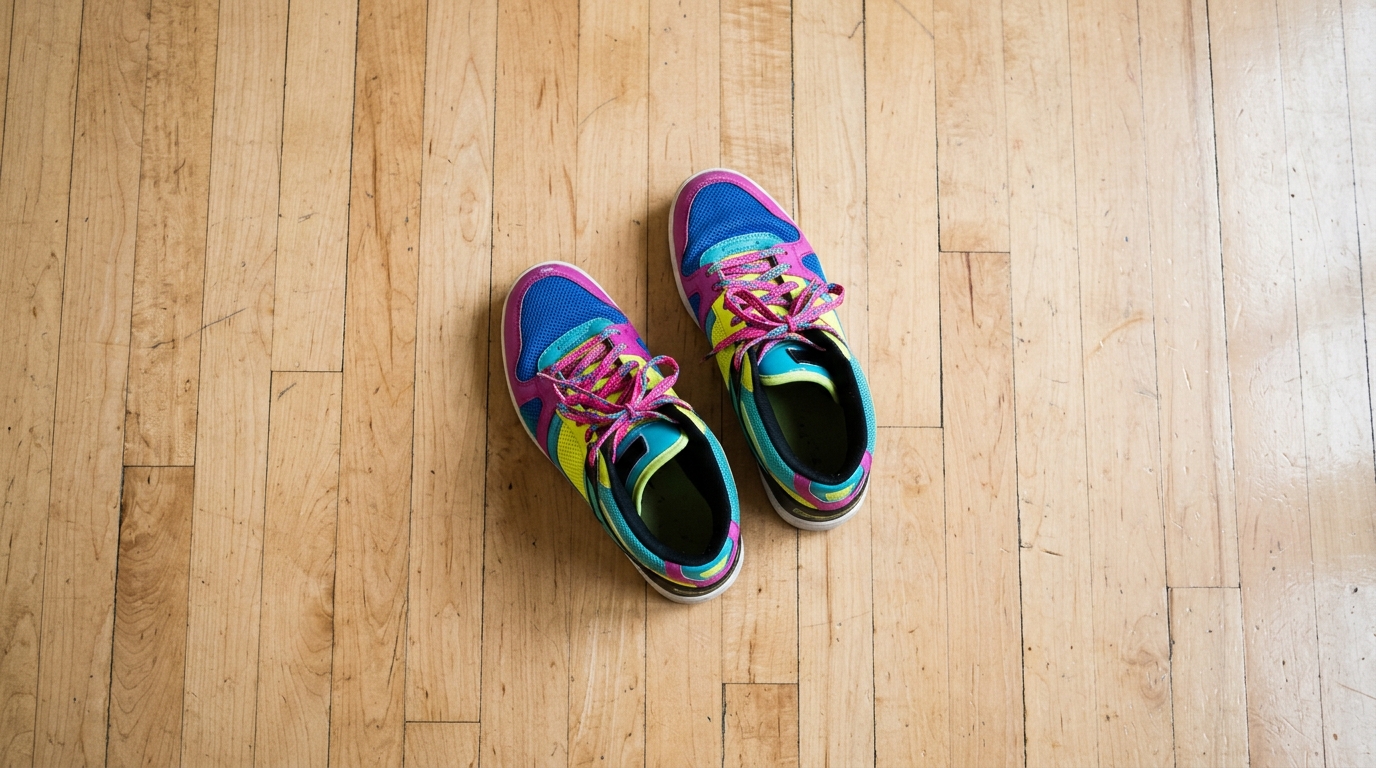
Your shoes matter more than anything else in the room. Running shoes are a poor choice for Zumba — their grippy soles are built for straight-ahead running, not for spinning. Look for dance sneakers or cross-trainers with a smooth pivot point under the ball of the foot and support on the sides.
Warm up properly, even if the class starts with a slow song. A few ankle circles, some gentle calf raises, and a slow run through the basic steps get your feet ready for the twisting and jumping ahead. If a move hurts, modify it — march instead of jumping, and turn in smaller steps.
Pace yourself across the week, especially if you’re going to several classes. If your feet start to ache mid-class, ease off the jumps rather than pushing through — pain is your feet asking for a break.
What Helps: Recovery After Class
When class ends, get out of your sweaty trainers and into something dry, soft, and supportive — not flat slippers. A cool foot soak for ten minutes helps if your feet feel swollen, and rolling the bottom of each foot over a tennis ball loosens tight tissue.
Stretch your calves every evening you dance. Stand facing a wall, step one foot back, and press the heel into the floor until you feel a gentle pull. Hold it for thirty seconds on each side. Tight calves are one of the main drivers of heel pain. The same recovery steps help after any hard workout — our guide to foot pain after exercise covers what to do when the soreness lingers into the next day.
Give your feet real rest days. Dancing every day without a break doesn’t give irritated tissue time to settle.
Your Daily Routine for Happier Feet on Zumba Days
Here’s a routine that fits around a Zumba class:
- Stretch your calves and ankles before class: A wall calf stretch and a few ankle circles take two minutes.
- Wear dance sneakers, not running shoes: A smooth pivot point and side support let you turn without sticking.
- Bring dry socks and change after class: Fresh socks stop blisters and keep your feet comfortable.
- Modify moves when your feet ache mid-class: March instead of jumping, and turn in smaller steps.
- Recover after every class: Cool soak or tennis-ball roll, calf stretches, and supportive shoes for the walk home.
FAQs
Is foot pain from zumba normal?
Mild soreness in the balls of your feet or heels after a hard class is very common and usually fades with rest, stretching, and better shoes. Sharp, one-sided, or persistent pain is not normal and should be checked.
Why do the balls of my feet hurt after Zumba?
Every pivot and quick step loads the front of your foot, and grippy trainers make it worse by sticking to the floor while your body turns. The result is metatarsalgia — a bruised, aching feeling in the ball of your foot that usually eases with rest and dance sneakers with a smooth pivot point.
Can Zumba cause plantar fasciitis?
Yes — repeated jumps and hard landings can irritate the plantar fascia, especially with tight calves and unsupportive shoes. Rest, calf stretching, and supportive footwear usually help, but heel pain lasting more than a couple of weeks should be checked by a doctor.
What shoes are best for Zumba foot pain?
Dance sneakers or cross-trainers with a smooth pivot point under the ball of the foot are the best choice. Avoid running shoes — their grippy soles stick during pivots and twist your forefoot. Make sure the shoes fit snugly without pinching your toes.
When should I see a doctor about foot pain from zumba?
See a doctor promptly if the pain is sharp or severe, if swelling doesn’t settle after rest, if you can’t put weight on your foot, or if you notice numbness, tingling, or a sore that won’t heal.
Sources
- Mayo Clinic — metatarsalgia causes and symptoms
- Cleveland Clinic — plantar fasciitis causes and treatment
- American Podiatric Medical Association — dance fitness and foot injuries
This article is for general information only and is not medical advice. Talk to your doctor or a podiatrist about your own feet.