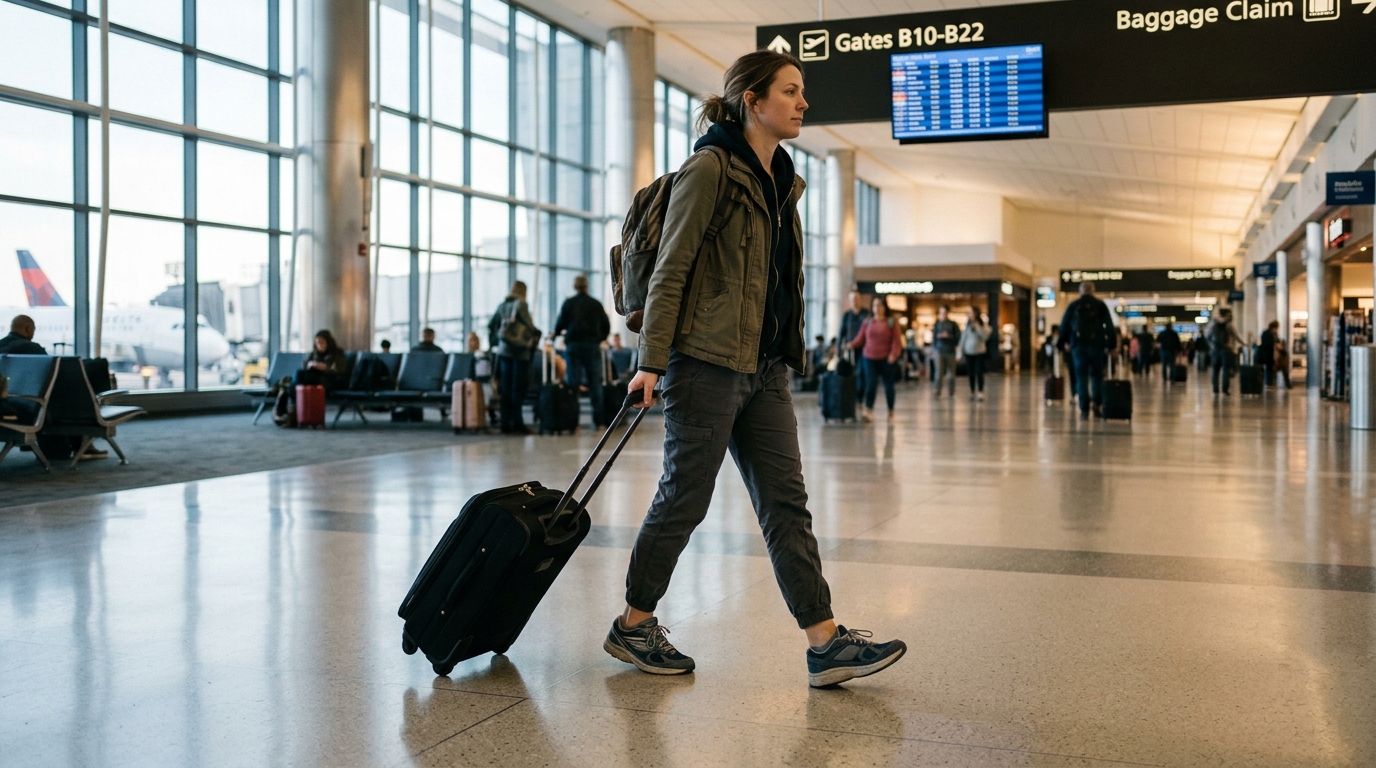
Why flying puffs up your feet
Your veins return blood from your legs to your heart against gravity, and they don’t do it alone. Every step you take squeezes the deep veins of your calves — the calf-muscle pump — and one-way valves keep the blood moving upward. Sit still for five hours in a cramped seat and that pump barely runs. Blood pools in the lower legs, pressure rises in the small vessels, and fluid leaks out into the surrounding tissue. That’s the swelling: gravity plus immobility plus time.
Planes add two more ingredients. Cabins are pressurized to the equivalent of 6,000 to 8,000 feet of altitude, and the air is extremely dry, which encourages dehydration — and dehydration makes blood slightly thicker and clot risk slightly higher. The seat edge pressing into the back of your thigh doesn’t help venous return either. For most healthy travelers the result is temporary: the fluid reabsorbs over hours to a day once you’re walking around again.
Normal swelling vs. a clot: how to tell
This is the distinction that matters, so be precise with yourself. Normal flight swelling is in both feet and ankles, feels puffy rather than painful, leaves a dent when you press it, and improves noticeably within 24 hours of landing once you’re moving. Your shoes feel tight; that’s about it.
A deep vein thrombosis (DVT) — a blood clot in a deep leg vein — usually affects one leg. The NHS lists its symptoms as throbbing pain in one leg (usually calf or thigh), swelling in one leg, skin that turns red, blue, or darkened around the painful area, and swollen veins. The leg may feel heavy and ache when you stand or walk. DVT matters because a clot can break off and travel to the lungs — a pulmonary embolism — which causes chest pain, shortness of breath, coughing blood, and a racing heartbeat, and can be life-threatening. One-sidedness is the pattern that matters most: if only one ankle is swollen after a flight, don’t assume it’s just the flight.
You’re at higher risk for travel-related DVT if your journey is over four hours, and especially if you’re also older, pregnant, recently had surgery or an injury, have a history of clots, have cancer, or are significantly overweight. If you’re in a higher-risk group, talk to your doctor before a long flight — some travelers are advised to wear compression stockings or, in select cases, take preventive medication.
Preventing it on your next flight
Move every hour or so. Walk the aisle when the seatbelt sign allows. Even a lap to the restroom and back restarts the calf pump. If you can’t get up, do seated exercises: ankle circles, foot pumps (lifting toes then heels alternately), and calf raises in your seat, ten reps every half hour.
Drink water, skip the extra alcohol. Hydration keeps blood flowing normally; alcohol dehydrates you and makes you drowsy and still — a bad combination for circulation. Coffee in moderation is fine.
Wear loose clothing and comfortable shoes. Tight waistbands, tight socks, and shoes that dig in when your feet swell all work against circulation. Slip-on shoes that accommodate swelling are ideal for flying.
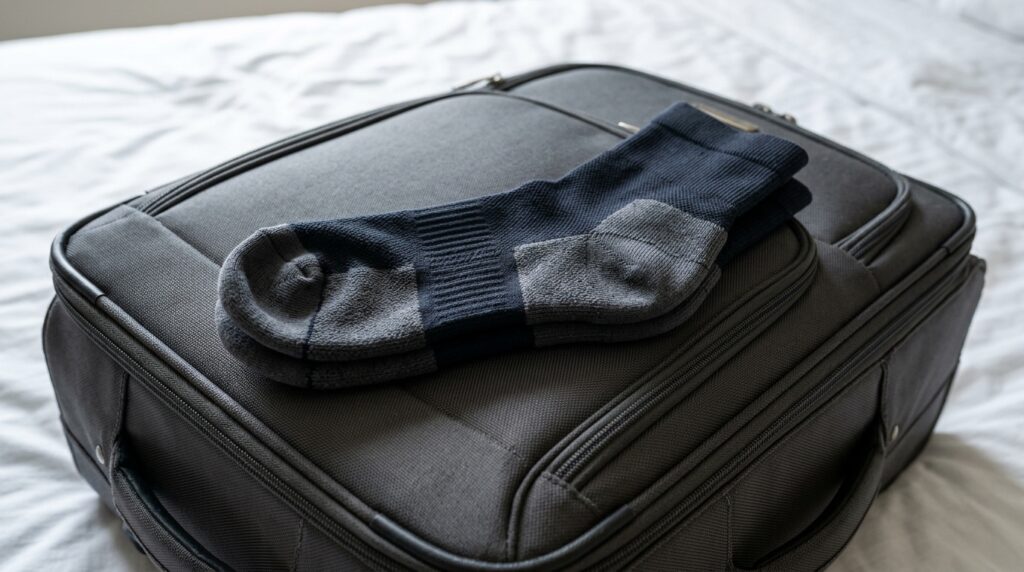
Consider compression socks. Properly fitted, graduated below-knee compression stockings reduce ankle swelling during travel and, per NHS guidance, can lower DVT risk for higher-risk travelers. Fit matters — they should be measured to your leg, not grabbed in a random size. And if you have peripheral artery disease, check with your doctor first, since compression isn’t right for everyone.
After you land
Walk. Seriously — the single best thing after a long flight is a proper walk through the airport and beyond, not a taxi straight to a hotel bed. Elevate your feet for 20 minutes when you get in, keep drinking water, and avoid sitting still for another long stretch right after landing. Normal swelling should be clearly better by the next morning and gone within a day or two. If it’s not improving, is getting worse, or is one-sided, get it checked the same day rather than waiting for your next routine appointment.
FAQ
How long does normal flight swelling last?
Usually hours to a day, improving with walking and elevation. Swelling that persists beyond 48 hours, worsens, or affects only one leg should be evaluated.
Do compression socks really help on flights?
Yes — they reduce ankle swelling during travel, and properly fitted graduated stockings can lower DVT risk for higher-risk travelers. Get measured rather than guessing a size.
Can a short flight cause a clot?
Risk rises with journey length, and flights over four hours are the usual concern. Short flights carry much lower risk, but the same warning signs apply regardless of flight length.
Should I take aspirin before flying to prevent clots?
Don’t start aspirin for this without medical advice. It’s not routinely recommended for travel DVT prevention, and it carries bleeding risks. Talk to your doctor if you’re concerned about your risk.
Is it normal for swelling to be worse on one side?
Mild asymmetry can happen, but clearly one-sided swelling — especially with pain, warmth, or redness — should be treated as a possible clot until proven otherwise. Get same-day care.
Sources
- NHS — DVT (deep vein thrombosis): symptoms, prevention, and travel guidance
- Centers for Disease Control and Prevention — Blood clots and travel
- Mayo Clinic — Deep vein thrombosis; Edema
- Chelsea and Westminster Hospital NHS Foundation Trust — Blood clots: DVT and PE information
Medical disclaimer: This article is for general information only and is not medical advice. One-sided leg swelling after travel, or any symptoms suggesting a blood clot or pulmonary embolism, require urgent medical attention.