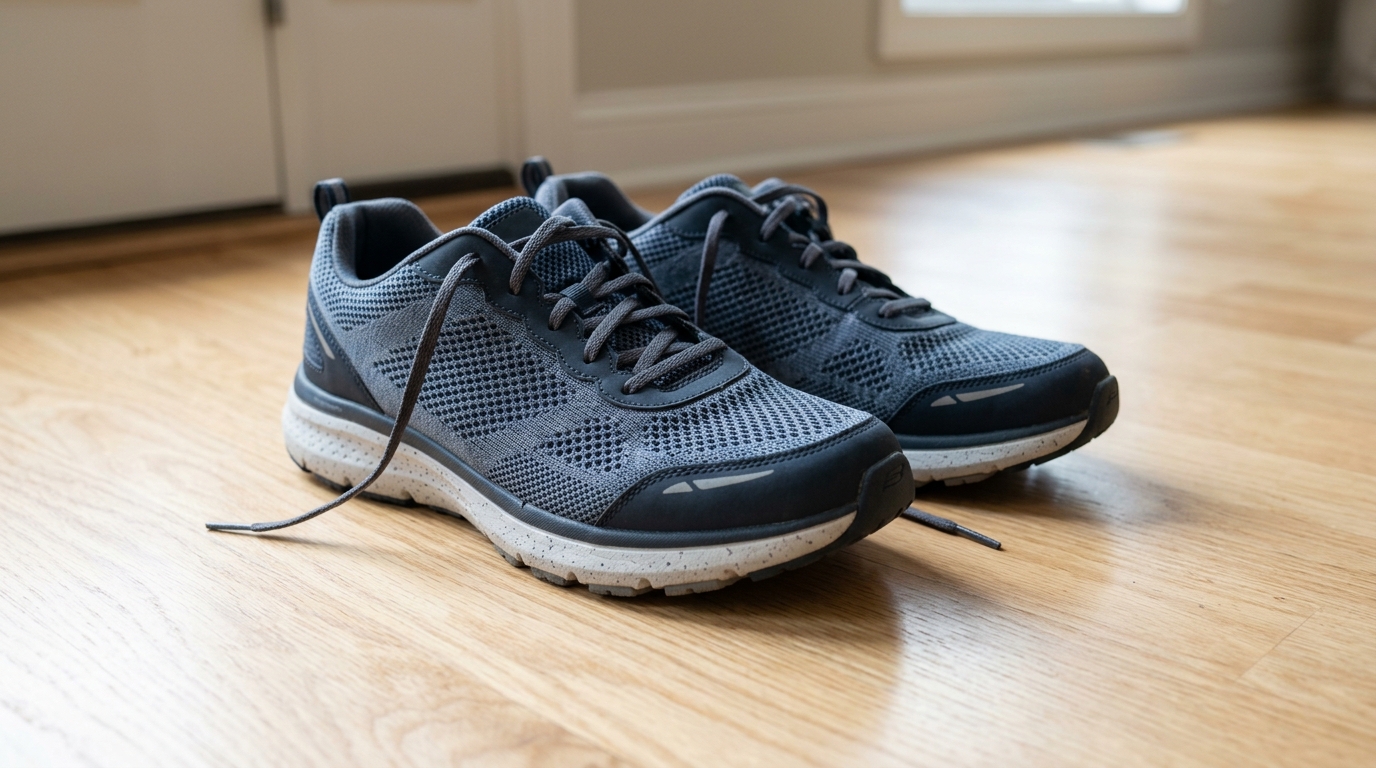
Why feet sweat so much
Your feet are sweat machines by design. Each foot carries roughly 250,000 sweat glands, more densely packed than anywhere except your palms. Sweating is how your body cools itself, and feet, stuffed into shoes all day, can’t shed that heat easily. Some people just sweat more — teenagers and young adults especially, since sweat glands are most active then — and heat, stress, and physical activity all turn the dial up further.
The problem isn’t really the sweat itself. It’s the damp. A foot sealed in a shoe for ten hours sits in its own moisture, and that damp, warm, dark environment is exactly what fungi love, what softens skin until it blisters, and what lets odor-causing bacteria thrive. Sweaty feet are often the first domino in a chain that ends with athlete’s foot or a blister.
The daily system that works
Wash properly. Warm water and soap, every day, including between the toes. Then — and this is the part people skip — dry thoroughly, especially between the toes. A quick towel pat isn’t enough; that trapped moisture is the whole problem. If your feet sweat heavily, a hair dryer on cool for a few seconds between the toes actually helps.
Socks matter more than shoes. Cotton socks absorb sweat and then hold it against your skin, which is the worst of both worlds. Moisture-wicking socks (synthetic blends or merino wool) pull sweat away and dry faster. If your feet sweat a lot, change socks midday — keep a spare pair in your bag. It feels excessive until you try it once.
Rotate your shoes. Shoes need a full day to dry out between wears. Wearing the same pair two days running means stepping into yesterday’s dampness. Two pairs in rotation beats one expensive pair worn daily, every time. Stuffing shoes with newspaper or using shoe trees speeds drying, and taking the insoles out overnight helps a lot.
Choose breathable shoes. Leather, canvas, and mesh uppers let air move; fully synthetic, non-breathable shoes trap it. Sandals or open shoes in warm weather aren’t just comfort — they’re genuinely better for sweaty feet.
Antiperspirant, for feet. This surprises people, but a standard antiperspirant (not just deodorant) applied to clean, dry feet at night can reduce sweating noticeably. The aluminum compounds temporarily block sweat ducts. Foot-specific antiperspirant sprays exist, but a regular roll-on works fine. Apply at night so it has hours to work before you put shoes on.
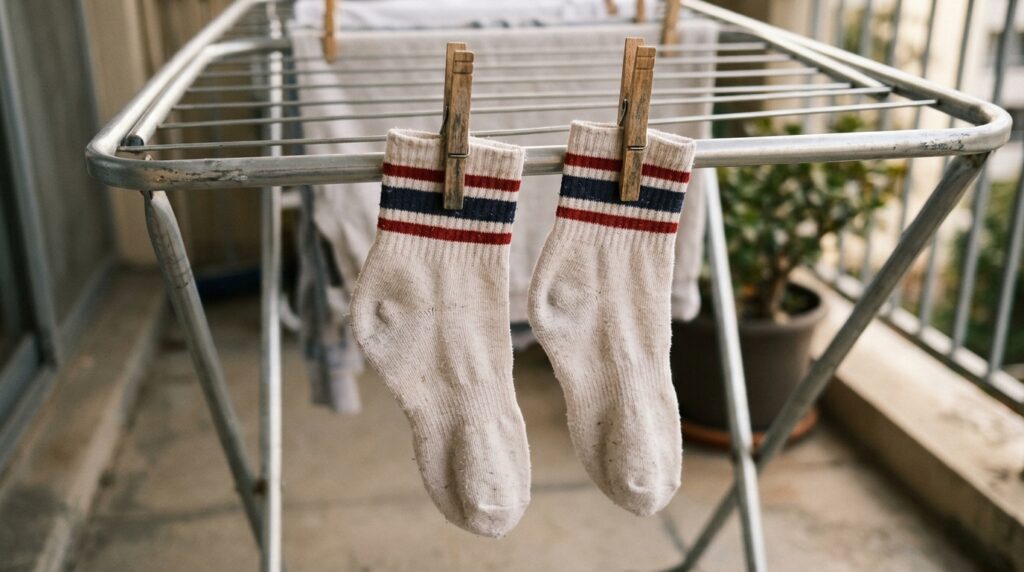
Dealing with the smell
Foot odor isn’t the sweat — it’s bacteria breaking down sweat on your skin and in your shoes. The system above handles most of it, but a few extras help: wash insoles regularly or replace them, sprinkle baking soda inside shoes overnight and shake it out in the morning, and don’t wear shoes without socks (bare feet in shoes means sweat goes straight into the shoe lining, where it stays). If one particular pair of shoes smells no matter what you do, the lining is probably colonized — it may be time to retire them.
When it’s more than normal sweating
Some people sweat far beyond what’s normal — soaking through socks and shoes, leaving wet footprints, sweating even in cool weather. That’s plantar hyperhidrosis, and it’s a real medical condition, not a hygiene failure. It often runs in families and starts in childhood or adolescence. If basic care doesn’t touch it, a doctor can offer stronger options: prescription-strength antiperspirants, iontophoresis (a device that passes a mild current through water to reduce sweating), Botox injections into the soles, and, rarely, medication or surgery. Don’t be embarrassed to bring it up — doctors hear it often, and the treatments genuinely work.
FAQ
Why do my feet sweat even in winter?
Because shoes trap heat regardless of season, and stress sweating isn’t temperature-driven at all. Heavy winter boots with poor ventilation can make feet sweatier than summer sandals do.
Is it bad to wear the same shoes every day?
For sweaty feet, yes — shoes that never fully dry stay damp, smell, and harbor fungus. Rotation is the single easiest fix.
Can I use regular antiperspirant on my feet?
Yes. Apply it to clean, dry feet at night, not in the morning rush. It needs time to work before shoes go on.
Do sweaty feet cause athlete’s foot?
They create the conditions for it — warm, damp, dark — but the fungus itself comes from contact with spores, usually in locker rooms, pools, or shared showers. Keeping feet dry is your best defense.
When should I see a doctor about sweaty feet?
If sweating soaks shoes daily despite good care, started suddenly, comes with night sweats or weight loss, or the skin between your toes is breaking down. Hyperhidrosis has effective medical treatments.
Sources
- American Academy of Dermatology — Hyperhidrosis: diagnosis and treatment
- Cleveland Clinic — Sweaty feet: causes and treatments
- Mayo Clinic — Hyperhidrosis
- International Hyperhidrosis Society — Plantar hyperhidrosis guidance
Medical disclaimer: This article is for general information only and is not medical advice. Severe, sudden, or treatment-resistant sweating — or sweating with skin breakdown — should be evaluated by a clinician.