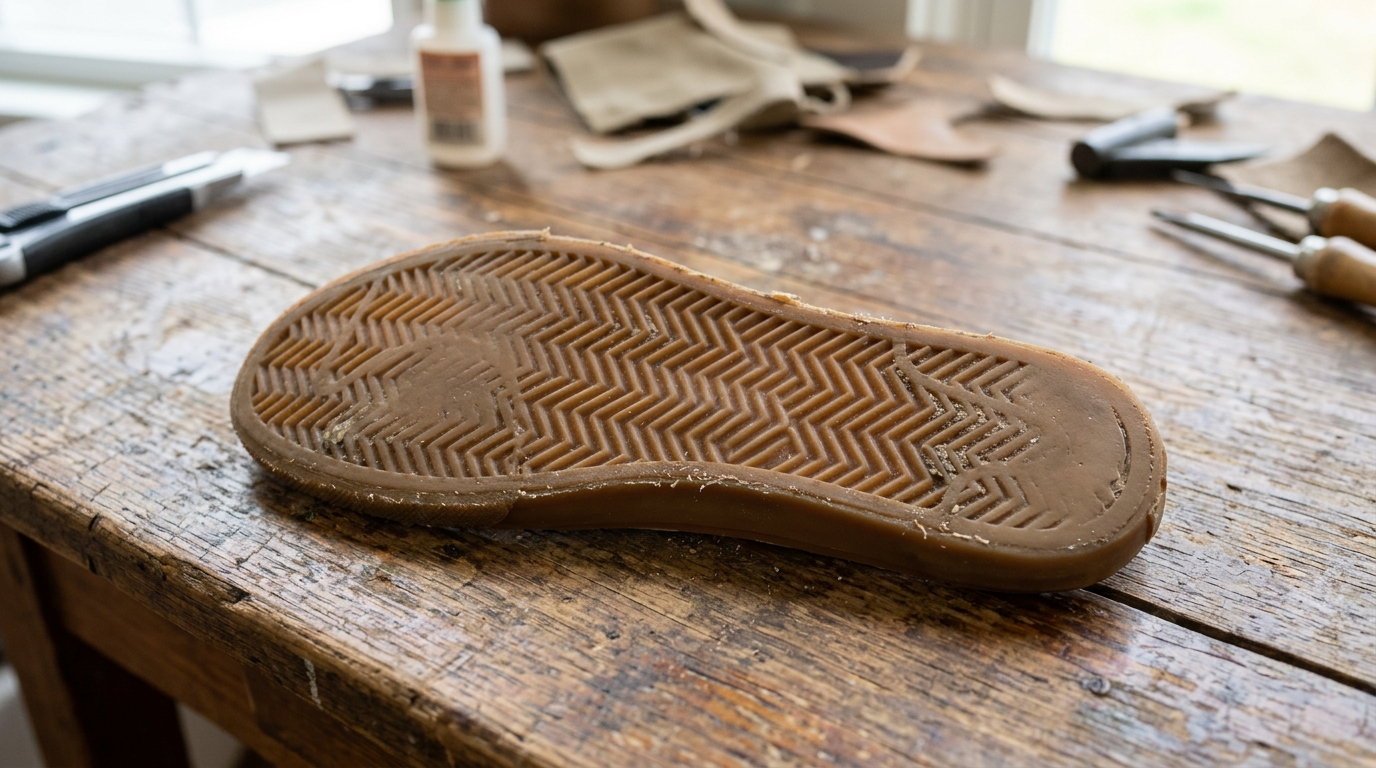
Shoes without arch support foot pain happens when a flat shoe lets your arch collapse with every step, forcing the plantar fascia, ankle tendons, and small foot muscles to do work the shoe should be doing. Over hours, that extra strain shows up as aching arches, heel pain, tired feet, and sometimes knee or shin soreness too. The fix is straightforward: add shaped support inside the shoe, or choose shoes that already have it built in.
See a doctor promptly if you notice any of these:
- Heel pain that’s sharp with your first steps in the morning
- One foot flattening or aching much more than the other
- Swelling around the ankle or along the inside of the foot
- Pain that doesn’t ease after two weeks in supportive shoes
- Foot pain plus diabetes, poor circulation, or a weakened immune system
What happens when a shoe has no arch support
Your arch is a natural shock absorber. When you step, it flattens slightly to absorb impact, then springs back to push you forward. A shoe with proper arch support holds that arch in its working position so the spring mechanism works efficiently. A completely flat shoe doesn’t. Your arch collapses further than it should, stays collapsed longer, and the tissues that hold it up — the plantar fascia underneath and the posterior tibial tendon along the inside of your ankle — take on strain they weren’t designed to carry all day.
That strain spreads. When the arch collapses, your foot rolls inward, a movement called overpronation. Your ankle tilts, your shin rotates, and your knee tracks slightly differently. That’s why people with flat, unsupportive shoes sometimes notice aching knees or shins alongside their foot pain — the problem starts at the foot but the chain reaction travels upward. According to the Cleveland Clinic, overpronation is linked to plantar fasciitis, shin splints, and Achilles tendon problems, all of which are more likely when footwear offers no structural support.
Flat shoes also tire your feet faster. The small muscles inside your foot have to grip and stabilise constantly to make up for the missing support, and by late afternoon they’re exhausted. That end-of-day burning ache across the arch and the ball of the foot is often simple muscle fatigue — your feet did a full day’s work without any help from your shoes.
What helps: adding support that actually works
The most effective fix is a shaped insole. Not a flat gel pad — those feel soft but add no structure — a proper insole with a contoured arch and a cupped heel. According to the American Podiatric Medical Association, over-the-counter arch supports are a reasonable first step for most people with arch-related foot pain, and they work by redistributing pressure away from overloaded areas. If your shoes have removable insoles, swapping them out takes a minute and transforms the shoe.
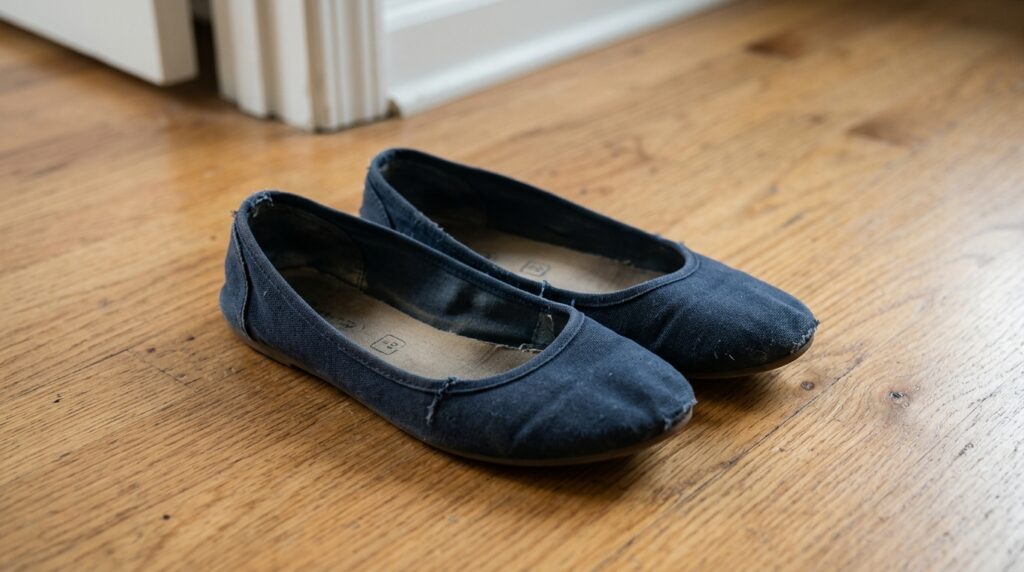
If your shoes don’t have removable insoles — common with ballet flats, loafers, and sandals — you have two options: a low-profile arch insert that sticks to the shoe’s footbed, or a different shoe. Be honest here: some shoes simply can’t hold support. A paper-thin flat with no heel counter and no insole to replace is a fashion item, not a walking shoe, and no insert will turn it into one.
When buying new shoes, test the support before you buy. Press the arch area of the insole — it should have a visible, firm contour, not a flat surface. Bend the shoe — it should flex at the ball of the foot, not fold in the middle. And twist it — a shoe that twists like a dishcloth has no torsional stability and won’t support your arch for long. According to the Mayo Clinic, shoes that match your arch type — low, neutral, or high — reduce strain on the feet and lower legs during daily activity.
A daily routine for unsupported feet
If your feet are already sore, start the day right: put your supportive insoles in before you put your shoes on, and do a quick calf stretch against the wall, thirty seconds per side. Tight calves make arch pain worse because they limit how your ankle moves and force your foot to compensate.
During the day, if you spend long hours in flat shoes at work, keep a second pair with proper support for your commute or lunch break — even partial relief helps tired feet recover. In the evening, roll a ball under each arch for two or three minutes, then do ten toe scrunches per foot: place a towel on the floor and scrunch it toward you with your toes. It sounds silly, but it strengthens exactly the small muscles that flat shoes overwork.
Finally, check your shoes monthly. Insoles compress over time, and a support that felt great three months ago may be flat now. Replacing a worn insole is a small expense that saves you from going back to square one.
Frequently asked questions
Do I really need arch support, or is it a marketing gimmick?
It’s real, but it’s not one-size-fits-all. People with low arches or flat feet benefit most, while people with high, rigid arches need cushioning more than aggressive support. The test is practical: if your feet feel better in a supported shoe, you needed the support.
Can flat shoes cause plantar fasciitis?
They can contribute to it. Plantar fasciitis is irritation of the band of tissue under your foot, and unsupported shoes increase the strain on that tissue with every step. Flat shoes alone rarely cause it overnight, but months of daily wear in unsupportive shoes is a recognised risk factor.
Are custom orthotics better than shop-bought insoles?
Custom orthotics are moulded to your exact foot and last longer, but they’re expensive. For most people, a good over-the-counter insole with a proper arch contour solves the problem. Consider custom orthotics if shop-bought options haven’t helped after a few weeks, or if a podiatrist recommends them.
Can I add arch support to sandals or flats?
Sometimes. Sandals with a contoured footbed already have some support, and stick-on arch pads can help in flats with a bit of depth. But very thin flats and flip-flops usually can’t hold an insert securely, so they’re best kept for short wear rather than all-day use.
How do I know what arch type I have?
Try the wet test: wet your foot, step on a paper bag, and look at the print. A full, wide print suggests a low arch; a narrow band connecting heel and forefoot suggests a high arch; something in between is a neutral arch. A podiatrist can confirm it if you’re unsure.
Sources
- Cleveland Clinic — Overpronation and Plantar Fasciitis
- American Podiatric Medical Association — Arch Supports and Footwear
- Mayo Clinic — Flatfeet: Symptoms and Causes
This article is for information only and is not medical advice. If you have ongoing or severe foot pain, talk to a qualified healthcare professional.